Brown water pouring out of a hot tap looks like the end of the tank. Same brown tint, same panic — but there are three different repairs hiding behind it, and one of them isn’t a repair at all. A GE water heater producing rusty water is almost never the dead tank people assume, so before you price replacements, take two minutes at a bathroom sink.

Rusty hot water usually points to a spent sacrificial anode rod — a $30 to $50 part and about an hour of work. Test it first: run the cold tap, then the hot. If only the hot side is discolored, it’s the tank. If both run rusty, the heater isn’t the source at all.
- The anode hex on GE tanks is buried under foam and a snap-on plastic cap — you’re gonna be digging before you can even see it.
- A 1-1/16″ socket and a 24-inch breaker bar are the minimum. A factory-torqued rod laughs at a ratchet.
- Low ceiling above the tank? A segmented rod solves it. A one-piece rod needs roughly 44 inches of clearance.
Start With The Cold Tap — It Splits The Problem In Two
Isolate the fault before you buy a single part — that’s the whole point of starting at the cold tap instead of the heater. Fill a cup cold, fill a cup hot, set the two side by side, and read the difference in daylight. The test costs nothing, and it decides everything that follows.
- Fill a white cup from the cold tap after a full minute of running. Color only reads honestly against white.
- Fill the same cup from the hot tap after a full minute, then set the two side by side.
- Read the result: hot dirty and cold clean points at the tank; both dirty points at the incoming supply.
- If neither cup is dirty, draw hot first thing tomorrow morning — settled sediment hides after a day of normal use.
A tank that has actually rusted through leaks, so check for water on the floor or a rust ring at the base before anything else. If either one is there, the shell is perforated and no rod fixes that — you’re replacing the heater, not repairing it. Discolored water over a bone-dry pan is the rod doing exactly what it was built to do.
| Cause | Likelihood | Fix Cost | DIY Time |
|---|---|---|---|
| Spent sacrificial anode rod | Most common | $30-$50 | 1-2 hours |
| Sediment layer on the tank bottom | Common | Free (or $12-$20 valve) | 45 minutes |
| Corroded galvanized nipples or house piping | Common in older homes | Varies | Plumber |
| Tank corroded through (leaking) | Least common | $1,200-$2,200 installed | Call a pro |
Symptom: The Hot Water Runs Rusty Every Time, All Day Long
This is the anode rod, and I’d bet the price of the part on it. By the time the hot side runs discolored around the clock, there usually isn’t much rod left up there to find. Once the rod is gone, the glass lining is the only defense left, and factory lining always has pinholes. Iron leaches in through those spots and the hot water never clears, no matter how long you run it. On softener-fed GE tanks I’ve seen that show up by year three, because softened water is aggressive on magnesium.

The part that trips people up on GE units — and the reason a lot of DIY attempts die early — is that you can’t see the anode port. The top of the shell is foamed over with a plastic cover snapped on top, and the hex hides under there, offset from center, usually near the cold inlet. It has to be carved out with a utility knife.
Shut the breaker off at the panel before you drain an electric tank — not just the thermostat dial. Elements that fire in a partly empty tank burn out in seconds, another $30 to $60 in parts. On gas units, turn the control to OFF, not PILOT. The water in there sits at 120°F to 140°F, so give it a couple of hours to cool.
The swap itself:
- Kill the power or gas, then close the cold water shutoff on top of the heater.
- Open a hot tap upstairs to break the vacuum, or the tank won’t drain right.
- Drain 2 to 3 gallons into a bucket — enough to drop the level below the rod port.
- Pry off the plastic cap and dig the foam out with a utility knife until the 1-1/16″ hex shows.
- Break the rod loose counterclockwise with a 1-1/16″ socket on a 1/2″ drive breaker bar. No ratchet touches factory torque. Strap the tank or have someone steady it, because it wants to rotate.
- Pull the rod straight up and look at it. Under half its original diameter, or bare core wire anywhere, means it’s finished.
- Tape the new rod’s threads three or four turns, start it by hand, then snug it with the socket. Don’t gorilla it.
- Refill with the hot tap open until flow runs steady and air-free, then restore power or gas.
I keep a bucket and a rag right under the port when the old rod comes out — whatever’s left of it drips scale and black water down the jacket the second it clears the threads.
The direct GE replacement is part number WS07X22929 — match thread and length against the old rod on the iFixit listing for the WS07X22929 anode rod before ordering. Check your rating plate first — GE sold several tank heights, and rod length follows the tank.
Symptom: Rusty For The First Few Seconds, Then It Clears Up
That’s settled debris, not steel actively corroding. Two suspects: a sediment layer on the tank bottom that gets stirred up when the burner or lower element cycles, and the galvanized nipples in the hot and cold ports, which rust from the inside out. It’s why the worst glass of the day is the first one in the morning.
A flush handles the sediment side, in this order:
- Kill the power or gas and close the cold inlet, same as before.
- Thread a garden hose onto the drain valve and run it out to the driveway — rusty water stains a floor drain surround.
- Open a hot tap upstairs, then crack the drain valve partway. Never wide open on a tank that’s never been flushed.
- Let it run until it’s clear, budget 45 minutes, then close the valve and refill with the hot tap open before restoring power.
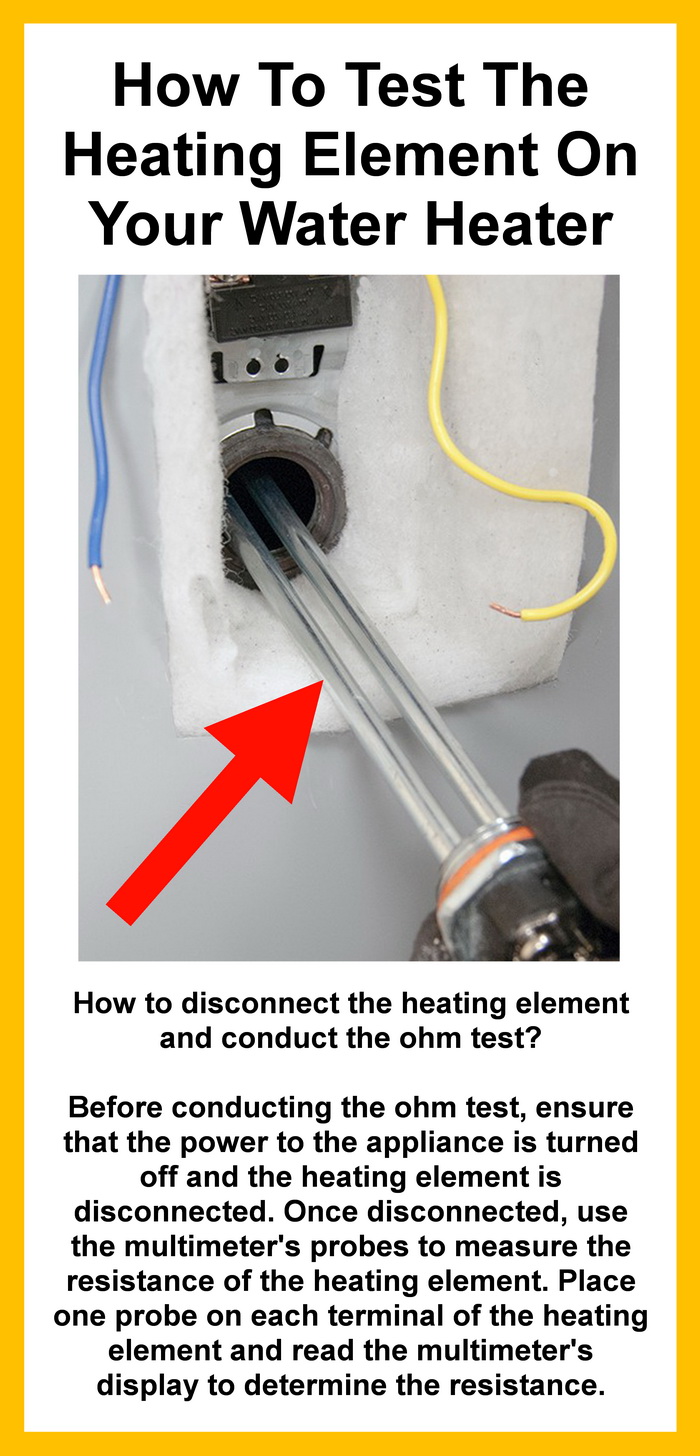
If the water is also slower to get hot than it used to be, sediment has likely packed onto the lower element and insulated it. Put a multimeter on it before blaming the tank, and how to test the heating element walks through the readings.
The wrong move, and it happens constantly: cranking that plastic drain valve wide open. Sediment surges into the seat, the gate won’t close again, and now you own a heater you can’t shut off. If flow slows, you gotta close it, wait, and open it partway again. Better yet, spend $12 to $20 on a brass full-port ball valve while the tank is already drained.
My first instinct on a rusty-water call was always to flush the tank and see what came out — that’s how I ran it for years. Then I learned the flush tells you almost nothing about the rod. A tank can flush perfectly clear and still have nothing but bare core wire hanging inside it, and I’d walk away thinking the job was done while the lining kept getting eaten. Now I pull the rod before I touch the drain valve.
Symptom: Both The Hot And The Cold Are Rusty
Stop working on the heater. The rust is coming into the house — well iron, a disturbed municipal main, or old galvanized supply piping shedding from the inside. Confirm that first by filling your white cup at an outside hose bib, since those usually tap in ahead of most of the house piping; if that water is rusty too, nothing inside the walls is making it. Next, call the water utility and ask whether there’s been a main break, a repair, or hydrant flushing in your area in the last week — that kind of rust clears on its own in a few days and costs you nothing but patience. If the outside tap runs dirty and the utility has nothing going on, you’re looking at well iron or your own corroded service line, and the real fix is a whole-house sediment or iron filter (or a softener with iron removal on a well) rather than anything at the heater. Iron in the supply is also how people end up chasing an ice maker water line that keeps clogging when the real problem is upstream of everything.
The GE Wrinkle Nobody Writes About: Segmented Rods And Hybrids
Two GE-specific situations turn a one-hour job into “not happening today.” Clearance is one: a one-piece rod for a tall 50-gallon tank runs about 44 inches and has to come straight up out of the port, and plenty of GE tanks sit in closets with 18 inches of headroom. A segmented rod solves that — same thread and hex, short sections linked by cable, fed in curled so it hangs straight inside. I keep one on hand for exactly that reason, because I’d rather not find out about the ceiling after the tank is already drained. Hybrids are the other: if your rating plate starts with GEH, the compressor owns the top of the tank and the rod port hides under a service panel. And if you dig through the foam and find no hex at all, your tank uses a combination anode built into the hot outlet nipple; GE’s anode rod maintenance page confirms which setup your model shipped with.
Is Rusty Water From A Water Heater Safe To Shower In?
Iron in water is an aesthetic problem, not a poison, and showering in it won’t hurt you. It stains, though — it sets into white laundry, rings tubs and toilets, and tastes like pennies in coffee. I don’t drink it and I wouldn’t cook with it. (If your laundry has a separate complaint, standing water in a washing machine is a different animal.) What concerns me more is timing: a GE water heater producing rusty water for six months with nobody touching the rod is a tank quietly spending the last of its lining.
Call a pro instead if:
- The rod won’t break loose after a real effort. A shop’s impact wrench frees it in seconds; you’ll round the hex.
- It’s a gas unit and you smell gas, or the pilot won’t stay lit afterward.
Past 12 years with a seized rod, I wouldn’t spend the money — how to tell whether your electric hot water heater is done covers that call.
Keeping It From Coming Back
I pull and inspect the anode rod every three years, every two behind a water softener. That’s the whole program. A few gallons out the drain valve once a year keeps the sediment layer from ever getting thick enough to matter. If you’ve already burned through one magnesium rod fast, switch to aluminum-zinc next round; it holds up better in softened water and knocks down the rotten-egg smell magnesium sometimes brings along.
One Last Thing Before You Snap The Cover Back On
Take a Sharpie and write the date and rod type on the metal jacket next to the port. I do it on every tank I touch, because three years from now you won’t remember, and neither will the next owner. Ten seconds now instead of twenty minutes of digging through foam later.
Frequently Asked Questions
These are the ones I get asked most about a GE water heater producing rusty water.
Why is my hot water brown but my cold water clear?
Because the rust is being manufactured inside the tank rather than delivered to the house — cold water never passes through the heater on its way to the faucet. Worth knowing the flip side, though: after a main break, a utility repair, or hydrant flushing, the cold side can go brown for a few days too, because the pressure swing scours iron scale off the inside of the street mains. That kind clears on its own once the line settles and gets flushed. If cold and hot ever go dirty at the same time, the heater isn’t involved at all.
How often should a GE water heater anode rod be replaced?
Go by what the rod looks like, not the calendar. Pull it every three years — every two on softened water — and judge it against the wear check in step 6 of the swap above. A rod still carrying a solid coating goes right back in.
Will flushing my water heater get rid of the rust?
Only if the rust is loose sediment, meaning the water starts brown and clears in a few seconds. If it’s discolored the whole time it runs, flushing buys a clear glass or two and then it’s right back.
Can I just replace the whole heater instead of the anode rod?
You can, but age decides it. Under 8 years, put the $30 rod in — that tank has plenty of life left. Past 12 years, especially with a rod that’s seized in the port, put the money toward a new heater instead. In between, it’s a judgment call on how the rest of the tank looks. Either way, the new tank needs its rod checked in three years.
Does a rusty anode rod mean my tank is already ruined?
No — a rusted rod means the rod worked. It’s supposed to be consumed. The tank is only in trouble if it sits with no rod for a long stretch afterward.

Written by Keith Schneerer
Certified Appliance Tech · Founder, RemoveAndReplace.com
Keith has spent 30+ years repairing machines, starting as a military mechanic and later maintaining food processing equipment before moving into appliance repair. He founded RemoveAndReplace.com to share field-tested repair advice.
More about Keith →