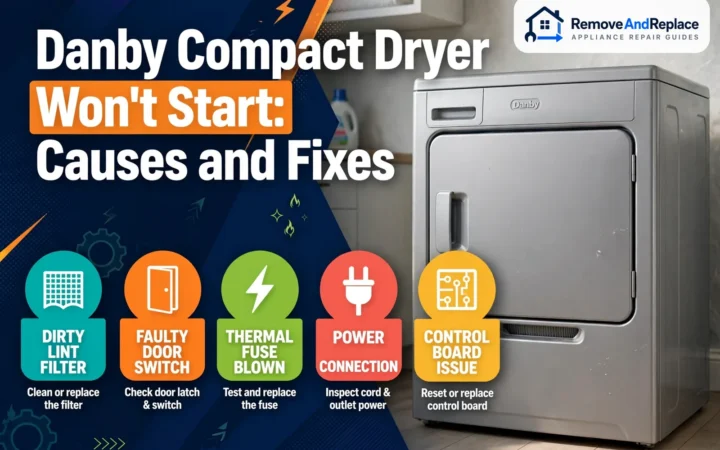
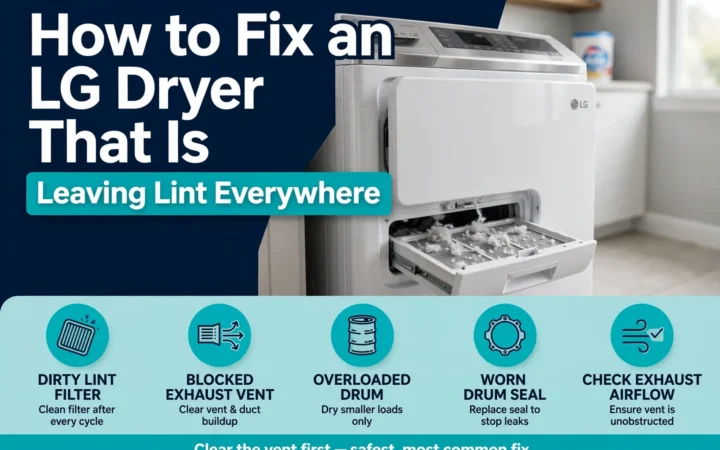
For a dryer lint trap handle broken replace job, start with the model plate and a pull test: if the screen slides out cleanly and the housing rails still grip it, a screen or handle alone may be sold separately, depending on the model; if the slot or frame is cracked, order the whole housing. Never run the dryer without a screen.
What Actually Breaks When the Lint Trap Handle Snaps
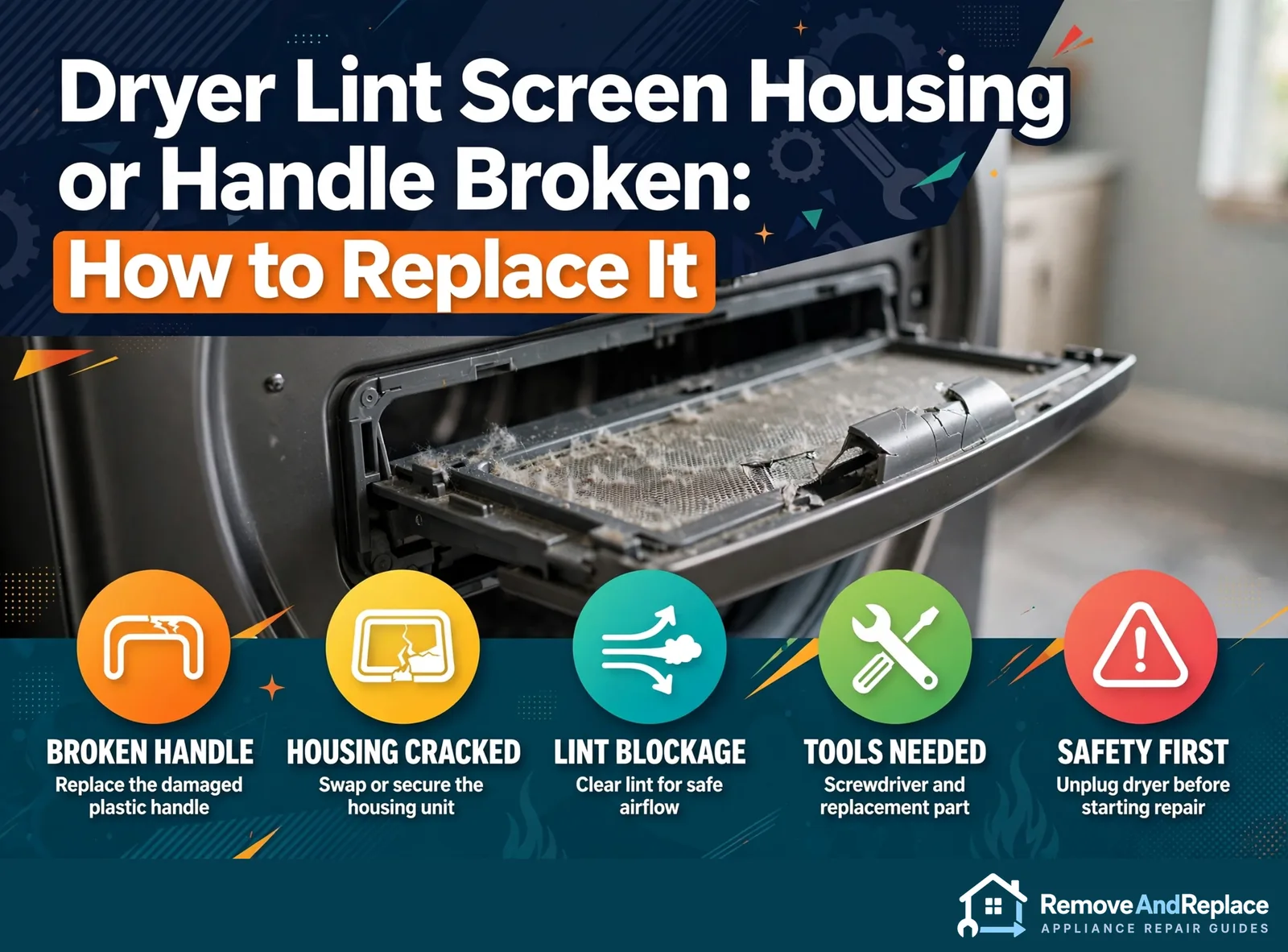
The lint screen is a mesh filter in a plastic frame that slides into a housing, a molded slot in the top or front of the dryer that funnels air through the screen and down into the duct. Plastic and rubber dryer parts can become brittle with age and repeated heating, and the handle is the part you yank on every load. When it snaps, the damage is often not limited to the handle. A dryer lint trap handle broken replace repair starts with working out how far the crack runs, because that decides whether you buy a small part or the whole housing assembly. The housing is the piece people underestimate, and I’ve checked that slot on dryers for 30+ years of hands-on repair before ordering anything, so that’s my own rule here too. The pattern is similar on most brands, though how the housing mounts varies by model.
A lot of people assume the handle is the only thing that failed. That’s the wrong assumption, and it’s how folks end up with a new screen that still doesn’t seat.
Which Part Is Actually Broken? Ranked, With the Quick Test
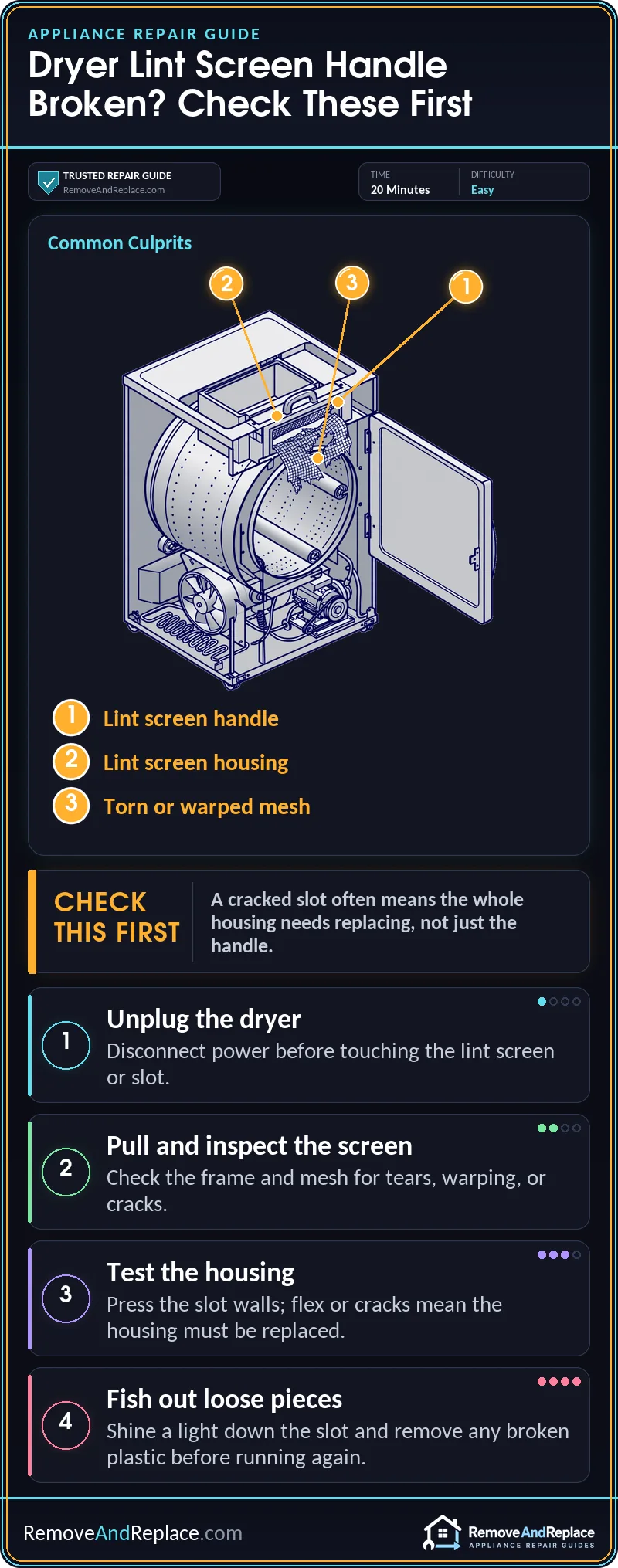
- Handle or screen frame only. Unplug the dryer and pull the screen. If the slot looks clean and the screen drops back in flat with no gap, the screen is your part.
- Torn or warped mesh. Hold the screen up to a light. Holes, or mesh pulling away from the frame, mean lint is bypassing it and heading for the vent.
- Cracked housing or broken mounting tabs. Press gently on the slot walls with the screen out. If the housing flexes, a screen sits crooked, or you see a crack, the housing assembly needs replacing.
- A broken chunk that fell into the cabinet. Shine a flashlight down the slot. A loose plastic piece below needs to be fished out before you run the dryer again.
See, understand, then act
What you’ll see: a handle that comes off in your hand, a screen that tilts, or lint dropping past the edges. What’s happening: air takes the easiest path, and a gap around the screen lets lint ride into the duct and the blower area. What to do: stop running loads until the screen seals properly. A dryer without a sealed screen is the same problem described in how to fix an LG dryer that is leaving lint everywhere, and it can also make clothes take longer to dry because the vent gets loaded up.
The Common Mistake: Pulling the Screen with Pliers and Carrying On
If the handle is gone, it’s tempting to grab the frame with needle-nose pliers and keep drying. For a day or two while the part ships, that can get a screen out, but it’s a stopgap, not a fix. Don’t force a cracked frame into a slot that’s already damaged, and don’t run a load with a missing or loose screen. Lint in the duct builds heat, and a blocked vent can trip sensors like the one covered in the Samsung 5E dryer error.
This video walks through replacing a lint screen housing and shows how the housing comes out and goes back in. Watch it once before you pick up a screwdriver so you know whether your dryer is a quick swap or needs the front opened up.
Before You Order: Screen, Handle, or Housing?
Find the model number on the rating plate, usually inside the door frame or on the back. Then look up the lint screen parts on a parts diagram for that exact model. Some dryers sell the screen alone, a few sell a handle-only piece, and many sell the housing as a complete assembly. This Whirlpool housing replacement walkthrough shows what the assembly looks like and how it’s swapped, which is a useful reference even if your brand differs.
- Pass: screen seats flush, slot is intact, and the diagram lists the screen as its own part. Buy the screen.
- Fail: cracked slot, broken tabs, or a diagram that only lists the assembly. Buy the housing.
Compare the cost honestly. A screen is usually the cheaper part, a housing costs more, and a whole new dryer is only worth it if other parts are also failing.
Unplug the appliance or switch off its breaker before you touch anything. Shut off the gas supply before you work on any gas component, and if you smell gas, leave and call your gas utility. Keep your hands clear of the burner area on gas models. Wear gloves, since broken plastic edges are sharp.
How to Replace the Lint Screen Housing
- Unplug the dryer. Pull it out far enough to reach the back if needed.
- Remove the screen and any loose pieces. Check the slot with a flashlight and pick out broken plastic by hand or with a reach tool. Don’t vacuum blindly past the opening.
- Find how the housing is held. Some are held by screws visible in the slot, others by screws or clips that only show once the top or front panel is loosened. Your model’s manual or diagram will tell you which.
- Open the cabinet if the model needs it. Release the top clips with a putty knife, remove the front fasteners, and lift the panel free. If wires or a door switch connector stay attached, note where they plug in and set the panel down gently instead of letting it hang. The same access method shows up in the LG dryer drum roller replacement.
- Remove the old housing. Take out its screws, lift it, and clear lint from the duct opening and the area around the blower inlet.
- Fit the new housing. Line it up with the same mounting points, start every screw by hand, and snug them without cranking, since plastic cracks if you overtighten.
- Reassemble the panels and reconnect anything you unplugged. Seat the front or top panel securely and fasten it, checking your model’s manual for details.
- Slide in the new screen and run an air-only cycle. It should seat flush with no wobble. Feel for airflow at the exterior vent, listen for rattling, then check that no lint is slipping past the screen edge after a few minutes.
Is It Worth Fixing?
If a dryer lint trap handle broken replace job is the only fault, fix it. The part is small compared with a new dryer. If you also see weak heat or a worn drum, the reasons a dryer takes longer to dry clothes are worth checking before spending on parts. On a rental, tell the landlord first. It’s usually their part to supply.
When to Call a Pro
Call someone if the housing sits behind a gas burner assembly you’re not comfortable moving, if a broken piece has dropped into the blower area and you can’t reach it, or if a fastener is stripped. A spinning blower wheel hitting a loose plastic shard makes a scraping noise, and that means stop running the dryer.
FAQ
Can I use my dryer with a broken lint trap handle?
Only if the screen still seats fully and you can pull it out safely. If the frame is cracked or the screen sits crooked, wait for the part. Running without a proper seal sends lint into the vent.
Can I just glue the handle back on?
I wouldn’t. Glue doesn’t hold up to repeated pulling and dryer heat, and a piece letting go inside the housing is worse than the original problem. Replacing the part is the cleaner fix.
Do I need the whole housing or just the screen?
It depends on the crack. If the slot and tabs are intact and your model’s diagram lists the screen separately, the screen is enough. If the slot is damaged, the housing is the part.
How do I find the right part?
Use the model number from the rating plate, not the brand and a guess. I always check the diagram for the exact name of the part before buying, because similar-looking housings differ between models.

Written by Keith Schneerer
Certified Appliance Tech · Founder, RemoveAndReplace.com
Keith has spent 30+ years repairing machines, starting as a military mechanic and later maintaining food processing equipment before moving into appliance repair. He founded RemoveAndReplace.com to share field-tested repair advice.
More about Keith →