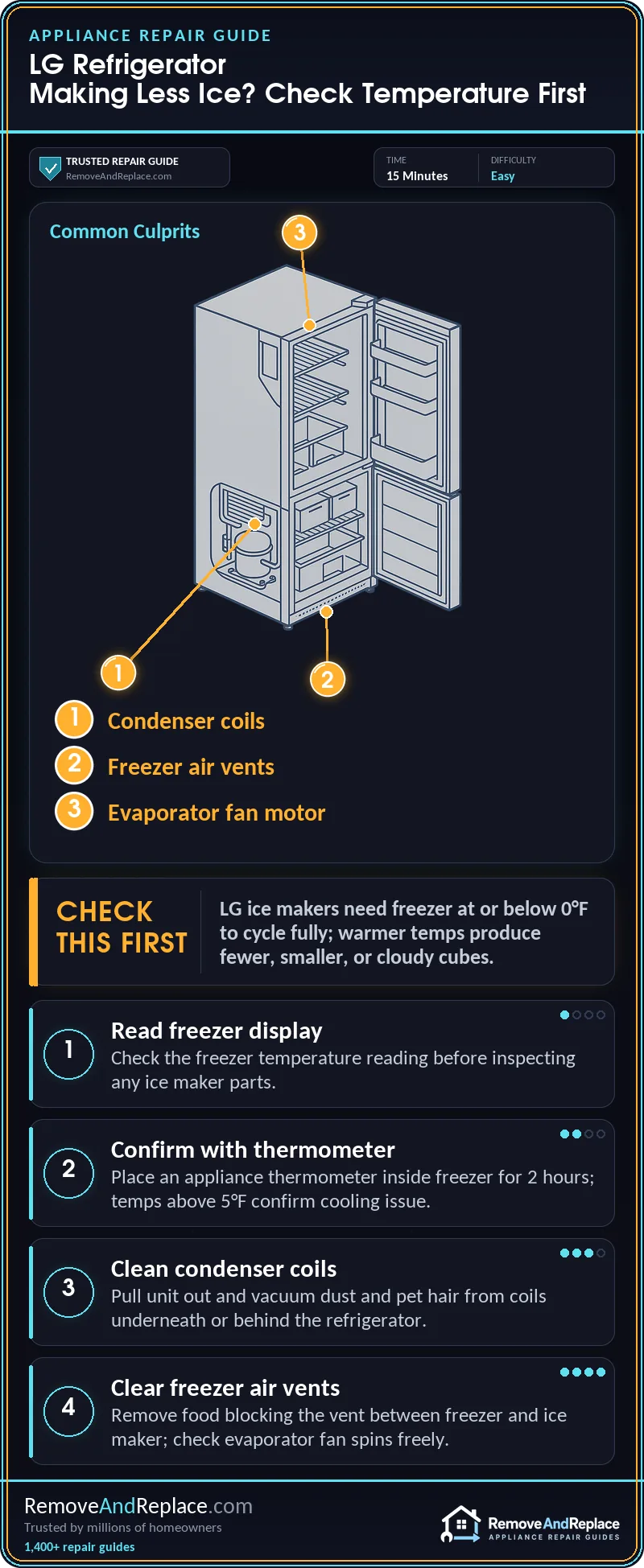
Check the freezer temperature display before you touch the ice maker at all — that’s the fastest way to tell whether you’re dealing with a cooling problem or an ice maker problem. An LG refrigerator making less ice than usual almost always traces back to the freezer running warmer than it should, and that one reading tells you more than pulling the ice bin apart ever will.

This video walks through checking freezer temperature and airflow on an LG fridge, which is the same starting point I’d use on a real service call.
Why Freezer Temperature Is the First Thing to Check
LG’s ice makers need the freezer compartment at or below 0°F to cycle through a full harvest reliably. If the freezer is sitting anywhere in the teens, the ice maker will still technically run, but the tray won’t freeze solid before the next harvest cycle kicks in — so you get smaller, cloudy cubes, or fewer of them, or sometimes none at all. I’ve worked enough electrical and mechanical systems over the years — going back to my time in aircraft maintenance — to know that when a system underperforms without failing outright, the cause is usually something upstream feeding it bad conditions, not the component itself. That’s exactly what’s happening here: the ice maker isn’t broken, the freezer just isn’t cold enough to let it do its job.
LG’s own support documentation backs this up directly — their guidance on refrigerators not making enough ice points to freezer temperature as the first variable to confirm before assuming a part is failing.
What’s Actually Driving the Temperature Up
Once you’ve confirmed the freezer is running warm, the usual suspects are pretty limited, and I’d check them in this order:
- Dirty condenser coils — if the coils underneath or behind the unit are caked in dust and pet hair, the compressor can’t reject heat efficiently, and the whole cabinet runs a few degrees warmer across the board. This is the single most overlooked cause of an LG refrigerator making less ice, and it’s also the cheapest fix on this list.
- Blocked freezer air vents — food packages pushed up against the vent between the freezer and the ice maker compartment will starve the ice maker of the cold air it needs, even if the rest of the freezer reads fine.
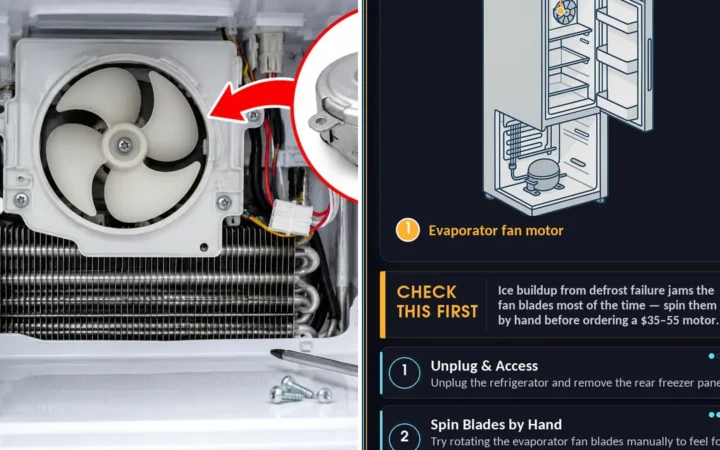
- A failing evaporator fan — if the fan motor is weak or seized, cold air isn’t circulating past the ice maker at all, and you’ll usually hear it as reduced airflow noise or no fan sound whatsoever.
- Door seal issues — a gasket that’s not sealing lets warm, humid air in every time the door opens, and the compressor ends up fighting a losing battle to hold temperature.
LG also has a dedicated page on freezer not cold enough / weak cooling that covers a few of these same points from their side, and it’s worth a look if you want the manufacturer’s own checklist alongside this one.
How to Actually Check It
Grab an appliance thermometer and set it inside the freezer, away from the walls, for a couple hours with the door shut. If it’s reading anywhere above 0°F to 5°F consistently, that confirms the cooling issue before you spend money on ice maker parts. While you’re back there, pull the unit out and look at the coils — if you can’t remember the last time they were vacuumed, that’s probably your answer. Our guide on how to clean refrigerator coils covers exactly where to look and how to do it without damaging anything back there.
It’s also worth listening for anything unusual while the compressor and fans are cycling. A refrigerator that’s straining to keep up with a warm freezer will sometimes make odd noises it didn’t make before, and our piece on what causes a refrigerator to make a popping noise is a useful reference if you’re hearing something new along with the ice problem.
When It’s Not a Temperature Problem
If the freezer temperature checks out fine and you’re still seeing an LG refrigerator making less ice than it used to, the issue has probably shifted to the water supply side — a partially clogged inline filter, low water pressure, or a failing water inlet valve can all choke off how much water reaches the ice maker per cycle, even with perfect freezer temps. That’s a separate troubleshooting path from the one above, so don’t waste time chasing coils and vents if your thermometer already reads cold enough. LG’s page on why the refrigerator isn’t making ice at all is the better reference at that point, since it’s a different failure mode than reduced ice output.
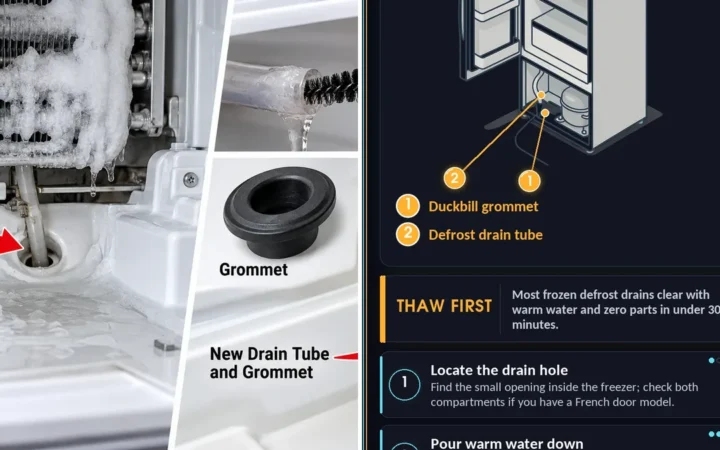
One thing I’d flag while you’re already back there checking coils and vents: if you notice water pooling under the unit or dripping from the freezer floor, that’s usually a separate drain issue rather than an ice problem, and it’s worth ruling out early since a clogged defrost drain can eventually affect freezer temperature too. Our guide on refrigerator leaking water on floor walks through that separately if it applies.
If You Need the Exact Specs for Your Model
Every LG refrigerator model has slightly different target temperature ranges and component locations, so if you’re not sure what’s normal for your specific unit, pulling the actual service manual is worth the five minutes. Our library of refrigerator service repair manuals has manufacturer documentation you can search by model number, which is more reliable than guessing at spec numbers from memory.
Bottom line: before you assume the ice maker itself is failing, confirm the freezer is actually holding temperature. In my experience, that one check resolves the majority of “less ice than usual” complaints without needing a single replacement part.

Written by Keith Schneerer
Certified Appliance Tech · Founder, RemoveAndReplace.com
Keith has spent 30+ years repairing machines, starting as a military mechanic and later maintaining food processing equipment before moving into appliance repair. He founded RemoveAndReplace.com to share field-tested repair advice.
More about Keith →