Pull the rubber anti-splash baffle out of the drain opening, rinse it, and reseat it — that fixes an InSinkErator garbage disposal draining slowly more often than any other single step. I check it first every time before I even think about pulling the trap.
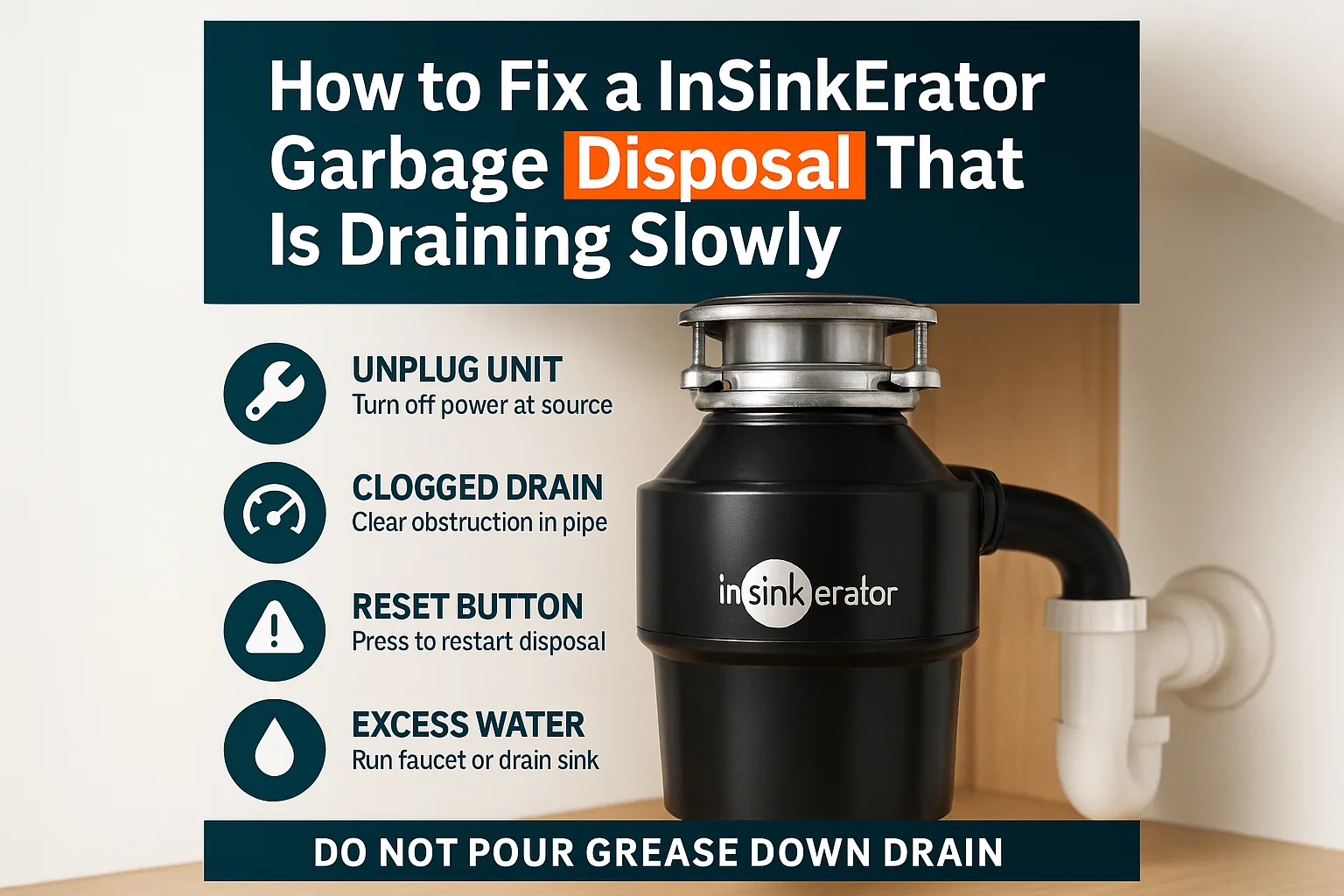
Pull the rubber anti-splash baffle out of the drain opening, rinse it under hot water, and reseat it. It’s free and takes five to ten minutes, and it solves this most of the time.
- Check the disposal’s own baffle before blaming the P-trap — it traps food more than people give it credit for
- A two-basin test tells you in under a minute whether the clog is in the disposal or farther downstream
- A cracked or corroded P-trap runs $8-15 to replace at any hardware store — hardly worth a plumber’s visit
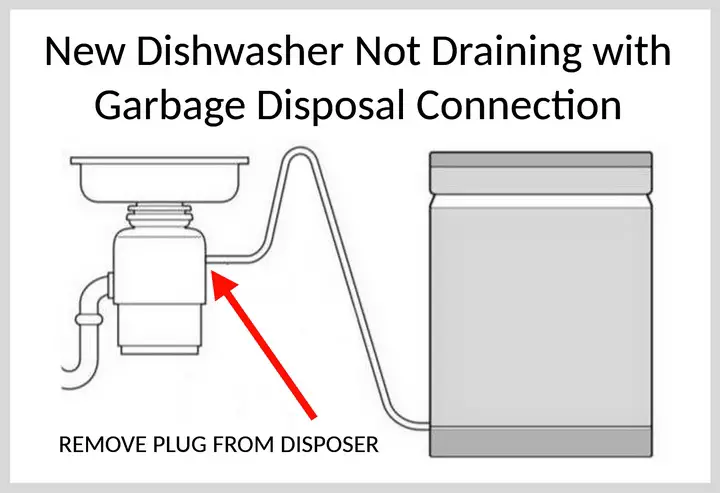
- Just installed a new unit? Check the dishwasher knockout plug before anything else
- There’s a genuinely rare cause involving the sink flange that almost nobody talks about
Is the Clog in the Disposal or Farther Down the Drain Line?
Most people assume the P-trap is clogged, grab vinegar and baking soda, and go to work under the sink before ever checking the disposal itself. The two-basin test saves you from tearing into the wrong part of the system — it’s the same triage habit that stuck with me from 11 years spent repairing commercial food service equipment, long before I ever wrote a word about home appliances. Turn on the disposal with water running and watch how the sink drains. If it empties slowly but steadily, the restriction is probably inside the unit — most likely the rubber anti-splash baffle. If water backs up and just sits there, or a double-bowl sink backs up on both sides at once, the clog is farther down in the P-trap or the branch line. If a dishwasher ties into the same disposal, run that too. Water backing up through the dishwasher alone usually points somewhere else.
| Cause | Likelihood | Fix Cost | DIY Time |
|---|---|---|---|
| Clogged anti-splash baffle | Most common | Free | 5-10 min |
| P-trap or drain line clog | Common | Free-$10 | 20-30 min |
| Dishwasher knockout plug left in | Occasional (new installs) | Free | 5 min |
| Trimmed sink flange blocking vent | Rare | Free-$10 | 15 min |
Once you know which side of the system you’re dealing with, the next step is straightforward.
This video walks through pulling the baffle, checking the trap, and testing the drain afterward — the same sequence worth running on a real repair job. Watch it once before you start and you’ll skip most of the guesswork.
The Sink Drains Slow, But the Disposal Sounds Fine
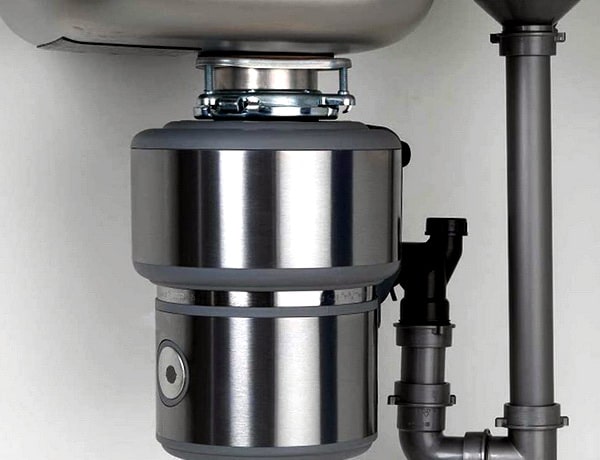
If the two-basin test pointed at the disposal, check the anti-splash baffle first. It’s the black rubber flapper sitting at the top of the grinding chamber, and it’s the most common reason a healthy InSinkErator garbage disposal draining slowly starts acting up. Unplug the unit, reach in with needle-nose pliers, and pull the baffle straight up and out.
Most of the time it comes out caked with a gray paste of ground food, coffee grounds, and grease. That buildup chokes the drain opening without ever jamming the grinding blades. That’s why the disposal still runs fine and sounds normal even while the sink barely drains. This happens across almost every current InSinkErator model — Badger, Evolution, even older 1/3-horsepower units — because they all use the same style of splash guard. Honestly, that friction-fit design is a flaw InSinkErator has never bothered to fix — a baffle that actually vented instead of sealing itself tight wouldn’t pack solid nearly this often. And grab it with needle-nose pliers, not channel-locks — scratched sink bowls are a common result of reaching for the wrong tool on this (trust me on this one).
- Unplug the disposal at the outlet under the sink
- Reach into the chamber with needle-nose pliers and pull the baffle straight up
- Rinse it under hot water and work the slots clean with an old toothbrush
- Press it back into its groove and plug the unit back in
Skip the chemical drain cleaner on this one. Pouring a caustic cleaner into a disposal that grinds food waste won’t touch a clog that’s mechanical, not greasy, and it’s hard on the rubber baffle itself. You’ll spend $8-10 on a bottle that does nothing and wear down a part in the process. InSinkErator’s own clogged disposal troubleshooting guide backs this up, if you want the manufacturer’s version next to mine.
If yours is humming instead of spinning, that’s a different problem. I’ve covered how to fix a humming garbage disposal separately, and it’s rarely tied to slow drainage on its own.
Notice I keep saying “sounds fine.” If the disposal hums, strains, or trips the breaker while this happens, skip ahead to the pro section below. If it runs normal and the sink is just slow to empty, keep reading.
Both Bowls of a Double Sink Are Slow, or Water Just Sits There
If the disposal side checks out clean and the sink is still slow — especially if a double-bowl sink is sluggish on both sides — the restriction is downstream. It’s almost always in the P-trap under the sink or the branch line right after it. A standard kitchen P-trap holds close to a quart of standing water at all times. That’s why a partial clog upstream turns into a sink that drains in slow motion instead of stopping outright. The trap is already full, so anything extra has nowhere fast to go.
- Set a bucket under the trap to catch what’s inside it
- Loosen the slip-nut fittings on both ends by hand or with channel-lock pliers
- Pull the trap free and dump it into the bucket
- Clear it out with a straightened wire hanger or a cheap trap brush
- Reassemble the fittings hand-tight, then snug them another quarter turn
- Run hot water for a minute to confirm it drains clean
What comes out is usually a solid plug of coffee grounds, congealed grease, and eggshell fragments. These are small enough to get past the disposal but heavy enough to settle out once the water slows down going around the U-bend. Budget 20-30 minutes the first time. Once you’ve done it, it’s closer to ten. If the trap is cracked or corroded, a new one runs $8-15 at any hardware store — hardly worth calling a plumber for that.
None of this fits a brand-new install, though. That’s its own problem.
Only the Dishwasher Backs Up After a New Install
If you just installed a new InSinkErator and only the dishwasher backs up into the sink — not the sink running slow on its own — check the knockout plug in the dishwasher inlet port first. Every new disposal ships with a plastic plug seated there to keep the shipping crate dry. If it doesn’t get knocked out during install, the dishwasher has nowhere to drain. Find the inlet nipple on the side of the disposal, knock the plug out with a screwdriver and hammer, and let it fall into the grinding chamber, where it’ll grind up harmless on the next cycle.
Still Slow After Cleaning Everything? The Rare Cause Almost Nobody Talks About
This next cause is rare enough that most repair techs go their whole career without seeing it. On some installs, the factory sink flange or splash guard fits so tightly against the sink opening that it blocks the small amount of air venting that’s supposed to happen around the mount. Without that venting, you get a soft air-lock that slows the drain in a way that looks exactly like a clog. Plunging or cleaning the trap does nothing, because nothing is actually blocking the pipe.
Trimming a sliver off the factory guard with a utility knife lets air move again, and the “clog” disappears almost instantly. The whole fix takes about fifteen minutes. If you’ve already cleaned the baffle and the trap and it’s still draining slow, this is the next thing to check before assuming you need a whole new mount.
Always unplug the disposal — don’t just flip the wall switch off — before you reach a hand or tool anywhere near the grinding chamber. A stuck switch is rare, but it’s not a repair worth losing a finger over.
None of the fixes above require taking the disposal off the mount. Call a plumber if:
- You’ve cleaned the baffle and the trap and it’s still draining slow
- Water is leaking from the mounting seal itself, not just draining slow
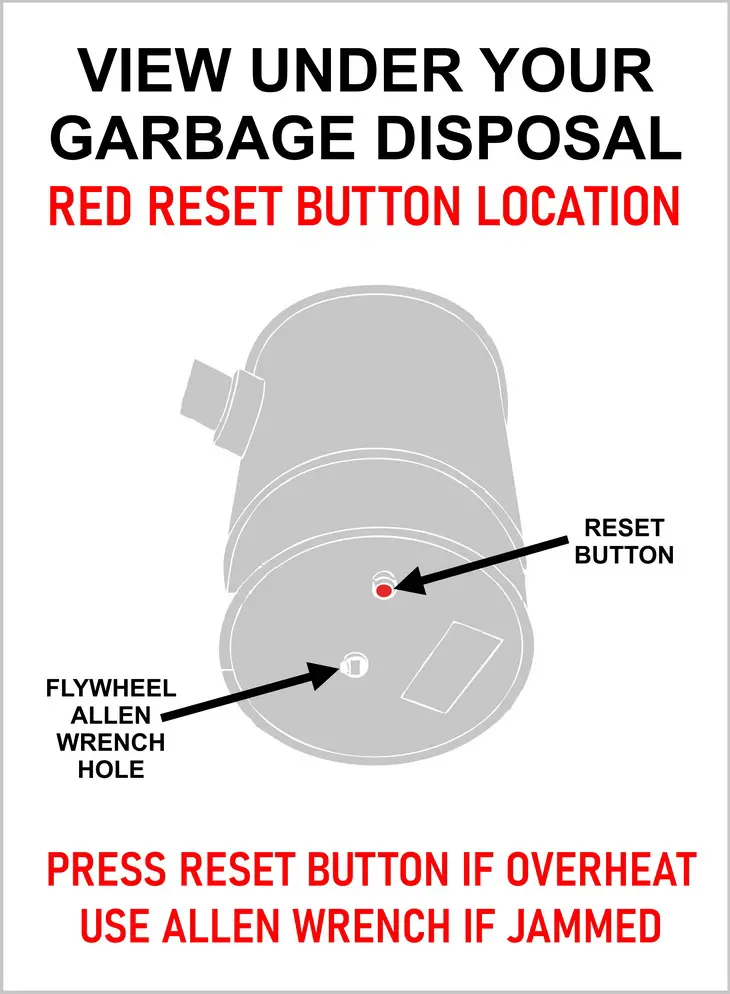
- The unit hums, clicks, or trips the breaker when you run it
A basic disposal service call runs $100-150 in most areas; a full replacement with labor is usually $200-350. If you’re on your third cleanout this year, replacing it outright might just be less hassle — worth a look at the best garbage disposals to buy and install yourself before you spend another weekend under the sink.

How to Keep This From Coming Back
Run cold water for 15-20 seconds after every use. Cold water keeps grease solid, so it gets ground and flushed instead of coating the chamber walls. Once a month, grind a handful of ice with a few citrus peels. It scrubs the walls and knocks loose whatever’s starting to build on the baffle. Keep fibrous stuff — celery, corn husks, onion skins — plus big batches of coffee grounds and eggshells out of it entirely. Those two are the repeat offenders behind most InSinkErator garbage disposal draining slowly complaints.
For another walkthrough of this exact problem, AppliancePartsPros has a solid one. The same troubleshooting logic works on other appliances, too — a dehumidifier running but not collecting water is rarely the compressor. It’s almost always something blocking the airflow or drain path, same story as this.
Frequently Asked Questions
Why is my InSinkErator garbage disposal draining slowly even after I clean the baffle?
Check the P-trap next — it’s the second most common spot for this problem. If that’s clean too, don’t rule out the rare air-lock cause from a too-tight sink flange before you call a plumber.
Is it safe to pour Drano down a slow InSinkErator disposal?
No. Chemical drain cleaners are made to break down organic slime and grease clogs, but this blockage is usually packed food debris jammed against a mechanical part, not slime — the cleaner just sits in the trap doing nothing useful, and repeated use can break down the rubber baffle faster than normal wear would. Clean the baffle by hand instead and save the money.
How can I tell if the clog is in the disposal or the drain line?
Run the disposal with water going and watch the drain speed. Steady but slow usually means the disposal side. Water that just sits there, especially on both sides of a double bowl sink, means the clog is farther down in the P-trap or branch line.
Can a clogged garbage disposal cause my dishwasher to drain slowly too?
Yes, if they share the same drain line. If you just installed a new disposal, check the knockout plug before you assume the worst. That plastic piece stops dishwasher water cold if it’s still in there.
How often should I clean my garbage disposal to prevent slow draining?
Run ice and a few citrus peels through it about once a month, and flush every load with cold water for 15-20 seconds afterward. That habit alone prevents most of what’s covered here.
Keep this one bookmarked for next time.

Written by Keith Schneerer
Certified Appliance Tech · Founder, RemoveAndReplace.com
Keith has spent 30+ years repairing machines, starting as a military mechanic and later maintaining food processing equipment before moving into appliance repair. He founded RemoveAndReplace.com to share field-tested repair advice.
More about Keith →