Watch what the flame does the moment you let go of the knob. That one detail sorts this repair faster than any part swap. A pilot that drops out in seconds and one that survives until 3 a.m. are two different problems with two different fixes.
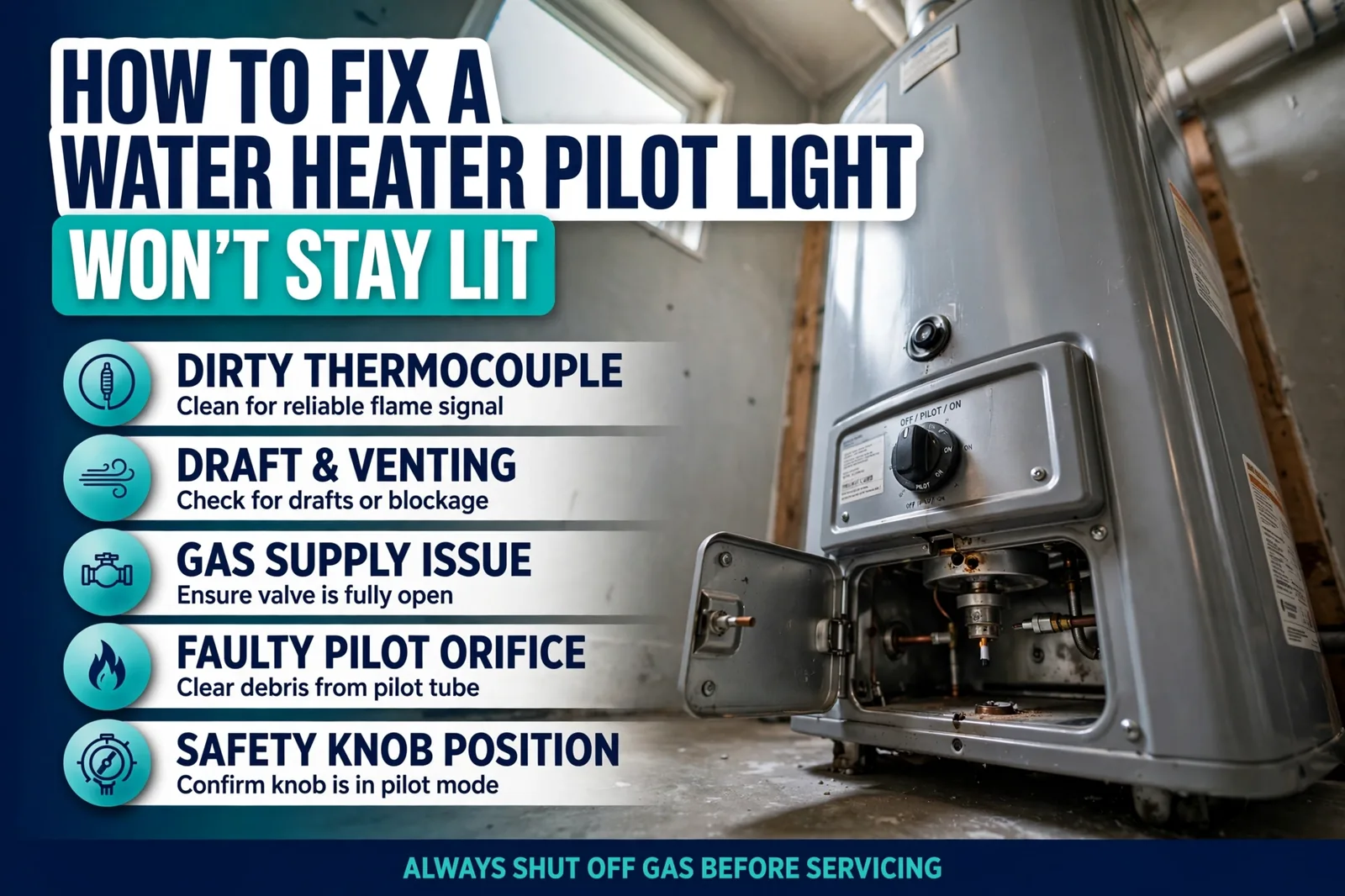
When a water heater pilot light won’t stay lit the moment you release the knob, the thermocouple usually isn’t heating enough to hold the gas valve open. If it dies minutes or hours later, suspect drafts, a tripped safety cutoff, or a clogged pilot. Test the part before buying one.
- Note when the flame dies, because instant and delayed failures point to different parts.
- A multimeter millivolt check tells you whether the thermocouple is actually bad.
- Yellow, sooty, or rolling flames are a stop-and-call situation, not a cleaning job.
Does Your Pilot Die the Second You Let Go, or Later?
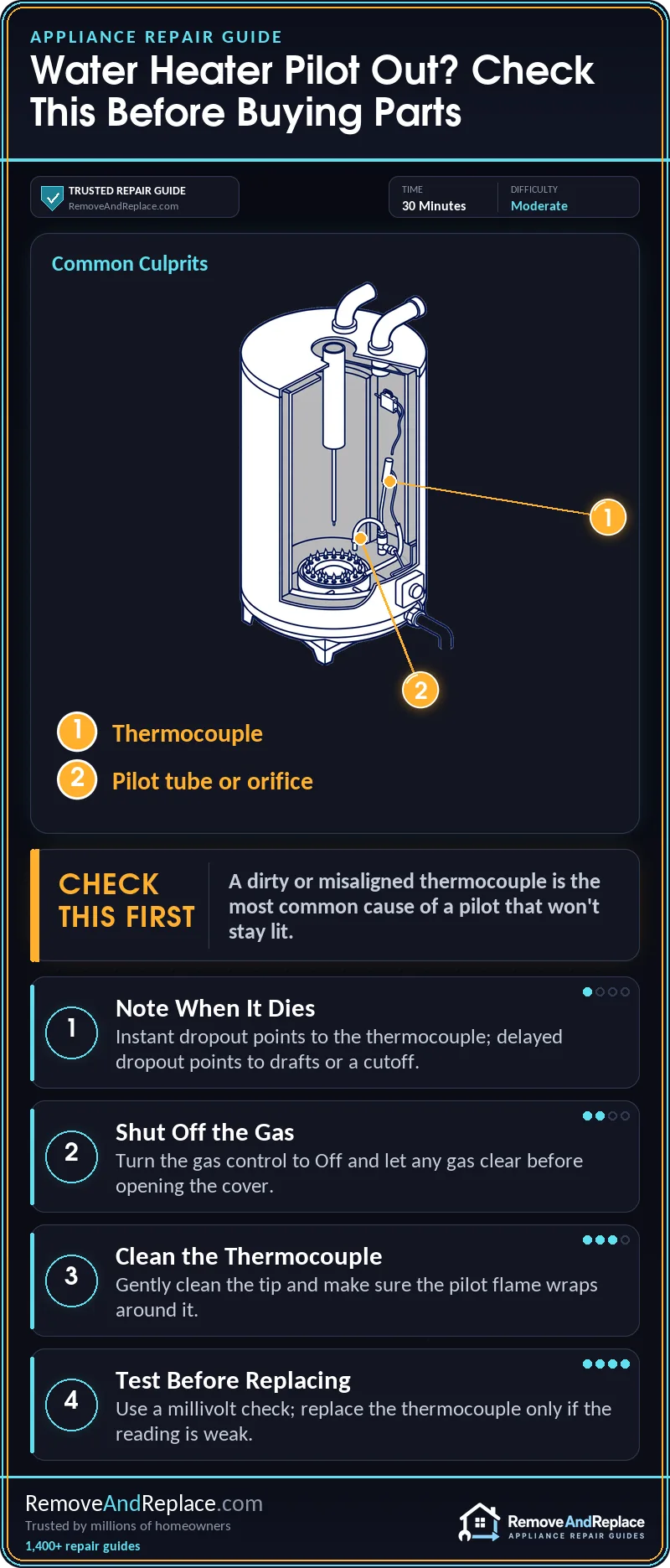
When a water heater pilot light won’t stay lit right at the knob, the thermocouple is the usual suspect. It’s a thin probe that sits in the pilot flame, makes a tiny bit of electricity when hot, and tells the gas valve to stay open. Cold tip, no signal, valve closes. I trust that logic because flame-proving works the same way on the commercial equipment I repaired over 11 years in food service. The fixes are cheap or free: clean it, reseat it, or replace it. If the pilot holds fine and then quits after minutes, hours, or overnight, the thermocouple is probably innocent and you’re hunting a draft or a safety cutoff. I used to assume it was the part and swap it before testing, and that’s how you end up with a new thermocouple and the same dead pilot. For a wider list of common failures, our water heater troubleshooting tips are a good side read.
Before you test anything electrical, including the millivolt check below, unplug the heater or switch off its breaker if it has any powered controls, and shut off the gas as described in the warning below.
What’s Actually Going Wrong Inside
The most common wrong assumption is that a pilot that won’t stay lit always means a dead thermocouple. Often it’s a dirty one, or one that has drifted out of the flame. Here’s how the causes rank.
| Cause | Likelihood | What to do |
|---|---|---|
| Dirty or misaligned thermocouple | Most common | Clean the tip and make sure the flame wraps it |
| Worn-out thermocouple | Common | Test it, then replace if weak |
| Clogged pilot tube or orifice | Common | Clean gently, no poking |
| Draft or backdraft | Common | Find the air source and check the flue |
| Tripped thermal cutoff or clogged flame arrestor | Less common | Clear the dust; call a pro if it keeps tripping |
| Failing gas control valve | Rare | Professional replacement |
Two quick observations narrow it down. First, look at the flame. A steady blue flame that wraps the thermocouple tip is what you want. A weak, wavering, or yellow flame points to airflow or a dirty pilot, and the thermocouple may be fine. Second, ask whether it only fails when the wind blows or a bathroom fan runs. That’s a draft, not a part.
PartSelect lays out a similar split between thermocouple and gas-flow problems in its pilot-won’t-stay-lit repair guide, if you want a second set of diagrams.
This video walks through the pilot assembly and relighting process on a gas water heater. It’s useful for seeing where the thermocouple sits relative to the flame, and what a properly lit pilot looks like before you start cleaning or replacing anything.
Shut off the gas supply before you work on any gas component, and if you smell gas, leave and call your gas utility. Turn the heater’s gas control knob to Off and wait for any gas to clear before you open the access cover. Do not relight anything until the thermocouple is back in place and snug.
Pilot Dies as Soon as You Release the Knob
Start with the free fix. Most of the time the tip is just coated with soot or scale and can’t heat properly.
- Turn the gas control to Off and close the gas shutoff valve to the heater. Let it sit so any leftover gas clears.
- Remove the burner access cover. Find the thin copper line running from the gas control valve down to the pilot assembly. That’s the thermocouple.
- Clean the tip. Wipe it with fine emery cloth or fine steel wool until it’s bright. Don’t use anything coarse.
- Check the pilot tube. If the opening looks clogged, clear it gently with compressed air. Don’t poke it with a pin or drill it out. An enlarged orifice gives you a bad flame and a bigger problem than the one you started with.
- Check the position. The tip should sit in the pilot flame so the flame wraps the end. If the bracket has shifted, nudge it back. Snug the thermocouple nut at the gas control, but don’t crank it.
- Restore the gas only now, and relight following the instructions on the heater’s label. Hold the knob in for as long as the label says, usually about a minute.
I used to let go early, thinking the flame looked steady. It takes time for the tip to heat, and releasing too soon looks exactly like a bad part.
Still dropping out? Test before you buy. You’ll need a multimeter on a millivolt setting and a thermocouple test adapter that threads between the thermocouple and the gas control.
- Shut off the gas and let the heater sit, then thread the test adapter between the thermocouple and the gas control.
- Connect the meter set to millivolts to the adapter.
- Relight the pilot and hold the knob in while you read the meter.
- Compare the reading to your manual. Commonly cited healthy readings are in the neighborhood of 25 to 30 millivolts, but your model’s value rules.
A reading well below spec with a clean tip and a good flame means a weak thermocouple. A decent reading with the valve still dropping out doesn’t settle it, though. That’s an open-circuit reading, and it can look fine while the thermocouple falls apart under load. A closed-circuit (under-load) test is what tells you more. If the voltage drops under load, the problem can be on the valve side, such as a restricted internal filter, a weak operator, or seat leakage, and that is a job for a professional. If you replace the thermocouple, try to match the length of the original, since a longer one may not sit correctly, though extra length can be coiled up; it’s generally an inexpensive part. Family Handyman covers the relighting and replacement steps in its pilot light guide.
Pilot Stays Lit, Then Quits Minutes or Hours Later
OK, so the thermocouple holds while you’re standing there, but the pilot is dead by morning. That narrows it down. This is rarely the thermocouple.
Drafts first. A bathroom fan, a dryer in the same closet, a garage door opening, or a gust down the flue can all snuff a small flame. Hold an incense stick near the draft hood opening while the burner runs. The smoke should be pulled in. If it blows back at you or the flame flutters outward, you have a backdraft or a blocked flue, and that goes to a professional.
Then the safety cutoffs. Many newer gas heaters have flammable-vapor protection, with a flame arrestor at the bottom that can clog with lint and dust. Garage-installed heaters collect plenty of it, desert dust included. A clogged arrestor starves the burner of air, and the heater shuts itself down. Some models also have a thermal cutoff that trips if flame rolls out, and a few have a reset button; check the manual for yours. If it trips more than once, don’t keep resetting it. Repeated trips usually point to an airflow or combustion problem, but a failing thermostat, a faulty switch, or overheating from sediment can also cause them, so call a professional. If you’ve been running the thermostat high, our water heater temperature settings page covers sensible targets.
When the water heater pilot light won’t stay lit only after the heater has been running a while, dirt in the gas line or a weak gas supply is also possible, but I’d rule out the draft and the arrestor first.
Yellow, Sooty, or Rolling Flame: Stop Here
A yellow or sooty flame, black marks above the burner, or flame spilling out of the burner area means combustion air or venting isn’t right, and carbon monoxide becomes a real concern. Don’t clean around it and relight. Leave the heater off and get it inspected.
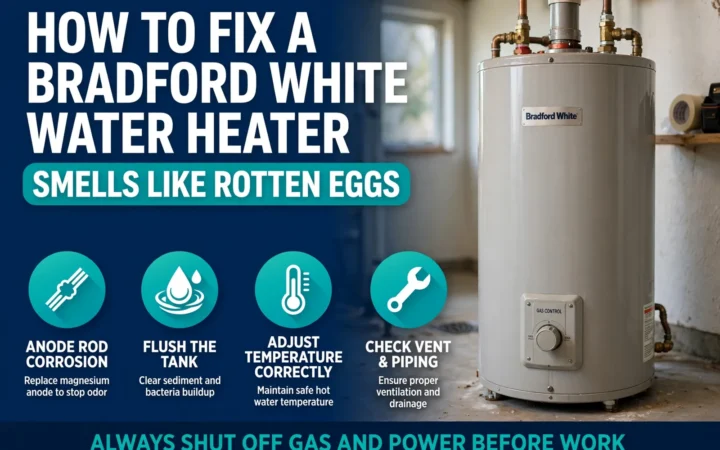
A faint rotten-egg smell around the burner itself is a gas-smell situation, so follow the warning above. If it only shows up at the hot tap, that’s a different issue; we cover it in our Bradford White rotten egg smell article. Gas control valve replacement is also a job I’d hand off.
Keeping It From Happening Again
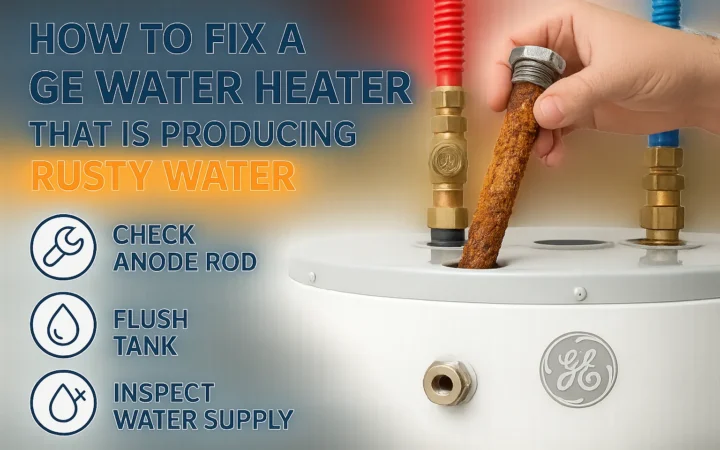
Vacuum the dust from around the base and burner area once or twice a year, more often in a garage. Flushing the tank occasionally also helps; see how to drain a water heater. If the tank is old and the water runs rusty, like in this GE rusty water case, don’t pour money into the pilot assembly. Weigh the age of the tank first.
FAQ
Why does my pilot go out the moment I release the knob?
The thermocouple isn’t sending enough signal to keep the gas valve open. Usually it’s dirty, out of the flame, or worn.
How long should I hold the knob in?
Follow the label on your heater, which typically calls for around a minute. I used to let go as soon as the flame looked stable, and that’s a common reason people think they need a new part when they don’t.
Can wind or a draft really blow out a pilot?
Yes. A pilot flame is small, and a bathroom fan, a gust down the flue, or a dryer pulling air from the same space can disturb it. If smoke spills back out of the draft hood, treat it as a venting problem and not a nuisance.
Is it safe to keep relighting it?
Don’t make a habit of it. If a clean relight fails again, stop repeating it and work out why. Also let any gas smell clear first, and if you smell gas, leave and call your gas utility.
Can I tell the thermocouple is bad without a meter?
Not reliably. In my experience, the flame holds only while the knob is pressed and the tip looks fine, which is a strong hint, but a millivolt check is what actually confirms it.
Is it worth fixing an older heater when the water heater pilot light won’t stay lit?
If the cause is a thermocouple or a dusty arrestor, yes, those are cheap repairs. If the tank is leaking or badly corroded, put the money toward a new heater.
Test first, buy second. Most of these end with a clean tip and a flame that wraps it correctly.

Written by Keith Schneerer
Certified Appliance Tech · Founder, RemoveAndReplace.com
Keith has spent 30+ years repairing machines, starting as a military mechanic and later maintaining food processing equipment before moving into appliance repair. He founded RemoveAndReplace.com to share field-tested repair advice.
More about Keith →