Ceiling Fan Direction: Which Way Should It Turn in Winter and Summer?
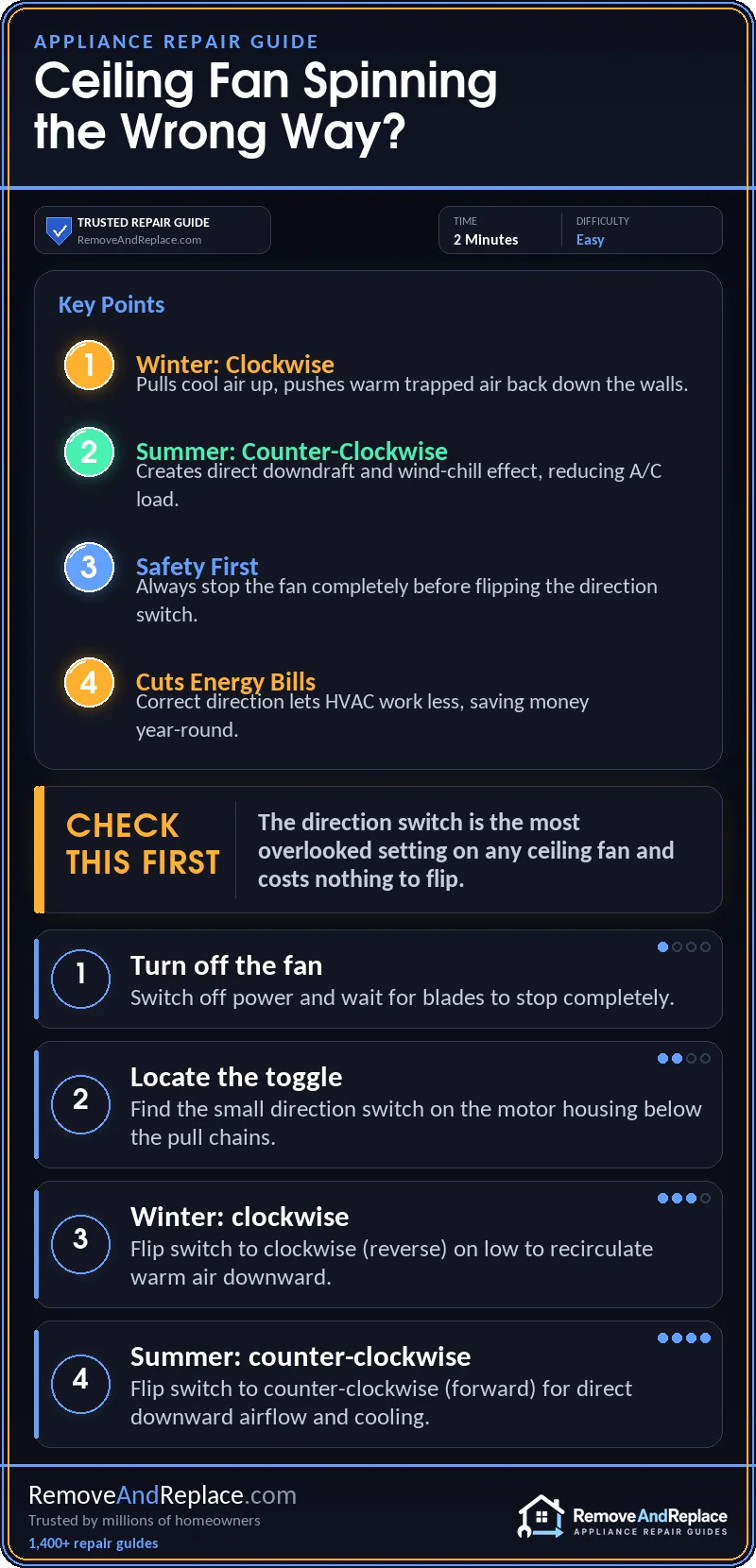
If you’ve got a ceiling fan and you’re just letting it spin whichever way it happens to be set, you’re missing out on one of the cheapest comfort upgrades in your house. The short answer: in Winter, your ceiling fan should turn clockwise (reverse) on low speed to push warm air back down into the room. In Summer, it should turn counter-clockwise (forward) to create a direct downdraft that cools your skin. After years of hands-on repair work, I can tell you this one setting gets overlooked more than almost anything else on a ceiling fan.
- Winter setting: fan blades turn clockwise on low speed to pull cool air up and push trapped warm air back down.
- Summer setting: fan blades turn counter-clockwise to create a direct downdraft and a wind-chill cooling effect.
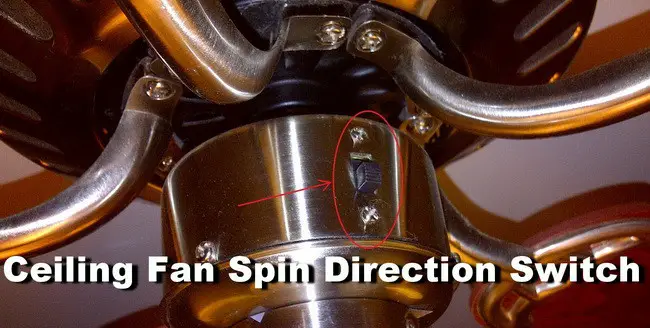
- The direction switch is almost always a small toggle on the motor housing, just below or beside the pull chains.
- Always turn the fan off and let the blades stop completely before flipping the direction switch by hand.
- Running the fan in the correct direction can genuinely take some load off your heater or A/C, since you’re not fighting the airflow.
Which Way Should a Ceiling Fan Turn in Winter?
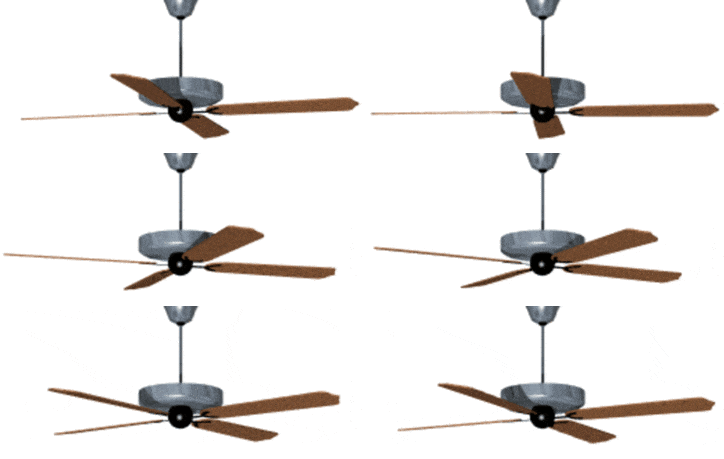
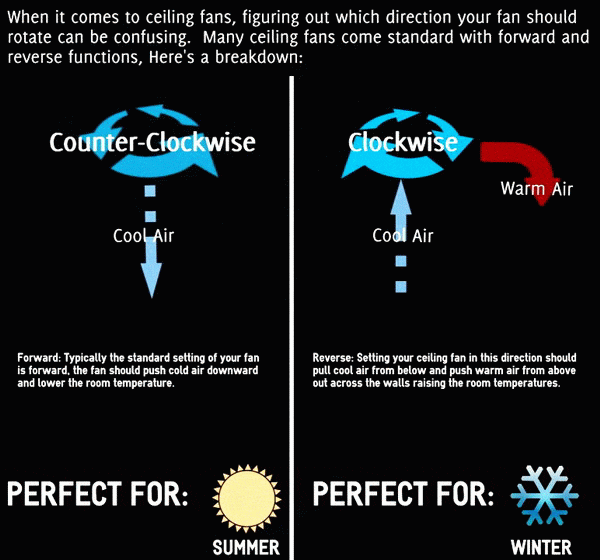
When you’re standing under the fan looking straight up at it, the blades should be turning clockwise — that’s the “reverse” setting on most fan switches. Running the fan this way pulls cooler air up from the floor and gently pushes the warm air that’s collected near the ceiling back down along the walls, rather than blowing straight down on you. Since heat naturally rises, that warm layer near the ceiling is doing you no good sitting up there — reverse mode is just recirculating it. I always check the direction switch first when a room feels drafty or uneven in Winter, because it’s such an easy fix and people forget the switch even exists. Because the fan isn’t blowing directly on you, you don’t get that cooling wind-chill sensation while the room is already cold, and your heating system doesn’t have to work as hard to keep the space feeling even. The Hunter Fan direction guide covers this same reverse-mode logic if you want a manufacturer’s take on it.
If your fan is spinning the wrong direction for the season, there’s a small toggle switch on the metal motor housing that flips the rotation. Turn the fan off completely and wait for the blades to stop before you reach up to flip it — the switch sits close enough to the blades that a still-spinning fan is a real hand hazard. You gotta let it come to a full stop first, otherwise you’re just asking for a sore hand.
Which Way Should a Ceiling Fan Turn in Summer?
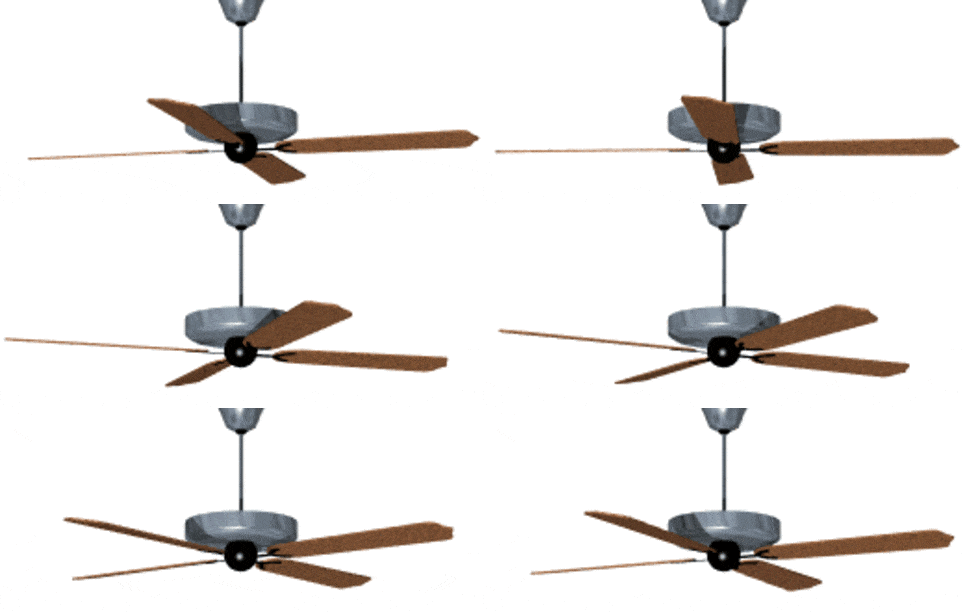
For Summer, you want the opposite: blades turning counter-clockwise, or “forward.” This setting maximizes the airflow that gets pushed straight down into the room, which is what actually cools you off — not the air temperature itself, but the wind-chill effect moving air has against your skin. I’d rather flip this switch than crank the A/C down another few degrees, since the wind-chill effect does most of the work for free. You can find the full breakdown on how to set your ceiling fan to spin the correct direction for Summer if you want the seasonal setup covered separately. Running counter-clockwise in hot weather means your A/C isn’t fighting the room’s air on top of cooling it, which is where the real electric-bill savings comes from. This is one of the cheapest comfort upgrades in the whole house.
What Does the Full Direction Chart Look Like?
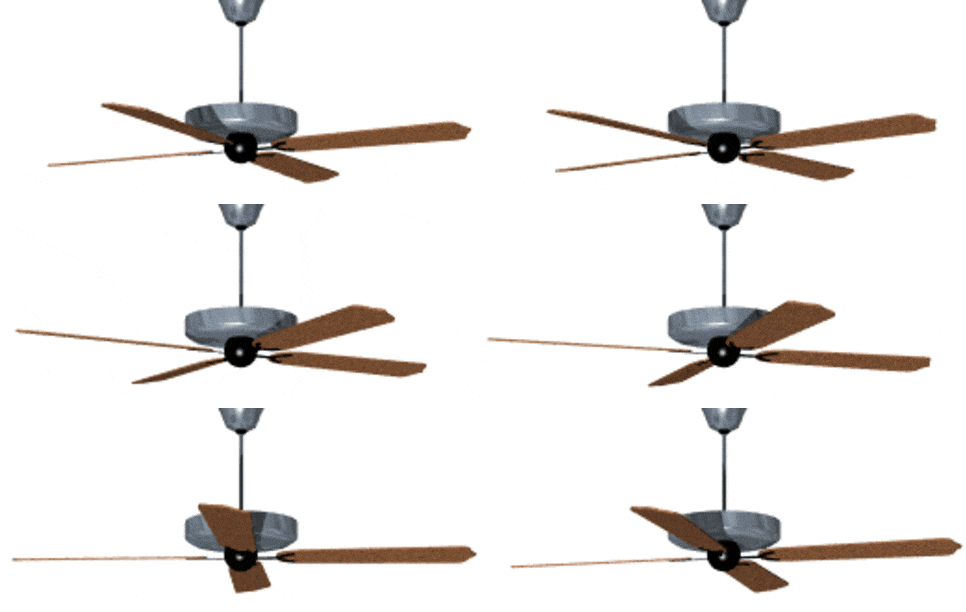
If you want to keep both settings straight at a glance, this side-by-side breaks down blade rotation against the season and the intended airflow pattern. I keep a chart like this in mind whenever I’m double-checking a fan, since the seasons flip and it’s easy to forget which way you set it last.
Why Does Blade Pitch Change the Airflow Direction?
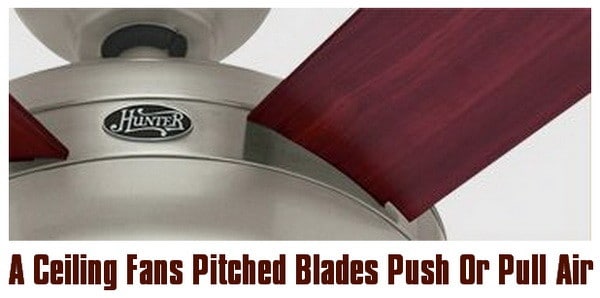
A ceiling fan’s blades aren’t flat — they’re pitched at an angle, which is the entire reason spinning them one way pulls air up and spinning them the other way pushes air down. That pitch angle also determines how much airflow force the fan actually produces. I’ve come across plenty of fans where the blade pitch is so shallow it barely moves any air at all, and I always point that out to folks who complain their fan feels weak no matter the setting. Some fans are built for aggressive air movement (think garage or patio fans), while most household ceiling fans are pitched for a gentler, more even mix of the room’s air rather than a strong direct breeze.
How Do You Switch a Ceiling Fan’s Direction?
The direction switch is almost always a small slider or toggle mounted on the motor housing, usually near where the pull chains come out. On a few models it sits slightly above the housing instead. Either way, the process is the same: shut the fan off, let the blades come to a full stop, then flip the switch. I never touch that switch until the blades are fully stopped, no matter how slow they’re spinning — it’s kinda tempting to just reach up while it’s coasting, but it’s not worth the risk. Once you’ve flipped it, turn the fan back on and confirm the blades are spinning the direction you expect before you walk away. If your fan also has multiple speed settings you’re not using, it’s worth learning how to change fan speeds on a ceiling fan so you’re getting the most out of both settings together. And if the direction switch is on a remote instead of the housing, that’s usually covered under ceiling fan remote control programming and replacement.
Does Ceiling Fan Direction Actually Save You Money?
It won’t replace a working heater or A/C, but running the fan in the right direction does take some of the workload off both systems, since you’re not fighting trapped warm air in Winter or wasting cool air that isn’t reaching you in Summer. I wouldn’t expect the fan alone to carry the whole job, but I’ve found it takes a real edge off the workload once the direction’s set right for the season. The Constellation energy efficiency guide and Home Depot’s ceiling fan direction guide both back up the same basic logic — it’s a small adjustment, but it’s a genuinely useful one, and it costs nothing but flipping a switch twice a year.
Which Fan Direction Do I Actually Need Right Now?
If you’re running the heater, set the fan to clockwise on low. If you’re running the A/C or it’s just hot in the house, set it to counter-clockwise. Check the direction switch on the motor housing, confirm the rotation against the charts above, and you’re done. I check mine twice a year, right when the seasons flip, and honestly it only takes a few seconds once you know where the switch is — no tools, no cost, just two flips a year.

Written by Keith Schneerer
Certified Appliance Tech · Founder, RemoveAndReplace.com
Keith has spent 30+ years repairing machines, starting as a military mechanic and later maintaining food processing equipment before moving into appliance repair. He founded RemoveAndReplace.com to share field-tested repair advice.
More about Keith →

Our Muskoka place is very hot upstairs in the winter while the downstairs is cool and comfortable. The rooms are equipped with ceiling fans. What direction should the fans be going I. The winter to make the rooms upstairs cooler. Thanks
This is the best answer. Plus showing the direction of the fan in animation is awesome, because I didn’t know whether it was looking up or down at the fan. Thanks!
I always if it is super cold turn the fan off. I love ceiling fans and will run them anytime of year but 45 degrees and lower too cold. I don’t reverse anymore. I’m okay with ceiling fans being non reversible. I’d also prefer 2 or 3 speeds. If the fan only has 1 speed it doesn’t work for me.
Phoebe,
A ceiling fan will not directly make the air quality less healthy. A ceiling fan can however move more dust around causing more unhealthy things to be in the air. However it may be a better option to install another A/C instead of 15 new ceiling fans. If a new A/C is out of the question and ceiling fans are the way you are going to go, make sure you purchase the most efficient fans possible. You may also be able to purchase commercial ceiling fans at 15 at a time and optimized to save electricity and move more air.
-RR
We have an open area, 7,000 Square Feet and our current air conditioner is not enough to cool down the temp. I am thinking to put up about 15 ceiling fans to make our participants feel more comfortable instead to install large unit of air con. Some of my college thinks that ceiling fans will cause the quality of air turn to be bad inside the area, is this true? please reply, thanks.
Sincerely,
Phoebe