Set your water heater to 120°F (49°C) and you land in the spot most manufacturers and safety groups point to — hot enough for showers, dishes, and laundry, cool enough that a slip of the tap won’t send someone to urgent care.
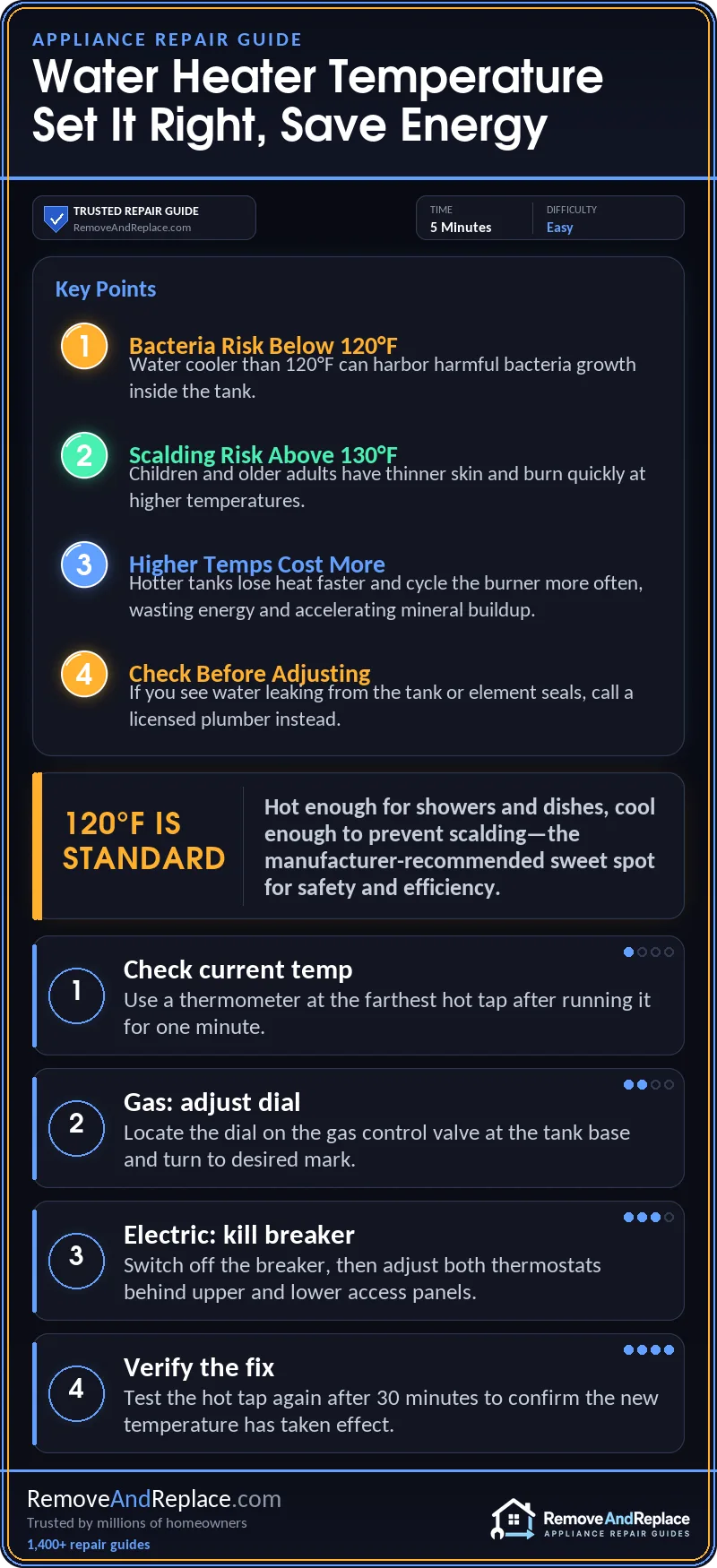
- 120°F (49°C) is the standard recommendation for most households.
- Gas heaters: one dial on the gas control valve at the bottom of the tank, often marked “Warm / Hot / Very Hot” instead of degrees.
- Electric heaters: kill the breaker first, then adjust both thermostats behind the upper and lower access panels.
- Check your starting point at the hot tap farthest from the heater with an instant-read thermometer.
- Need hotter stored water? Run the tank hotter and add a thermostatic mixing valve so the fixtures still deliver about 120°F.
What Temperature Should A Water Heater Be Set To?
Why 120°F specifically? Two things pulling against each other. Water that sits below roughly 120°F gives certain bacteria a comfortable place to multiply inside the tank. Water above about 130°F starts to burn skin quickly, and quickly is not an exaggeration — children and older adults have thinner skin and get hurt at temperatures an adult would call merely uncomfortable. That middle number is the compromise that keeps both risks low, and it’s what most modern tanks are marked at from the factory. After 30-plus years of hands-on repair work, it’s still where I leave nearly every tank I touch (including my own).
There’s a third thing riding on that same dial: how hard the heater has to work. A tank held at 140°F loses heat through its shell around the clock at a faster rate than one held at 120°F, and it cycles the burner or elements more often to make up for it. More cycles means more wear and more standby energy burned just keeping the tank hot. In hard-water areas, hotter water also drops mineral scale out of solution faster — which is how you end up with a sediment layer baking onto the bottom of the tank.
One exception worth knowing before you touch the dial: a few older dishwashers without internal heating boosters, and some specialty appliances, ask for a hotter supply. I’d read the appliance manual before deciding the water heater is the thing that needs to change. A.O. Smith’s guidance on water heater temperature settings is a good sanity check if your unit’s markings are vague.
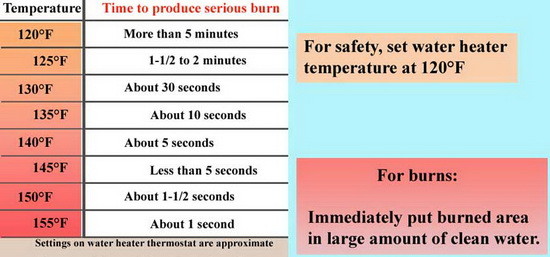
That’s the chart I point at when somebody tells me 140 just feels better.
How To Check Your Current Water Temperature
Don’t adjust anything until you know where you’re starting. I use a cooking thermometer for this, the same instant-read probe from the kitchen drawer — you don’t need to buy anything special.
- Pick the hot tap farthest from the water heater. That’s the one that tells you what the rest of the house actually gets.
- Run it on full hot for about a minute so you’re not measuring water that’s been sitting in the pipe.
- Fill a cup or bowl straight from the stream and put the thermometer in immediately.
- Write the number down. If you’re more than about 5 degrees off 120°F in either direction, I’d adjust.
Expect the tap reading to come in a little under the tank setting — heat is lost in the pipe run. That’s normal, and it’s worth accounting for before you decide the heater is set wrong.
Before you adjust either type of heater: if you see water weeping from the tank body, seeping from around an element gasket, or pooling on the floor under the unit, stop here. A leaking tank is a licensed plumber’s call, and no temperature setting fixes it.
How To Adjust A Gas Water Heater
The gas control valve is the boxy assembly near the bottom of the tank where the gas line comes in. The temperature dial is on the face of it. If the burner has just been running, give it a few minutes before you get in close — the tank shell and draft hood stay hot long after the flame drops out.
- Find the dial. Some are marked in actual degrees; plenty are marked “Warm,” “Hot,” and “Very Hot,” sometimes with a letter scale or a line of hash marks.
- Mark where it’s currently set so you can always get back. I put a pencil tick on the valve body right at the pointer — fussy, maybe, but a vague dial is easy to lose your place on.
- Move the dial one increment toward the setting you want — one hash mark, one letter, or on a dial with no markings at all, about the width of the pointer. On a vague “Warm / Hot” dial, the notch just past Warm typically lands near 120°F, but treat that as a starting guess rather than a finished setting.
- Wait three to four hours, then measure at the tap again.
- Still off? Move one more increment in the same direction from your new position, wait, and measure again. Two or three rounds of mark, move, wait, measure will get most unmarked dials inside a few degrees of target. I’d rather sneak up on the number than overshoot and chase it back down.
On older units with a standing pilot, turning the control all the way to OFF or PILOT can drop the flame. If that happens, follow the relighting sequence printed on the label pasted to the tank — that sequence is manufacturer-specific and it’s not the place to improvise. If the pilot won’t stay lit at all afterward, you’ve gotta look at the thermocouple, not the temperature setting. And if you smell gas near the unit or hear hissing at the control valve, leave it alone and call someone qualified.
How To Adjust An Electric Water Heater
Electric tanks hide their thermostats, which is why people assume they can’t be adjusted. They can — there’s just a panel in the way, and I’d budget about ten minutes for the whole job.
- Shut off the breaker feeding the water heater. Not the switch, the breaker. These are 240-volt circuits, and I confirm the power is dead with a non-contact tester before a screwdriver goes anywhere near that panel (trust me on this one).
- Unscrew the metal access panel on the side of the tank. Most residential units have two — upper and lower.
- Peel back the fiberglass insulation and the plastic safety cover behind it. Wear gloves — that insulation is miserable on bare hands, and the tank shell behind it stays hot long after the elements cycle off.
- Find the small dial on the thermostat face and turn it with a flat screwdriver to your target number.
- Repeat at the second thermostat. Both must be set to the same temperature. Mismatched thermostats are the most common reason an electric tank behaves strangely — lukewarm water, short hot showers, elements fighting each other. If you only adjust the one you can reach easily, you’re gonna be right back at this panel next week.
- Put the covers, insulation, and panels back, restore power, and wait before you measure. I give it four hours.
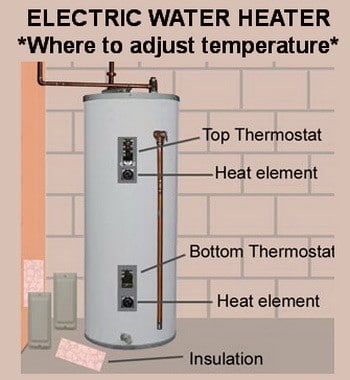
While you have the upper panel off, take note of that red reset button on the upper thermostat. That’s the ECO, or high-limit cutoff, and it kills power to both elements if tank water gets dangerously hot. If yours has tripped, don’t just keep pushing it — when an electric water heater reset button keeps tripping, it’s telling you a thermostat is stuck closed or an element has shorted to the tank. There’s also a full walkthrough on changing the temperature on an electric water heater if you want the step-by-step with more photos.
When 140°F Actually Makes More Sense Than 120°F
This is the part most temperature articles skip. There are real situations where a plumber will deliberately run the tank hotter — and then install a thermostatic mixing valve (also called an anti-scald or tempering valve) on the hot outlet to blend it back down to about 120°F before it reaches the fixtures.
Why bother? Two reasons. First, a household with someone immunocompromised may be advised to keep stored water hotter to discourage bacterial growth in the tank. Second, a hotter tank effectively stores more usable hot water, because every gallon of 140°F water gets stretched further once it’s blended with cold. A family that keeps running the tank dry mid-shower sometimes gets more relief from this setup than from a bigger heater.
The other thing worth knowing is thermal stacking. If your house draws small amounts of hot water frequently — a hand wash here, a quick rinse there — the burner or lower element fires briefly each time, and heat keeps collecting at the top of the tank where the outlet is. The result is water noticeably hotter than the dial says, even though nothing’s broken. It’s kinda counterintuitive the first time you measure it. If your tap temperature climbs above the setting during the busy parts of the day, stacking is a likely explanation. One Hour Heating & Air Conditioning covers adjusting hot water heater settings if you want a second opinion before you commit to a valve install.
Troubleshooting: Water Still Too Hot Or Too Cold
If you’ve set the dial correctly and the water still isn’t right, the setting was never the problem. My first instinct was always to turn the dial up when somebody said they kept running out of hot water — more heat, more hot water, right? Then I learned that a shower going cold halfway through is almost never a temperature-setting issue, and cranking the dial just masks the real fault for a week while burning more energy. So now I work through these instead, in this order:
- Rumbling, popping, or kettle-like sounds — sediment on the tank bottom. Water gets trapped under the mineral layer and flashes to steam. I’d drain a few gallons off the bottom valve and see if it quiets down.
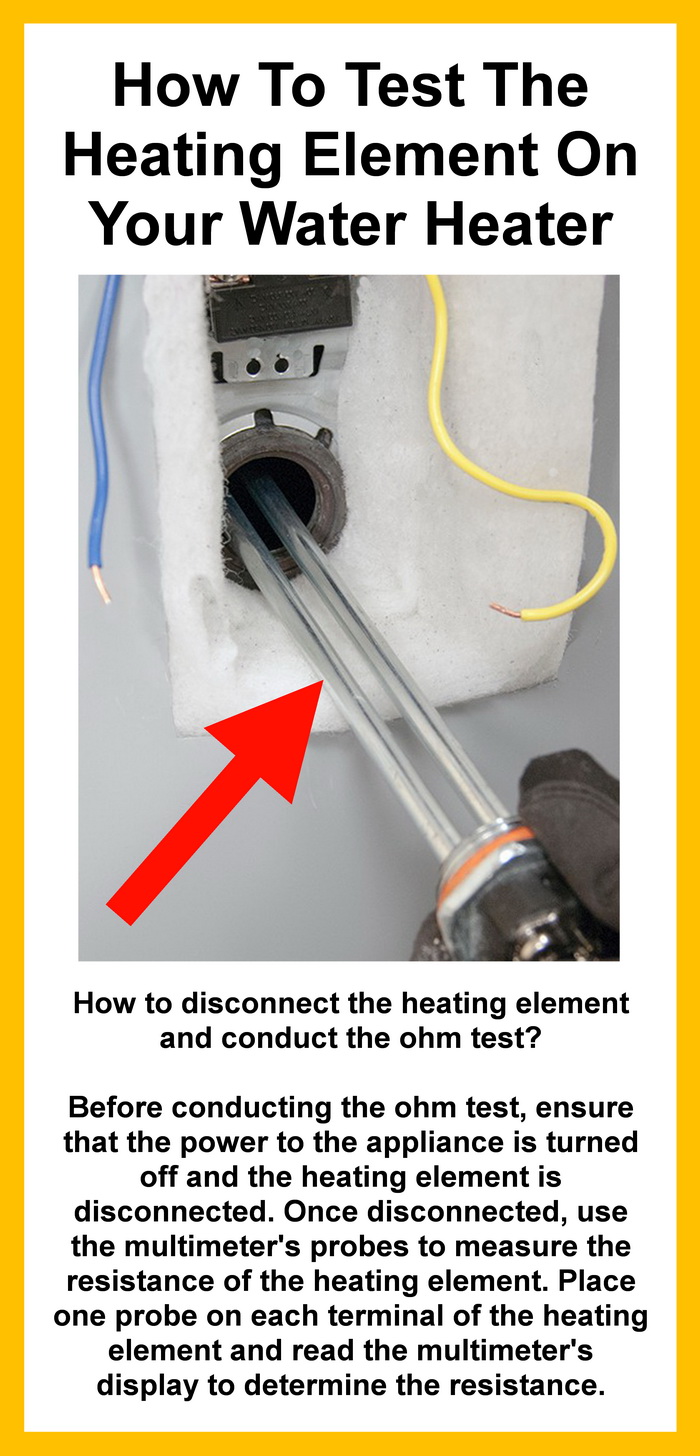
- Hot water runs out faster than it used to — on an electric unit, that’s often a dead lower element, so the upper one is doing all the work. Testing takes five minutes with a multimeter, and I keep one on the bench for exactly this; here is how to test the heating element on your water heater.
- Temperature swings wildly between showers — mismatched or failing thermostats on an electric tank, or a broken dip tube letting incoming cold water short-circuit straight to the outlet.
- Gas pilot keeps dropping out — thermocouple or a dirty burner assembly, not the thermostat.
- No hot water at all on an electric unit — see the ECO reset button covered in the electric section above.
Maintenance That Keeps The Setting Accurate
A dial only means something if the tank underneath it is in decent shape. Three jobs I’d put on the calendar, and none of them take long:
- Flush a few gallons from the drain valve every six to twelve months. Hard water areas, lean toward six. This is the single maintenance item that most affects whether your heater actually delivers the temperature you set.
- Check the anode rod once a year. It’s the sacrificial magnesium or aluminum rod that corrodes so the steel tank doesn’t. Replacing a rod costs a small fraction of replacing a tank.
- Test the T&P relief valve occasionally by lifting the handle and letting it snap back, confirming it moves freely and reseats. Have a bucket ready and keep your hands clear of the discharge pipe (I stand off to the side for this one, every single time — what comes out is scalding).
Bottom Line
120°F is where I’d leave it for most households. Pair that with a yearly flush and an anode rod check and I’d expect the heater to hold that setting for years. If the water still won’t behave after you’ve done all of it, that’s when I’d bring in a plumber or electrician.

Written by Keith Schneerer
Certified Appliance Tech · Founder, RemoveAndReplace.com
Keith has spent 30+ years repairing machines, starting as a military mechanic and later maintaining food processing equipment before moving into appliance repair. He founded RemoveAndReplace.com to share field-tested repair advice.
More about Keith →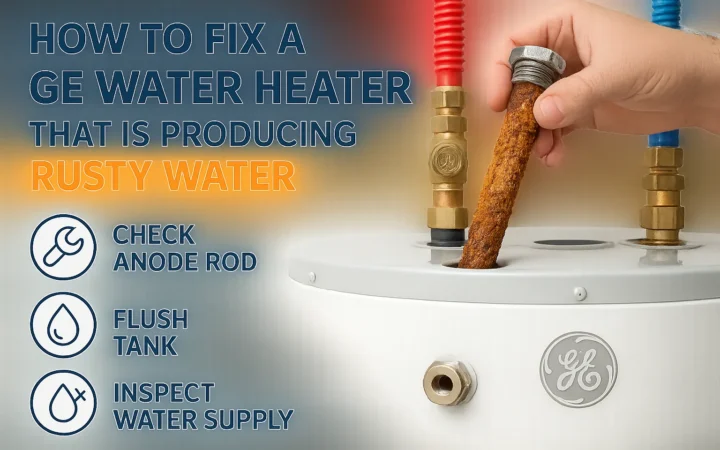

What temperature setting is the best to set a water heater when there is a bathroom in the back of the house?