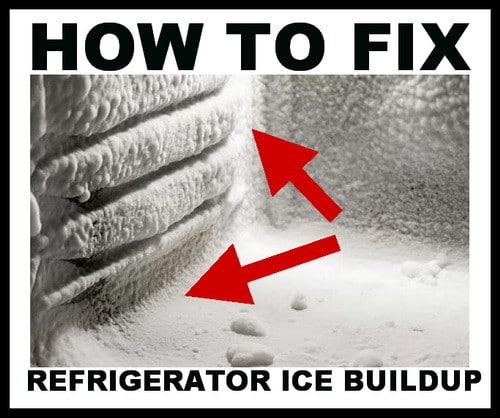
If your refrigerator has ice build up on the inside, here are a few things you can check yourself to fix the issue. A common cause for ice buildup is a faulty door seal. If a refrigerator has a bad door seal, the outside air will pass into the fridge and cause the ice build up problem you are experiencing.
Another cause for this could be that the door hinges are loose or not attached properly leading to outside air entering your fridge/freezer. Check to be sure the door hinges are tight and are attached and aligned properly.
Some other simple things you can do to try and remedy this issue are easy to try yourself. You can try moving the refrigerator away from the wall a little bit more to give it extra room for the air to circulate. The heat from the compressor should have sufficient room to dissipate. If the refrigerator is too close to the wall problems will occur.
Another solution may be to clean the vents on the back or below the fridge as they can be clogged with dust and debris. Clogged vents cause air circulation problems that lead to many common refrigerator problems.
If the ice build up is only happening in the freezer, the freezer drain is probably clogged. To unclog the drain you should first unplug the unit from the wall. Remove the freezer covers to expose the frozen drain. Pour hot water down into the drain hole until you see the water dripping into the drain pan under the refrigerator.
How to remove and replace the door gasket on a refrigerator
How to unclog a refrigerator defrost line
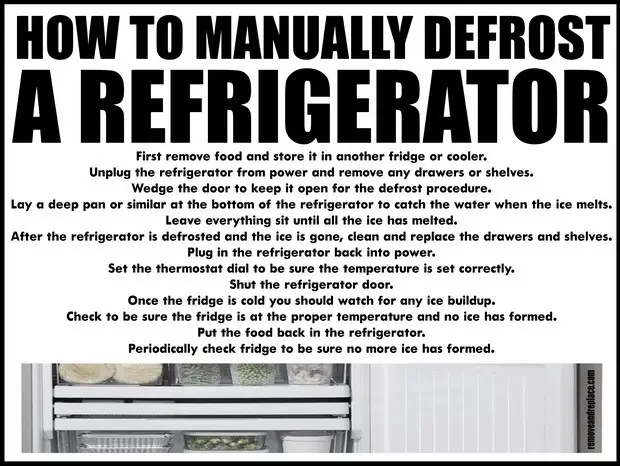
Modern day refrigerators are frost free. They should not have to be defrosted manually. If however you have an older refrigerator or you want to manually defrost your newer fridge, here is how:
- First remove food and store it in another fridge or cooler.
- Unplug the refrigerator from power and remove any drawers or shelves.
- Wedge the door to keep it open for the defrost procedure.
- Lay a deep pan or similar at the bottom of the refrigerator to catch the water when the ice melts.
- Leave everything sit until all the ice has melted (this is a good time to wipe down the inside of fridge).
- After the refrigerator is defrosted and the ice is gone, clean and replace the drawers and shelves.
- Plug in the refrigerator back into power.
- Set the thermostat dial to be sure the temperature is set correctly.
- Shut the refrigerator door.
- Once the fridge is cold you should watch for any ice buildup.
- Check to be sure the fridge is at the proper temperature and no ice has formed.
- Put the food back in the refrigerator.
- Periodically check fridge to be sure no more ice has formed.
If your refrigerator is still under warranty, make sure to call the company you purchased it from or call the 800 number of the company who manufactured it and schedule service. Find out if it is under warranty before doing repairs as doing repairs yourself could void the warranty on the unit.
NOTE: At times a powdery type of ice will form in your refrigerator if it is being repeatedly opened and closed. Keep this in mind as your only issue may be this and no repairs are necessary.
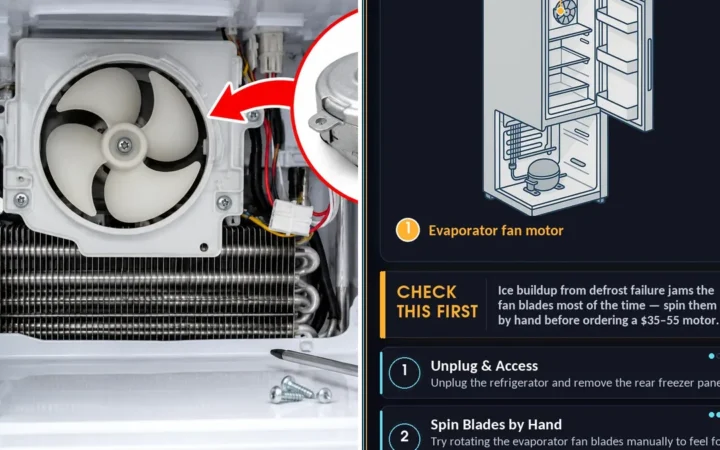
Other things causing this issue could be a defrost timer, bad temperature sensor or bimetal defrost thermostat. In this case you will most likely need to call a repair person or find someone who is experienced with diagnosing appliance faults and removing and replacing components.
Have experience with ice buildup in your freezer refrigerator? Please help out everyone who seeks information on this page by leaving a comment below.

Written by Keith Schneerer
Certified Appliance Tech · Founder, RemoveAndReplace.com
Keith has spent 30+ years repairing machines, starting as a military mechanic and later maintaining food processing equipment before moving into appliance repair. He founded RemoveAndReplace.com to share field-tested repair advice.
More about Keith →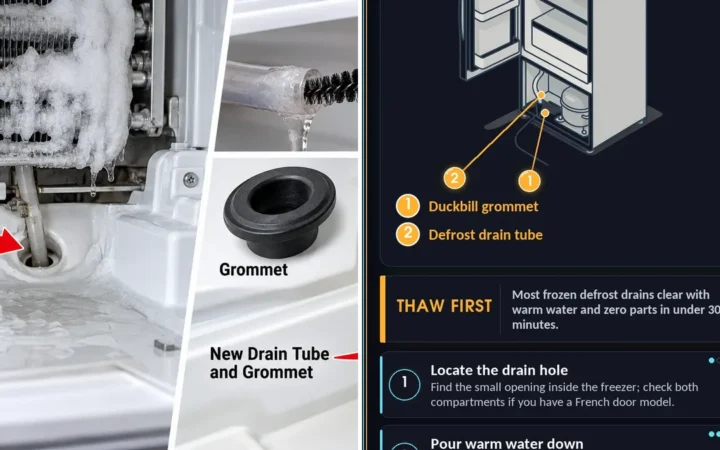
Needed to defrost an older refrigerator. My parents asked me to defrost their fridge for them while they’re on vacation. They’ve had the same fridge for the past thirty or so years, so they have to defrost it manually. I’ve never had to defrost the fridge, so these instructions will help me do it correctly. It’s a good thing that you listed instructions to set the thermostat dial to the correct temperature. I would have forgotten to do that right after plugging the refrigerator, so now I’ll remember to do that.
I think that a lot of times my fridge gets pushed back against the wall too much. It always seems that any issues always are from the simple things. I like that you give a lot of options to look at before I need to look for a repair guy.
ROSE,
Defrost the complete fridge freezer and go from there.
-RR
How can you get rid of the ice blockage once it’s already formed in the fridge? Should you let it melt or try to chip it away? You have great ideas on how to prevent it from happening again, but I need to know how to get rid of the ice that’s still in my freezer. It’s kind of a mess.
Are fridge say _15 and has ice on back on inside what best thing to do please
Deanna,
The ideal refrigerator temperature is 35°F (1.6°C)
-RR
Thanks for the tips! There’s a lot of ice buildup that’s been in my fridge for the past few years. I’ve always meant to do something about it, but I never knew how to go about defrosting a fridge myself. It’s good to know that all it takes is unplugging the fridge, letting the ice melt and drain from it, then reset the temperature to the correct settings. I didn’t know that the reason for all of that ice build up was caused by the settings that I use for my fridge. What’s the correct temperature for my fridge so that I can prevent any extra ice from building up? I would like to avoid having to manually defrost my fridge a second time if possible.