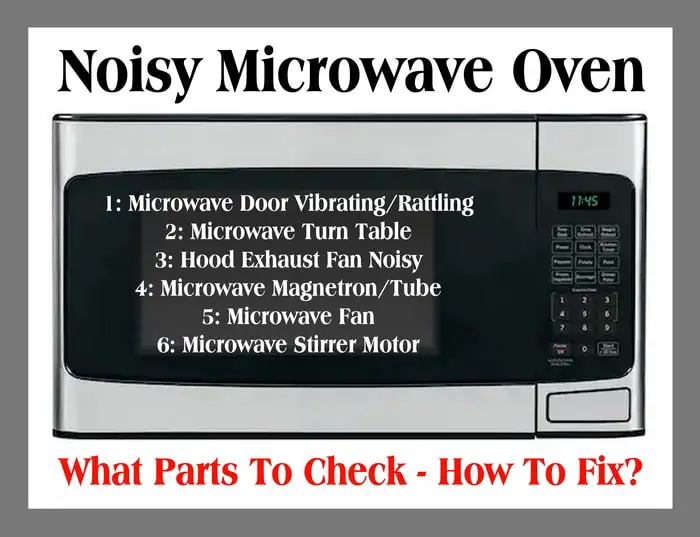
Before assuming a full Range Hood Motor Replace is needed, clean the grease off the impeller wheel and filters first — that free fix solves the problem more often than an actual dead motor does. If the motor still won’t spin freely, hums without turning, or shows no continuity on a multimeter after that, it’s genuinely time to replace it.
- A stuck damper or clogged duct can mimic a weak motor just as easily as grease buildup can.
- Test the motor for continuity before buying a replacement part.
- A matching housing shape doesn’t confirm a matching motor — check the tag.
- A weak capacitor or bad switch can look exactly like a dying motor.
- Budget under two hours once you’ve confirmed the motor really is the problem.
| Cause | Likelihood | Fix Cost | DIY Time |
|---|---|---|---|
| Grease-clogged impeller & filters | Most Likely | Free-$10 | 20 min |
| Stuck damper or duct restriction | Common | Free-$25 | 30 min |
| Weak run capacitor | Common | $8-20 | 20 min |
| Faulty fan speed switch | Less Common | $10-25 | 30 min |
| Blown thermal fuse | Occasional | $8-15 | 15 min |
| Motor actually failed | Less Common | $40-120 | 45-90 min |
Here’s What’s Actually Happening Inside That Hood
A range hood blower motor doesn’t usually die on its own — it’s almost always killed off slowly by something else in the system forcing it to work harder than it was built for. The motor is a sealed unit built around windings and bearings, and neither of those parts wears out just from spinning under normal load. What actually shortens its life is resistance: anything that makes the shaft fight to turn every time the fan switches on. Most homeowners never see this coming, because the hood keeps running right up until the day it doesn’t — the wear happens quietly in the background long before the fan actually stops turning. That drag doesn’t kill a motor overnight; it works through stages:
- Resistance forces the shaft to fight harder every time the fan switches on
- The extra load raises the operating temperature inside the windings
- That heat and the uneven load put ongoing stress on the bearings
- Over months or years, that steady strain cooks the windings or seizes the bearings solid
I’ve chased this same pattern on plenty of motors, going back to 19 years of Air Force aircraft maintenance work — resistance kills a motor slowly, then all at once. When a hood gets weak, loud, or stops pulling smoke, the motor is often the last domino to fall, not the first thing to check. Three things cause most of that drag inside a typical under-cabinet range hood:
- Grease-caked impeller blades
- A partially blocked or kinked duct
- A damper stuck half-open
The next section covers exactly what to look for before you spend a dime on a new one.
Is It Really the Motor, or Something Else?
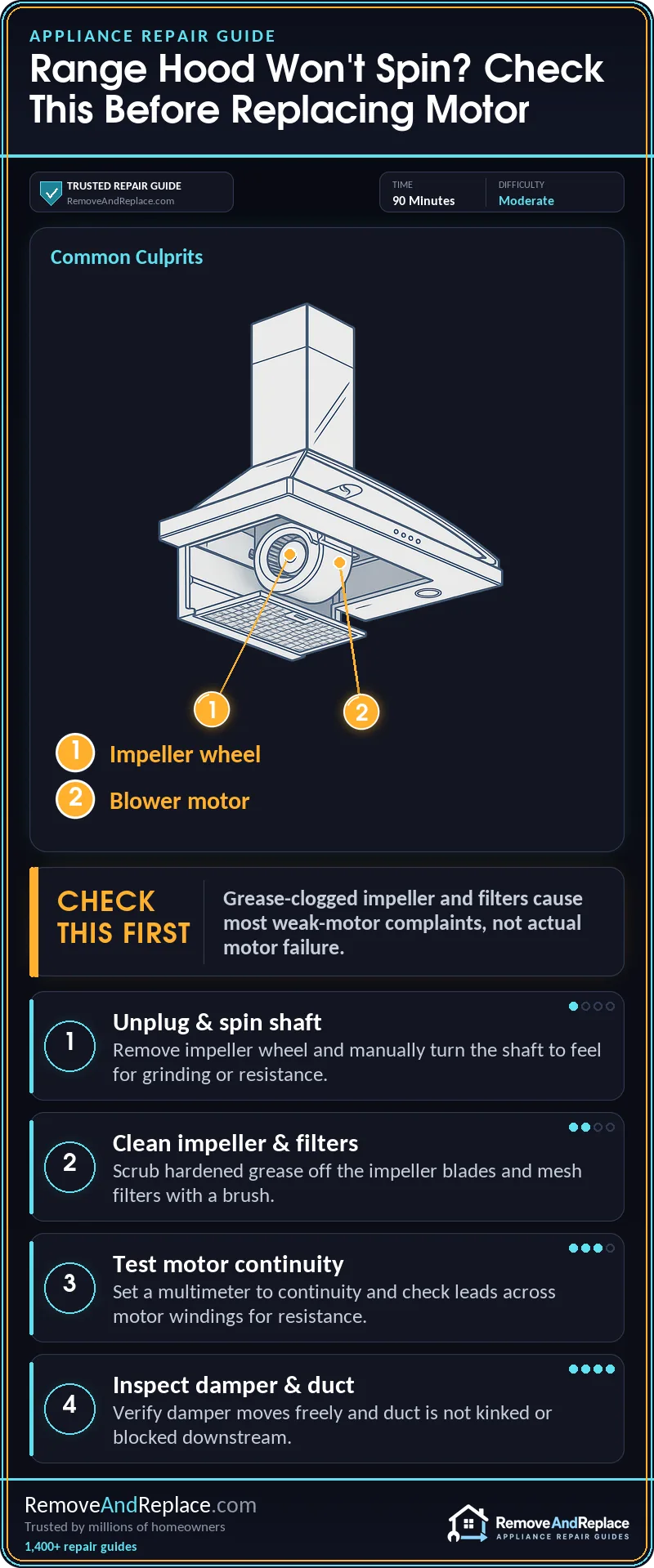
Before you spend money on a new motor, try this two-minute check. Unplug the hood, pull the wheel off the motor shaft, and spin the shaft by hand. If it spins freely and quietly — no grinding, no burning smell, no wobble — the motor probably isn’t your problem, and something upstream is stopping it from working the way it should. If the shaft feels stiff, gritty, or won’t turn at all, that points to a seized motor. A cheap multimeter set to continuity will tell you fast whether the windings are open (dead) or still intact. No continuity across the leads means the motor’s done, full stop.
For a broader rundown of what else can go wrong on these units, see this list of the ten most common range hood issues. Sears PartsDirect also has a solid walkthrough of the disconnect-and-swap process once the motor’s confirmed bad — their guide covers the basic wiring disconnect for most standard mounts.
What You’ll Find Once You Pull the Filters
When a range hood sounds strained or blows weak air, you’ll usually find a thick, amber-brown layer of hardened grease on the impeller wheel and the mesh filters in front of it. That buildup adds real drag to the motor shaft, so it works harder than it was built for and runs hotter with every cycle. If you can feel grease buildup on the blades with your fingers, or the wheel wobbles when you spin it by hand, start there before anything else.
This shows up most on hoods with washable aluminum mesh filters, not charcoal cartridges. The mesh traps grease right at the intake. If it isn’t pulled and washed every month or two, that grease film moves straight onto the impeller blades behind it. Standard 30-inch and 36-inch under-cabinet hoods from Broan, NuTone, and GE use this filter style, and they’re the ones that clog solid the most — often around the two-to-three-year mark for a household that cooks regularly. The grease hardens into a waxy, almost candle-wax texture on the blade edges. On a bad one, it’s heavy enough that the wheel is visibly out of balance when you spin it. That’s what causes the rattling, off-center vibration people mistake for a dying motor.
Pull the filters, soak them in hot water with dish soap or a degreaser, and scrub the impeller blades with an old toothbrush while the motor’s unplugged (trust me, this one’s oddly satisfying once the wheel’s actually clean). It’s a free fix, takes about twenty minutes, and it’s the first thing I check on every noisy or weak hood before I even consider the motor.
A Stuck Damper or Blocked Duct Can Fake a Dead Motor
The second most common reason a hood loses power or gets loud isn’t the motor either. It’s a backdraft damper stuck half-closed, or a duct run that’s kinked, crushed, or packed with years of grease and dust. A damper that won’t open all the way makes the motor push against resistance every time it runs, and that sounds a lot like a weak motor even when the motor’s fine. Pull the duct connector off the back of the hood and check that the metal flap swings freely. If it’s gummed up or bent, that’s your answer — and it costs nothing to fix.
If smoke and steam are lingering in the kitchen instead of actually getting pulled outside, that’s usually a duct or damper problem, not the motor, and it’s worth ruling out before you order any part at all.
Testing the Capacitor, Switch, and Thermal Fuse First
Many range hood motors use a permanent-split capacitor to get the shaft spinning. If that capacitor’s weak, the motor will hum, struggle to start, or run painfully slow — even though the windings are fine. That sounds a lot like a dying motor. Check the fan speed switch next. If the motor only runs on one speed, or won’t run on any speed but still hums, that points at the switch, not the motor. A blown thermal fuse, on hoods that have one, kills the motor completely with zero hum at all. Check that before you assume the worst.
The most common mistake I see: ordering a full motor and blower assembly the moment the fan gets weak or loud. Check these two things first:
- Test the run capacitor
- Test the old motor for continuity
Skipping both is an easy way to spend $40-120 on a part that was never bad — money down the drain when the real fix was a $12 capacitor. I used to replace the whole blower assembly automatically whenever a hood got noisy. Then I started testing capacitors first, and many of those swaps didn’t need to happen at all.
What the Actual Motor Swap Looks Like
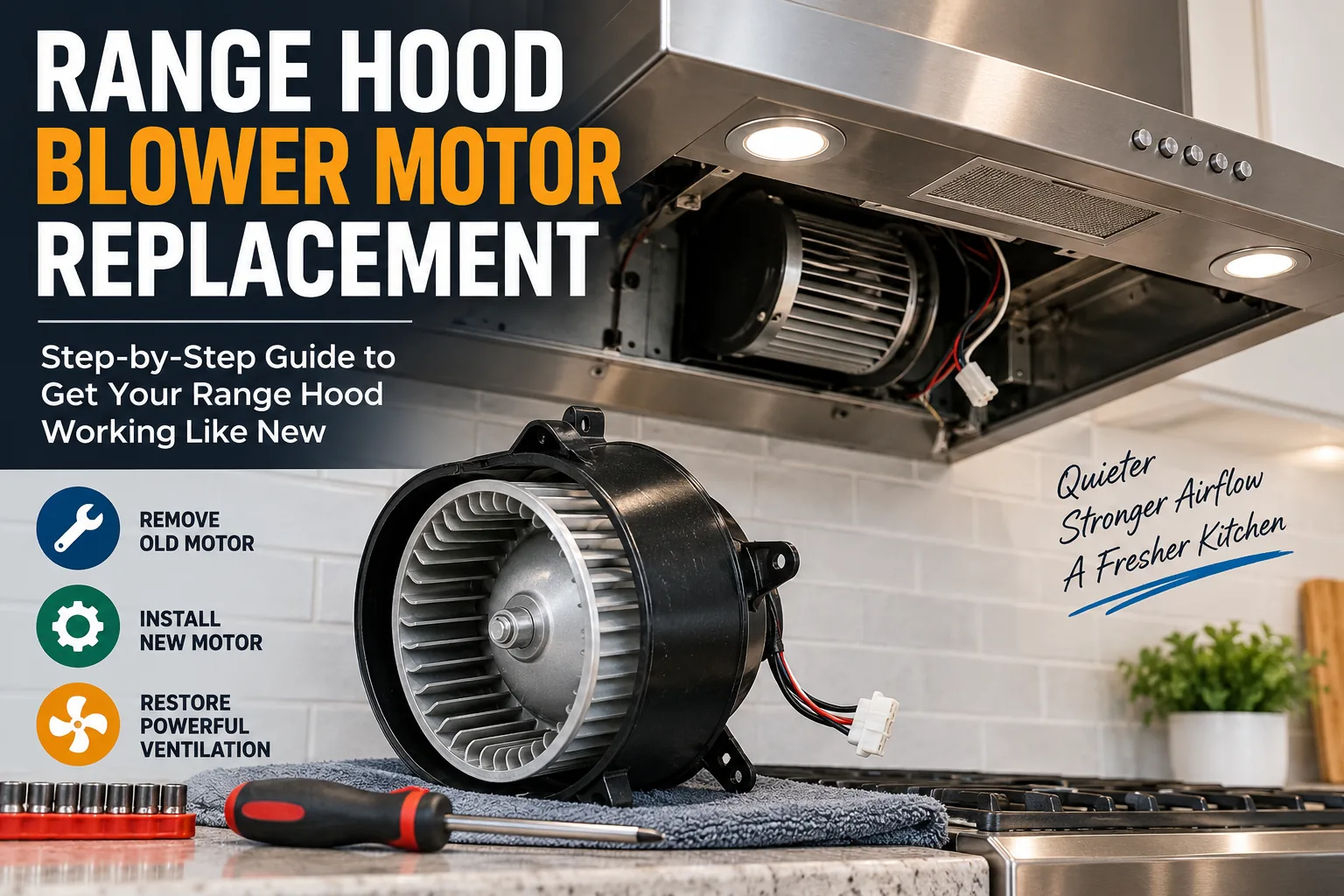
Once you’ve ruled out grease, dampers, ducts, capacitors, and switches, and the motor really is bad, the video below walks through the physical swap. It won’t match every brand’s hardware exactly, but the order stays close to this on almost every hood:
- Cut power and unplug the unit
- Pull the blower wheel off the motor shaft
- Remove the mounting bracket
- Disconnect the wire leads
- Set the new motor and wheel in place, and reverse the steps to reassemble
When It’s Actually the Motor
If you’ve cleaned the wheel, freed the damper, cleared the duct, and tested good on the capacitor, switch, and fuse — and the motor still won’t spin freely or hums without turning — it’s dead. You’ll usually get a burnt, slightly metallic smell if the windings cooked, or a dry grinding sound from the bearings if it seized. If you skipped the continuity check earlier, now’s the time to run it before you order the part.
How Do I Know Which Motor Actually Fits My Hood?
Housing shape isn’t enough to confirm a match, and this trips people up more than it should. Broan and NuTone share a lot of tooling on their under-cabinet housings. A blower wheel that looks identical between two model numbers can pair with motors that have different mounting bosses, shaft lengths, or even opposite rotation direction. I’ve seen a replacement wheel spin with almost no grip because the shaft diameter was a hair off — the wheel’s center hub never fully seated against the flat spot. It looked like a perfect match sitting next to the box. It wasn’t, once it was on the shaft.
Before you order based on a housing match alone, check the old motor’s tag for its voltage, RPM, and CFM rating. Confirm the shaft length and rotation direction too — clockwise or counterclockwise, viewed from the shaft end — against the replacement listing, not just the wheel shape. Frigidaire’s own replacement procedure shows how brand-specific the disconnect and mount steps get; their walkthrough uses a bracket configuration noticeably different from the Broan/NuTone style covered earlier.
The Range Hood Motor Replace Steps
Once you’ve confirmed the motor’s actually dead, the steps below walk you through the swap. If you haven’t ordered the part yet, RepairClinic’s motor and blower listings are a good place to check compatibility before you start.
Tools you’ll need:
- Phillips #2 screwdriver
- 1/4-inch nut driver
- Multimeter
- Phone camera, to photograph the wiring before you touch it
- Kill the power at the breaker — not just the wall switch. The switch doesn’t always cut power to every wire inside the housing.
- Remove the grease filters and access panel to expose the motor and blower wheel.
- Photograph the wire connections before disconnecting anything, then pull apart the wire nuts or connectors.
- Remove the mounting bracket screws and lift the old motor and blower wheel assembly out together.
- Transfer or swap the blower wheel onto the new motor shaft if it’s sold separately from the motor, matching shaft depth to the original.
- Mount the new motor, reconnect the wires exactly as photographed, and reinstall the filters and access panel.
- Restore power and test every fan speed before closing everything back up.
Whoever decided motor mounting brackets should be held on with three stripped-prone Phillips screws, in a spot you can barely fit a screwdriver into, needs to try this repair themselves. Budget 45 to 90 minutes the first time through. I can do this in under 30 minutes now, but there’s no shame in taking your time on the first one.
Always cut power at the breaker, not just the wall switch, before opening the hood housing. Some hoods route power to more than one wire inside, and the wall switch doesn’t always kill all of them.
How to Keep From Doing This Again
Pull and wash the filters every month or two if you cook regularly — it’s the cheapest insurance against this whole repair. Wipe the impeller wheel with a degreaser every few months instead of waiting for a rattle. Check that the damper swings freely while you’re already in there cleaning filters, and have a long duct run professionally cleaned every couple of years. Skip all of this for a few years and a free cleaning job turns into a $40-120 motor. If the hood still isn’t pulling its weight after all this, this range hood troubleshooting guide covers the rest of what can go wrong.
A replacement motor runs $40-120 depending on brand and CFM rating. A service call for this same repair typically runs $150-250. If you’re comfortable with a screwdriver and a multimeter, you’re saving $100 or more doing it yourself instead of paying someone else for a Range Hood Motor Replace you could handle in an afternoon.
- Call a pro if the hood is hardwired with no accessible disconnect and you’re not comfortable working at the breaker
- Call a pro if you smell burning insulation or see scorched, melted wiring near the motor
- Call a pro if the motor housing is riveted into a custom cabinet insert instead of screwed to a removable bracket
Can I replace a range hood motor myself?
Yes, on most standard under-cabinet hoods it’s a straightforward swap — see the call-a-pro conditions above if yours doesn’t fit that description.
How much does a range hood motor cost?
Most run $40-120 depending on the brand and CFM rating, plus whatever the blower wheel costs if it’s sold separately. Compare that to a $150-250 service call and the savings are real.
Why is my range hood motor humming but not spinning?
Usually a weak capacitor, not a dead motor — see the capacitor test steps above before you assume the worst.
Do I need to replace the whole blower assembly or just the motor?
Depends on the hood. Some sell the motor and blower wheel as one sealed unit; others let you swap just the motor and reuse the existing wheel. Check the part listing for your model before ordering — buying the whole assembly when you only needed the motor is a waste of money.
How long do range hood motors usually last?
With regular filter cleaning, I’ve seen these run well past ten years. Skip that maintenance for a few years running and you can cut that lifespan down fast.

Written by Keith Schneerer
Certified Appliance Tech · Founder, RemoveAndReplace.com
Keith has spent 30+ years repairing machines, starting as a military mechanic and later maintaining food processing equipment before moving into appliance repair. He founded RemoveAndReplace.com to share field-tested repair advice.
More about Keith →