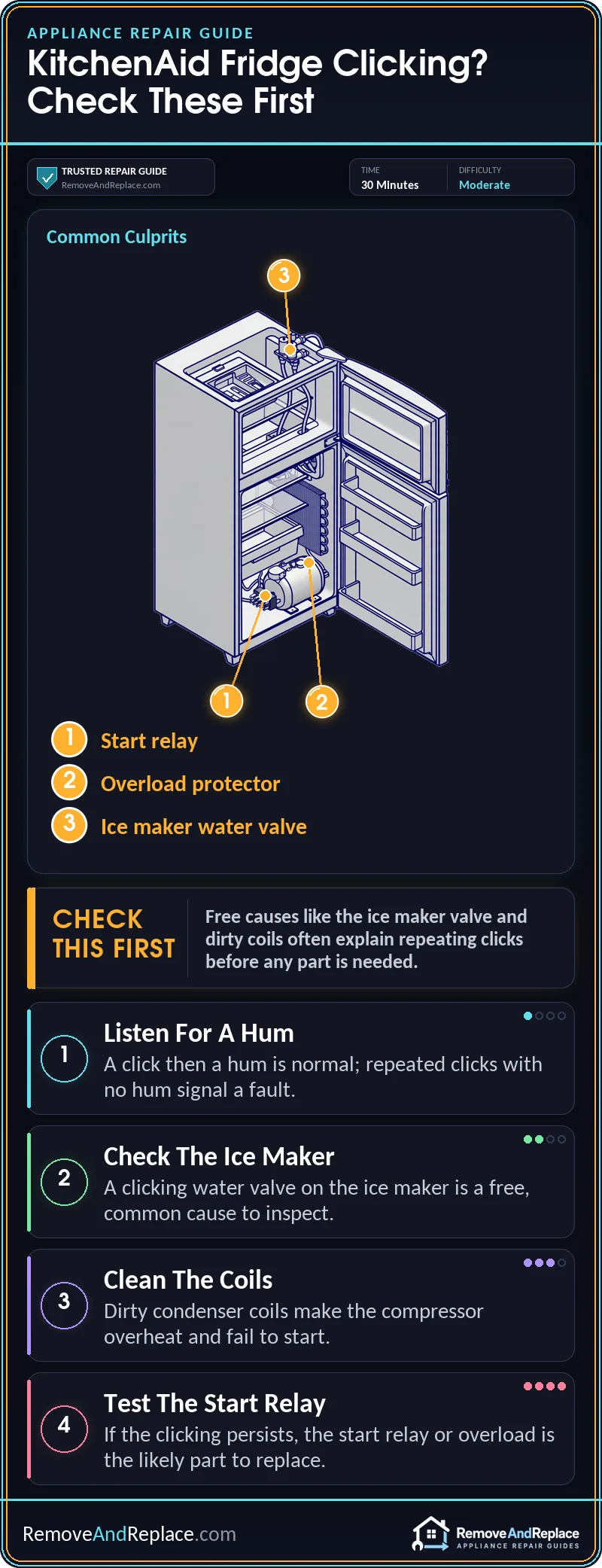
Listen for a hum after each click before buying anything. With a KitchenAid refrigerator clicking noise, a click followed by the compressor running is normal start relay work. Repeated clicks with no hum or a warm fridge most often point to a failing start relay or overload protector, but they can also indicate a seized or defective compressor, a failing control board, or a burnt start component. If you smell burning, unplug the fridge right away and have it inspected rather than simply swapping the relay.
The Short Version
- Timing matters more than volume: what happens right after the click tells you which part is involved.
- Rule out the free causes (ice maker valve, leveling, dirty coils) before you order a part.
- Warm food, dark lights or a thawing freezer alongside the clicking means act now.
- A start relay is a plug-on part. A control board or compressor is a different level of job.
- Your model’s rating plate and manual decide the exact part, not a guess.
What the Clicking Inside Your Refrigerator Actually Is
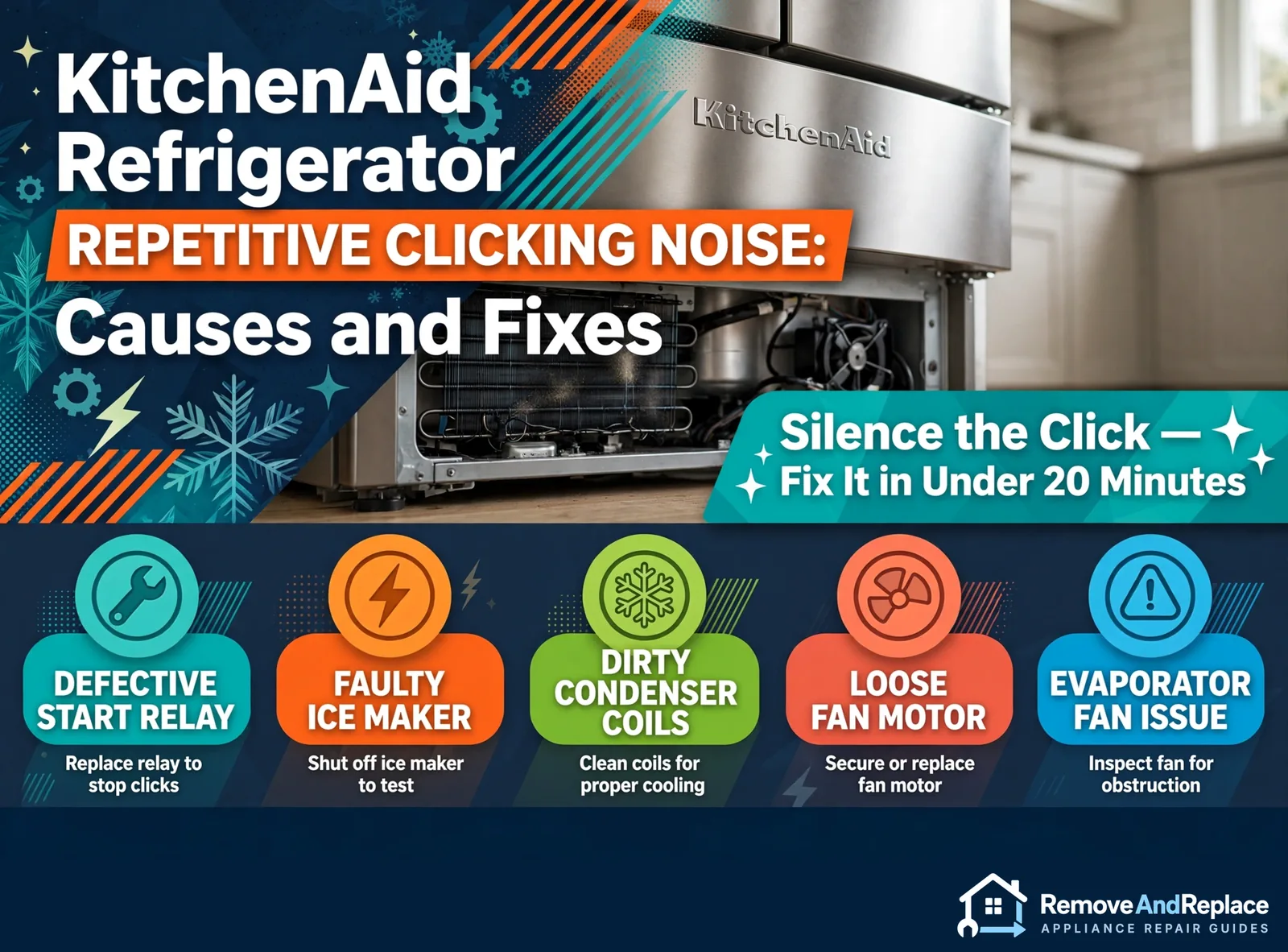
The complaint usually comes in as “it clicks over and over,” and what you’re hearing is something switching: a relay snapping, an overload tripping, or a valve opening and closing. The control board decides when cooling is needed. A small relay on the compressor, at the back of the cabinet, gives the compressor its starting kick. When it works, you get one click and then a steady hum. When it doesn’t, the compressor can’t start, the protector shuts it off, and the cycle tries again, which sounds like repeating clicks. A click is a switch changing state, so the useful question is what happens next, and I’ve asked it on electrical systems for 19 years in U.S. Air Force aircraft maintenance. Sorting a KitchenAid refrigerator clicking noise into harmless or failing starts with that question. KitchenAid’s normal sounds page is worth a skim first.
Normal Clicking vs. Failure Clicking
What you’ll see and hear: a single click, a short pause, then a hum or the fan kicking in. The food is cold and the lights work.
What’s happening: the board called for cooling and the relay started the compressor. That is a healthy cycle, and the same goes for the occasional tick as plastic and metal expand or contract. If your noise is closer to a crack than a click, my write-up on what causes a refrigerator to make a popping noise covers that family of sounds.
What to do: nothing. Check back in a day to make sure the temperatures hold.
What you’ll see and hear when it’s a fault: clicks repeat, there’s no hum or only a brief one, and then a quiet gap before it starts again. The fridge slowly warms, the freezer softens, or there’s a hot, burnt smell near the back.
What’s happening: the compressor is trying to start and failing, so the overload or relay keeps cutting the attempt off. A failing relay, a compressor overheating from clogged coils, a weak compressor, or a board that keeps calling for cooling can all produce this.
What to do: work through the free checks below, then the relay. Don’t leave food in a fridge that’s warming while you wait on a part.
Which Cause Fits Your Fridge?
| Cause | Likelihood | Fix Cost | DIY Time |
|---|---|---|---|
| Normal cycle sounds | Most common | Free | None |
| Ice maker water valve clicking | Common | Free to low | Quick |
| Compressor start relay or overload | Common | Low to moderate | Under an afternoon |
| Main control board | Less common | Higher | An afternoon |
| Compressor or sealed system | Rare | Highest | Pro job |
This video walks through how to identify a repeating click from a refrigerator and what to look at on the machine. Watch it before you pull the fridge out so you know what the rear compressor area looks like and what you’re hunting for.
Free Checks First: Ice Maker, Level and Coils
- Turn the ice maker off. If it’s switched on but no water line is connected, the fill valve can click each time it tries to fill. If the clicking stops, that was it.
- Check the water supply. If you do have a supply line, a clogged filter can starve the valve, so look at how to replace the water filter on your refrigerator. Dispenser trouble on the same line is covered in this water dispenser fix.
- Confirm the fridge sits level. Make sure it isn’t touching the wall or cabinets, which can turn a normal tick into a rattle.
- Inspect the condenser coils. Dust packed on them makes the compressor run hot and can trip the overload, and heat in a garage or a hot kitchen makes that worse.
- Check your manual for valves. Some models with separate fridge and freezer cooling have a valve that clicks as it switches, so confirm before you chase it.
The wrong assumption: clicking doesn’t automatically mean a dying compressor. A relay costs far less than a compressor and fails far more often than people expect.
Before You Order Anything
The one check: when it clicks, listen for the hum right after. A pass means one click, then the compressor runs and the fridge cools. A fail means repeated clicks with no sustained hum, or a fridge that warms. Find your model number on the rating plate inside the cabinet and match any part to it, because relays differ between models. I don’t give part numbers here since they depend on your exact model. The KitchenAid clicking noise help page is a good reference for what the manufacturer considers normal.
Safety first. Unplug the appliance or switch off its breaker before you touch anything. Shut off the water supply to the appliance before you disconnect any hose or valve. This part needs a licensed, EPA-certified technician: anything involving the sealed system or refrigerant. Wait a few minutes after unplugging and keep your hands clear of the compressor area, which can be hot.
How to Check and Replace the Compressor Start Relay
- Unplug the refrigerator. Move it out far enough to reach the back.
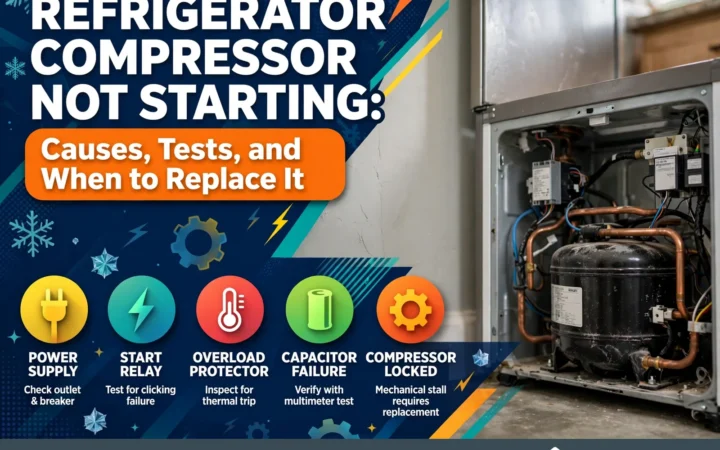
- Remove the rear access panel. A nut driver usually does it. Locate the compressor, the black dome near the bottom.
- Find the relay. It’s a small plug-on part sitting on the side of the compressor, often with an overload attached. Photograph the wiring before pulling it.
- Inspect it. Look for burn marks, melted plastic or a scorched smell. Pull it straight off and shake it. A rattle is a bad sign on many relays.
- Replace it with the part matched to your model. Push the new one straight on and refit the panel.
- Restore power and test. Plug the fridge back in only after the panel is on, and listen for the click followed by the hum.
If the new relay still clicks without the compressor running, stop there. That points to the board or the compressor, and guessing further costs money.
Common mistake: ordering the control board first because it’s the expensive guess. Check the relay and the coils before the board, since they’re the cheap, common causes.
When It Isn’t the Relay
A board that keeps calling for cooling or clicks its own relays can mimic a relay problem. The clue is usually that the relay looks clean and the fan and lights behave oddly too. Board replacement is a bigger job and costs noticeably more than a relay. An unusual alert instead of clicking is a different matter, and this door alarm guide covers that one.
How to Keep It From Clicking Again
Check your owner’s manual for how often your model’s condenser coils need cleaning. Many guides suggest vacuuming them once or twice a year, but Whirlpool says routine cleaning typically isn’t needed in a normal home. Clean them more often if you’ve got pets or the fridge sits in a hot space. Keep the area around the unit clear so air can move. A clean condenser lets the compressor run cooler and reduces overheating-related overload trips. A cold fridge with a calm hum is the sound you want.
FAQ
Is it normal for a KitchenAid refrigerator to click?
Yes, a single click as the compressor starts or stops is normal. It becomes a problem when the clicks repeat without the compressor running, or when the fridge warms.
Why does my KitchenAid refrigerator clicking noise come every few minutes?
A click that ends in a hum is usually a normal cycle. Repeated clicks with no hum often mean the compressor is trying to start and the relay or overload keeps cutting it off. I’d check the relay and coils before suspecting anything bigger.
Can I fix a clicking fridge myself?
Often, yes, if it’s the ice maker setting, dirty coils or a plug-on start relay. I’d leave the control board and anything sealed-system to a licensed technician unless you’re comfortable with the wiring.
Should I keep the food in it?
Not if it’s warming. Move perishables to a cooler or another fridge while you troubleshoot, because a failing compressor won’t recover on its own.
Keep it simple: listen, check the free stuff, then the relay. If you see smoke, smell burning plastic, or the clicking continues with a warm fridge after a new relay, unplug it and call a licensed appliance technician, since that points to the board or sealed system.

Written by Keith Schneerer
Certified Appliance Tech · Founder, RemoveAndReplace.com
Keith has spent 30+ years repairing machines, starting as a military mechanic and later maintaining food processing equipment before moving into appliance repair. He founded RemoveAndReplace.com to share field-tested repair advice.
More about Keith →