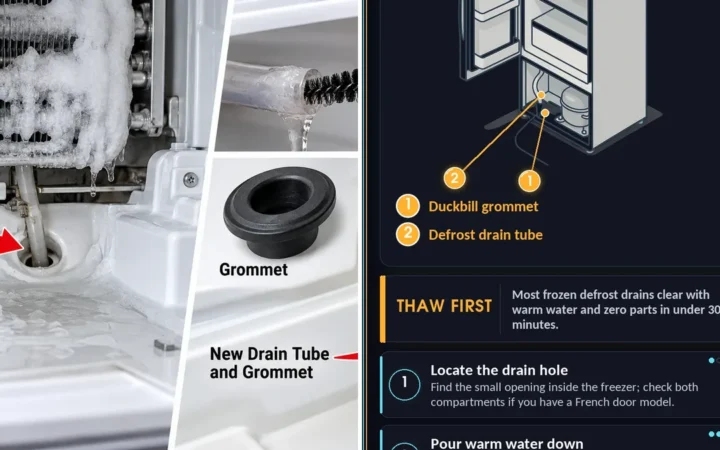
Unplug the unit, flush the defrost drain at the back of the freezer with warm water, and the leak normally stops. A clogged drain leaves melt water nowhere to go but the floor of the cabinet and down under the crisper drawers.
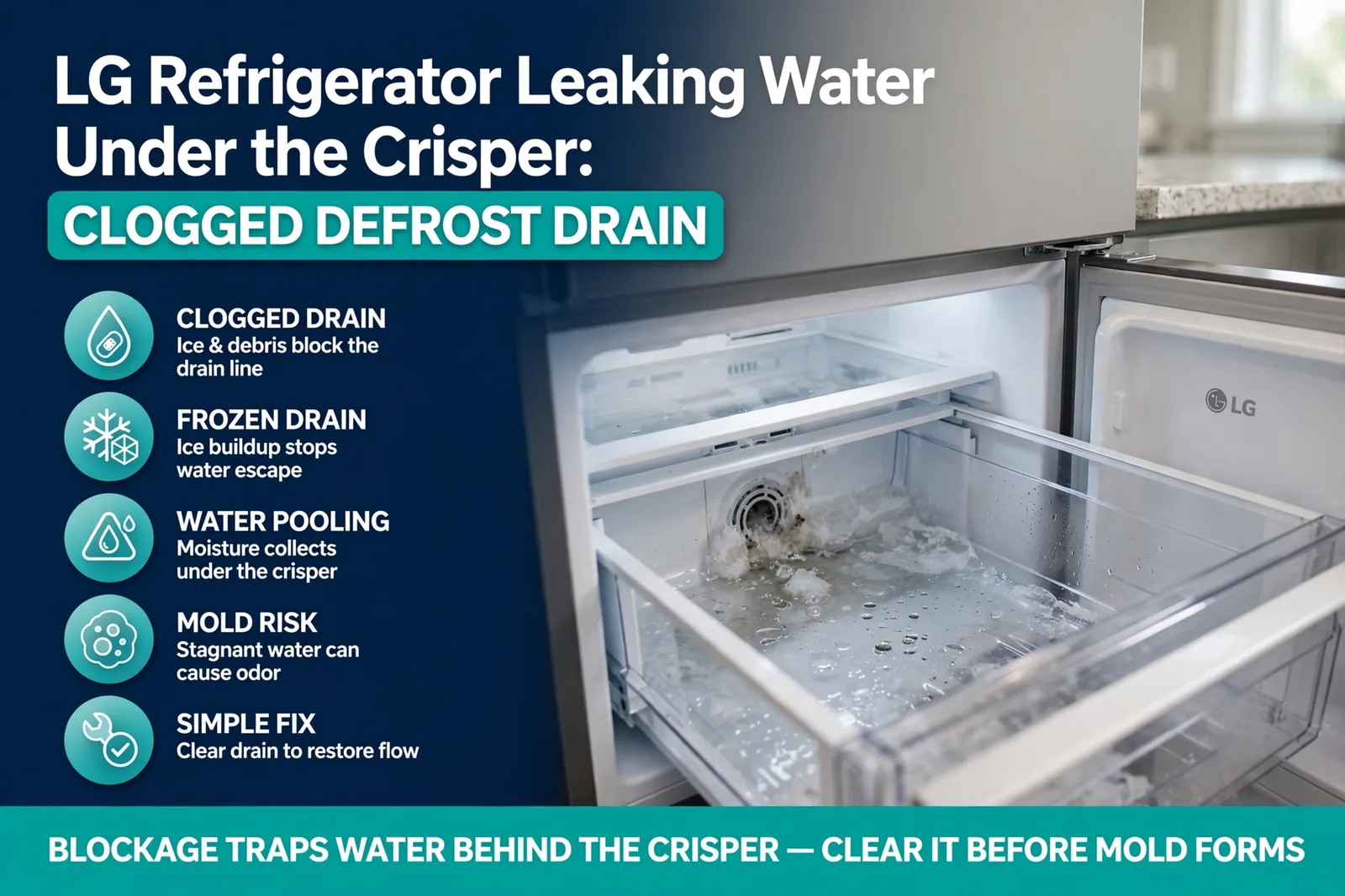
- Check where the water first shows up before you touch anything.
- A flush is usually free and often needs only warm water and a turkey baster, but it only works if you also find out why the drain clogged.
- A leak that returns soon after a flush can point to a failed drain heater or thermostat, but it can also mean the clog wasn’t fully cleared, the drain tube is damaged, or the fridge isn’t level.
- Ice maker and filter leaks look similar and have their own fixes.
The Defrost Drain Is the First Thing to Rule Out
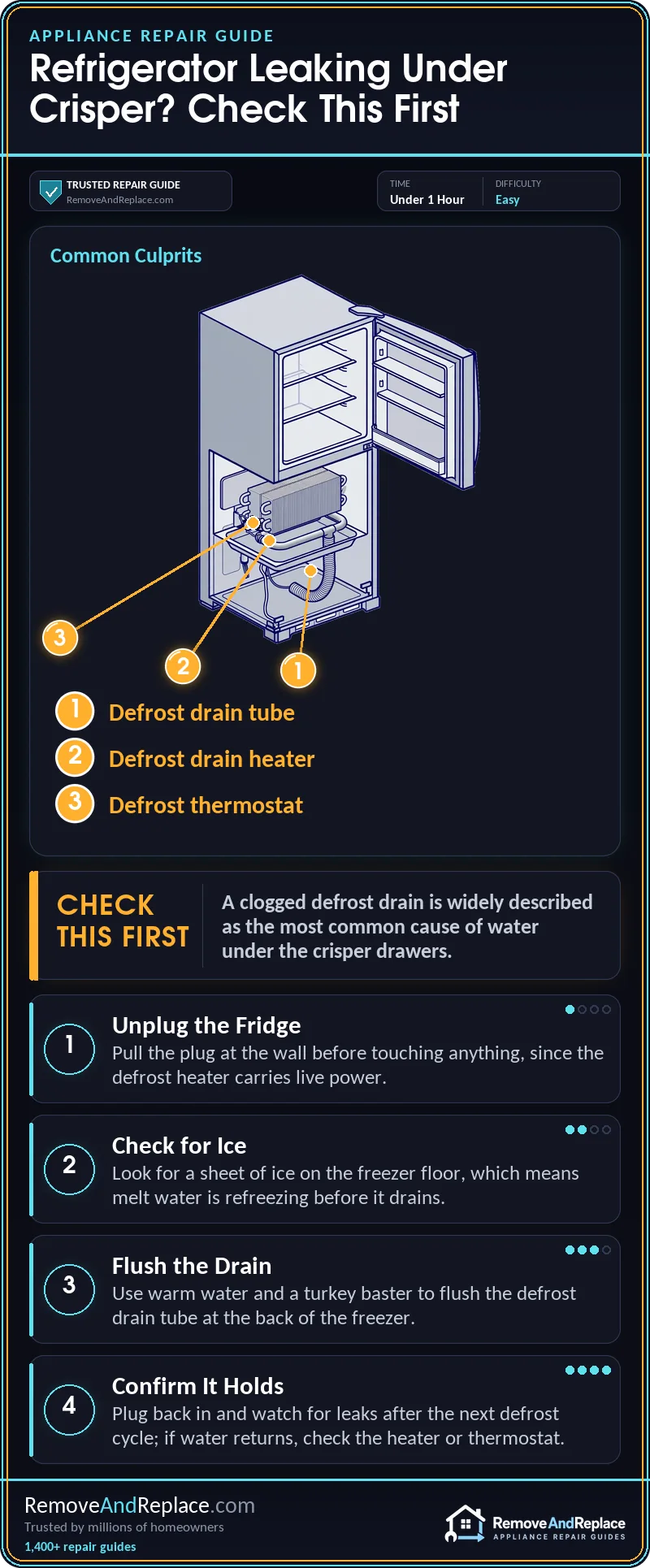
Water pooling under the crisper drawers usually points to a clogged defrost drain that backs up melt water from the scheduled defrost cycle. That melt water is supposed to run down a small drain into a pan underneath the fridge, where it evaporates. When the drain plugs with food debris or ice, the water backs up and spills into the cabinet and down toward the drawers. This is the first thing I check on a refrigerator leaking water under crisper drawers, and I’ve done it for 30+ years of hands-on repair before I even consider a part. Testing it yourself costs almost nothing, and a clogged drain is widely described as the most common cause. The sections below show you how to confirm it, flush it, and work out what to do if the water comes back. If you want a second set of eyes on the symptom, Sears PartsDirect has a symptom page on water under the vegetable drawers that attributes the puddle to a clogged defrost drain tube, though that page is written for top-mount refrigerators.
How Can You Tell It’s the Drain and Not Another Leak?
Most people assume the crisper drawer itself is cracked or the door seal is letting in warm air. A cracked drawer is possible, but a crack doesn’t explain water that keeps appearing. A bad seal mainly causes excess frost and sweating, though heavy frost from a leaky seal can also overflow the drain pan. The drawer is often just where the water ends up, not where it starts.
Three quick checks sort it out:
- Where does the water first appear? Water at the back wall or running down from the rear usually points to the defrost drain, but it isn’t definitive. Check for ice or a blocked drain at the rear floor first, since water line, ice maker, and filter housing leaks can also reach the crisper area.
- Is there ice on the freezer floor? A sheet of ice at the back of the freezer means melt water is refreezing before it can drain.
- Does it follow a defrost cycle? Leaks that show up soon after a defrost cycle, or water on the floor a day or two later, fit a drain issue.
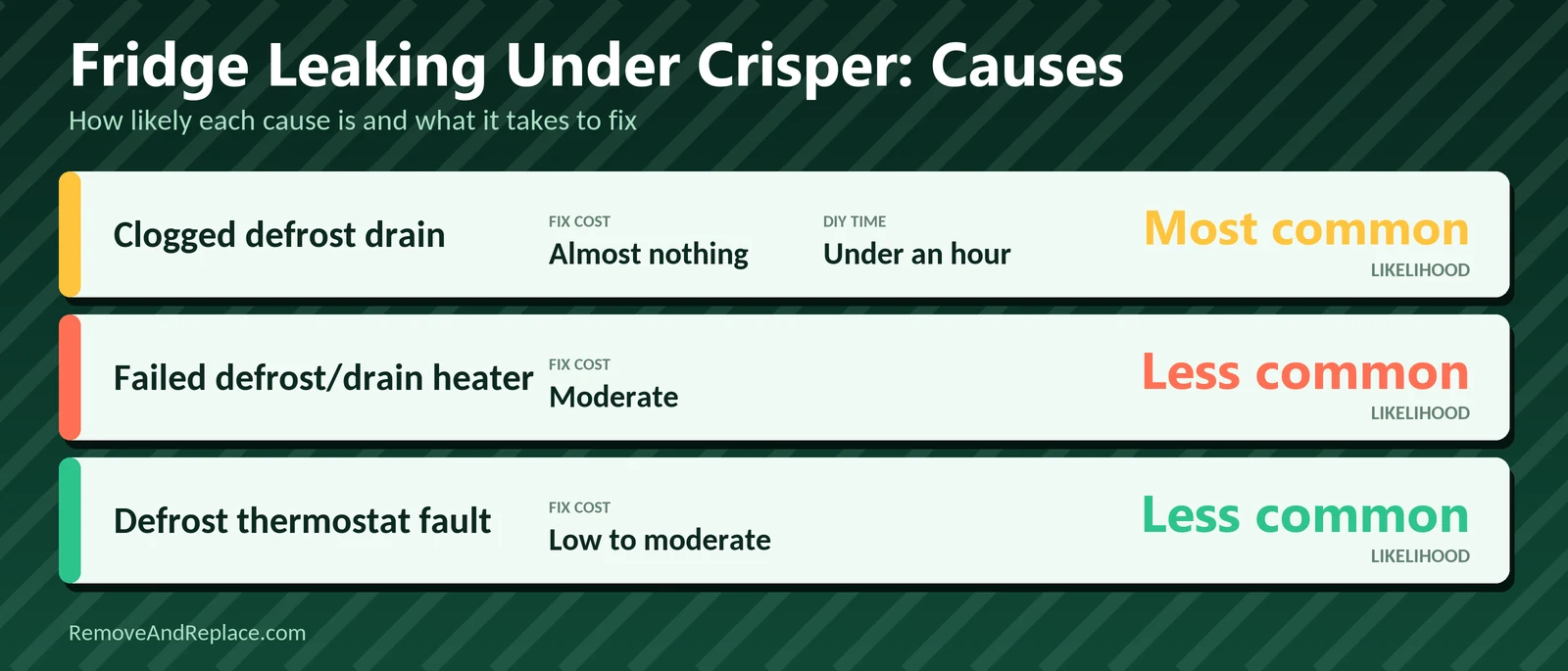
| Cause | Likelihood | Fix Cost | DIY Time |
|---|---|---|---|
| Clogged defrost drain | Most common | Almost nothing DIY; a pro visit varies by region and job, with a straightforward drain clearing often quoted around $150–$250 | Usually under an hour of hands-on work, plus extra time to thaw ice; a stubborn ice plug can take longer |
| Failed defrost heater or drain heater | Less common | Moderate; professional repair quotes vary widely by model, part, and region | A couple of hours |
| Defrost thermostat or control fault | Less common | Low to moderate | A couple of hours |
| Ice maker fill tube or filter leak | Common look-alike | Typically about $75–$250 | Short |
This video walks through finding the clogged defrost drain and clearing it. It’s worth watching once before you start so you can see where the drain sits and how the flush goes, then come back here for the step-by-step.
How Do You Flush a Clogged Defrost Drain?
Unplug the fridge at the wall before you start. Turning the temperature dial or the control panel off doesn’t remove power to the control board and the defrost heater, which carry line voltage even when the panel is off.
- Unplug the fridge and empty the area. Pull food out of the freezer section and the crisper drawers, and lay towels down for the spill.
- Get access to the back of the freezer. Your model may need the shelves and a rear panel removed, so check your manual for how it comes apart, and don’t pry.
- Find the drain. Its location varies by model, so confirm against your manual if you can’t spot it.
- Melt any ice first. Warm (not boiling) water flushed into the drain with a turkey baster or squeeze bottle is the usual approach. For stubborn ice, a hair dryer on low, kept moving and held at a distance, can help, and your model’s manual may have guidance. Don’t use a heat gun and don’t chip with a screwdriver.
- Flush with warm water. Use a turkey baster or a squeeze bottle, and push water through slowly until it runs freely into the drain pan. A straw or pipe cleaner can help with stubborn debris.
- Check the drain pan. Pull it out from underneath, empty it, and clean it. A dirty pan can smell.
- Reassemble, plug in, and watch. Check the drawers over the next day or two for new water.
The common wrong action is pushing a coat hanger or wire into the drain. It packs the plug deeper into the tube or can nick the line. Patience and gentle flushing win, and a clogged drain is the most common reason a refrigerator leaking water under crisper drawers has this problem, so clear it before you touch anything else.
What If the Leak Comes Back After a Flush?
This is the part most guides skip. If the drain clogs again within days, or you find ice refreezing around the opening, the clog may not have been fully cleared, or the drain tube may be damaged, or the fridge may not be level. If none of that fits, something is keeping the melt water from staying liquid. The usual suspects are a failed defrost heater, a drain heater that warms the tube, or a defrost thermostat that isn’t signaling properly. The defrost heater melts frost on a timed cycle, and when it fails frost builds up on the coil. A drain can freeze solid too, though that more often traces to a faulty drain heater, a missing drain strap, or a failed evaporator fan.
You can test the defrost heater, drain heater, and defrost thermostat with a multimeter by comparing your readings to the specification in your model’s service manual, and I won’t quote a number because acceptable ranges vary by model. The thermostat is checked for continuity rather than against a fixed resistance: it should read near 0 ohms when cold and open (infinite or OL) when warm. A fixed-resistance check applies to a thermistor, which is a separate sensor. The test sequence goes like this:
- Unplug the fridge and remove the evaporator cover or rear panel to expose the heater.
- Disconnect the wires or connector from the defrost heater, then set your multimeter to resistance.
- Touch the probes to the heater terminals and compare the reading to the service sheet. If it’s well off the spec, replace the part, and check your model’s manual if you’re unsure how to read the result.
- Repeat for the drain heater and the defrost thermostat using the same method, checking the thermostat for continuity.
A fridge that runs warm with heavy frost on the back wall tells the same story. If the freezer isn’t holding temperature, this LG refrigerator article may also help.
Could It Be the Ice Maker or the Water Filter Instead?
Yes, and I’d rule these out if the water is clear and keeps coming even without a defrost cycle. A frozen or cracked ice maker fill tube can drip into the cabinet, and clearing an ice maker water line is a different job from flushing the drain. A loose cartridge or housing can drip too, which I cover in this filter housing leak guide. If the ice maker is jamming rather than leaking, that’s a separate repair, like the one in this Samsung auger article. For more on the general symptom, RepairClinic’s leak guide is a decent reference.
Cleanup and Prevention
Don’t skip the cleanup. Standing water under the drawers breeds mold and smells. Wipe the cabinet with a mild disinfectant, dry it fully, and wash the drawers.
To keep the drain open, flush it from time to time, and check your model’s manual for any recommended schedule. Don’t let food packaging press against the back wall of the freezer, since blocked airflow encourages frost. I used to think a single flush was a permanent fix. It isn’t.
When to Call a Pro
Call a technician if the heater or thermostat tests bad and you’re not comfortable working behind the rear panel, or if the leak returns after you’ve confirmed the drain is clear. A service call usually costs more than the small heater or thermostat parts themselves, so being able to say exactly which part tested bad saves money. Sealed system work or anything involving refrigerant is not a DIY job for most people, since it calls for an EPA 608-certified technician, so call a qualified technician for any refrigerant-circuit work.
FAQ
Why is there water under my crisper drawers but not on the floor?
The water is collecting in the cabinet because it can’t reach the drain pan. The defrost drain is usually the reason.
Is it safe to keep food in a fridge that’s leaking?
Move food out of the wet area and wash the drawers, since the water may carry food debris. If the fridge is also running warm, keep perishables in a cooler until you fix it.
Can I use boiling water to clear the drain?
I’d skip it. Very hot or boiling water can damage plastic drain parts, so start with warm water and go gentle. I learned to start gentle.
How often should I flush the defrost drain?
Occasionally, and sooner if you see water or ice at the back wall. Check your model’s manual for any recommended schedule.
My refrigerator leaking water under crisper drawers is back after a flush. Now what?
Look at the heater, drain heater, and defrost thermostat. A refreezing drain often turns out to be a heating problem, and in my experience that’s where people give up too early.
Flush the drain, then watch it for a week. If the refrigerator leaking water under crisper drawers stops, you’re done.

Written by Keith Schneerer
Certified Appliance Tech · Founder, RemoveAndReplace.com
Keith has spent 30+ years repairing machines, starting as a military mechanic and later maintaining food processing equipment before moving into appliance repair. He founded RemoveAndReplace.com to share field-tested repair advice.
More about Keith →