You reached for the towel this morning and the whole bar came off the wall — screws, plastic anchor, maybe even a chunk of drywall hanging off the end of it. Or maybe it was the curtain rod, or the toilet paper holder that finally gave up after months of getting tugged on every time somebody grabbed for it. Either way, you’re standing there staring at a hole in the wall wondering if this is about to turn into a bigger project than it should be.

It usually isn’t. After 28 years of hands-on repair work, I can tell you the culprit is almost never a defective wall anchor — it’s what got asked of that anchor in the first place. A picture frame just hangs there and never gets touched. A towel bar, curtain rod bracket, or toilet paper holder gets pulled on and grabbed dozens of times a week, and plastic drywall anchors were never built to fight that kind of repeated pulling force forever.
Before you grab a bigger anchor and just redo the same hole, look at what you’re actually dealing with. If this is a towel bar, curtain rod, or anything people pull on regularly, go straight to the toggle bolt section — in my experience that’s the single most common reason these repairs fail in the first place, since the anchor was simply the wrong type for the job. If the hole’s still round and intact but the anchor just spins loose in it, skip down to the stud-finding section — that’s usually the real fix I reach for next. If the bracket ripped a chunk of drywall out with it, jump to the section on oversized or stripped holes. And if you’re just hanging something light like a picture frame with an intact hole, the plastic anchor section covers you.
A wall anchor pulled out of drywall is almost always caused by repeated pulling force, not a defective anchor — items like towel bars and curtain rods get tugged on daily in a way picture frames never do. The lasting fix is reinstalling into a nearby wood stud, spaced 16 to 24 inches apart, or switching to a toggle bolt if a stud isn’t within reach. Both fixes run under $10 and take about 20 minutes.
Most people assume the anchor itself was junk. In my experience it usually wasn’t defective at all — it held up fine for however long you’d had it. What actually happened is the anchor did its job right up until the accumulated pulling force finally won. That’s useful to know, because it changes what I fix: not “find a better anchor,” but “stop asking a light-duty anchor to do a heavy-duty job.”
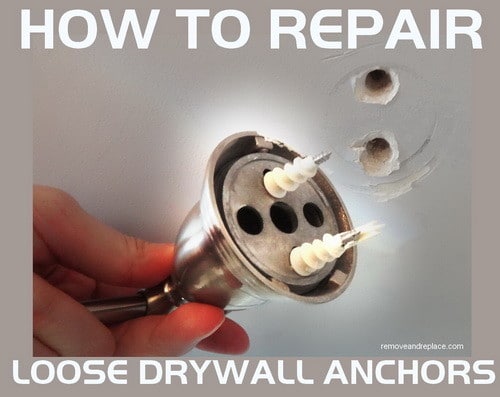
Before You Grab Another Anchor
- The anchor rarely failed on its own — repeated pulling force from daily use is the real cause, especially with towel bars and curtain rods.
- Studs run 16 to 24 inches apart, so shifting the item a few inches can often get you onto solid wood instead of hollow drywall.
- Toggle bolts hold dramatically better than plastic anchors for anything that gets pulled on regularly — they’re worth the extra few minutes.
- An oversized or stripped hole needs to be re-drilled a few inches away, not just packed tighter with the same anchor.
| Cause | Likelihood | Fix Cost | DIY Time |
|---|---|---|---|
| Wrong anchor type for the item (light plastic anchor on something pulled daily) | Most common | Free — just redo it right | 10-15 min |
| Nearby stud wasn’t used when one was available | Very common | Free | 15-20 min |
| Hole drilled too big or stripped out | Common | Under $5 in spackle | 20 min plus dry time |
| Heavy or frequently-pulled item on a light-duty anchor | Less common, but the worst case | $3-8 for toggle bolts | 20-30 min |
Why Wall Anchors Pull Out of Drywall In The First Place
Drywall itself isn’t the problem — it’s what people expect drywall to do. That inch of gypsum board between two studs was never designed to carry ongoing pulling force, and that’s exactly what a towel bar, curtain rod, or toilet paper holder puts on it every day. A picture frame just hangs there; nobody tugs on it. A towel bar gets grabbed and pulled dozens of times a week, and every pull works the anchor a little looser. Eventually it spins in its hole, or rips free and takes a chunk of the wall with it. The best fix — genuinely, not a consolation prize — is moving the whole thing over a few inches and anchoring into a wood stud instead. Studs are typically spaced 16 to 24 inches apart on center, so I usually only need to shift a few inches to land on solid wood instead of hollow drywall.
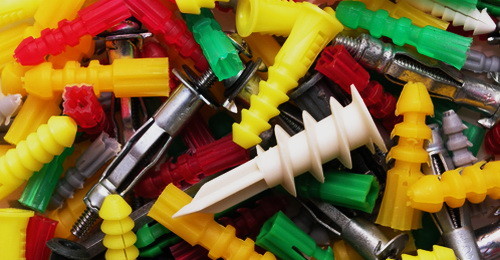
The fix I see people try first is jamming toothpicks, cardboard, or a dab of glue into the stripped hole to give the same anchor something to grip again. It buys you maybe a week before the whole thing works loose a second time. You’re not fixing the actual problem — you’re padding a hole that’s already too big and hoping friction does the rest. I’d skip that step entirely and go to one of the fixes below instead.
Is There a Stud You Can Use Instead?
This is the question I ask myself before I touch a drill. Grab an electronic stud finder and run it slowly across the wall in both directions, a few inches to either side of your original hole. Once you find the edge of a stud, mark it and measure over to where your bracket needs to sit — if you’re within an inch or two, you can usually shift the whole fixture over without anyone noticing.
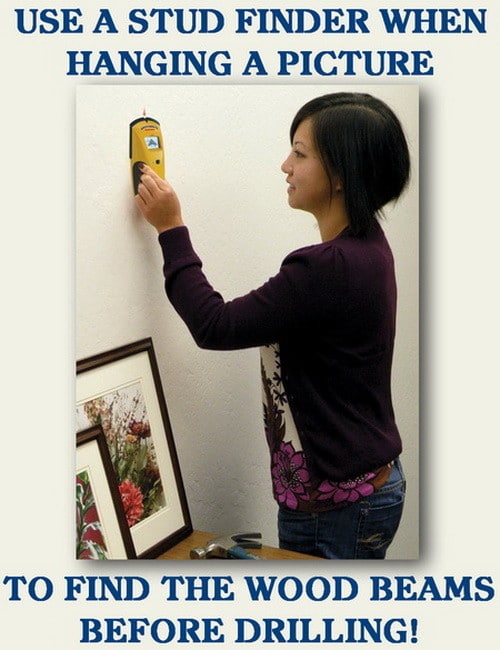
If you do land on a stud, skip the plastic anchor entirely — just use a wood screw or drywall screw long enough to bite deep into the stud, and you’re done. This is the same logic I apply any time I’m hanging something heavier than a picture frame; if you’ve ever looked into mounting a TV without hitting a stud, you already know how much stronger a stud-anchored fastener is compared to anything relying on the drywall alone.
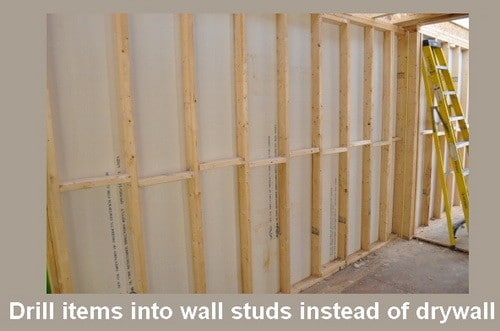
No stud within reach and moving the fixture isn’t an option? That’s fine — plenty of installs just don’t have one in the right spot. Keep reading.
Before you drill anywhere in a wall, think about what might be behind it. Bathrooms, kitchens, and exterior walls often have plumbing or electrical runs inside the stud bay. A stud finder that also flags wiring is worth the few extra dollars, and if you’re drilling near an outlet or switch box, stay well clear of that stud bay entirely. You can find a solid rundown of anchor installation basics from the CPSC’s anchor installation guide if you want to double check your approach before you drill.
The Hole Is Too Big or Stripped Out Now
If the original hole is chewed out — oversized, crumbling at the edges, or the anchor just spins freely with no bite at all — I patch it and start fresh a few inches away rather than fighting the same hole. Fill the old hole with a lightweight spackle, let it dry, sand it flush, and drill your new hole with enough space between the two that you’re not weakening the same section of drywall twice.
In a dry climate, spackle often skins over and is ready to sand well before the time listed on the container, since low humidity speeds up drying. If you’re somewhere humid, give it the full time on the label or longer, or you’ll sand through a soft patch and have to start over. For a full walkthrough on patching wall damage properly, this drywall anchor hole repair guide covers the patching process in more depth than I need to repeat here, and the same basic approach applies whether you’re dealing with a wall or a hole in the ceiling from a different kind of mishap.
Light Item, Intact Hole? Use a Self-Drilling Plastic Anchor
If you’re hanging a picture frame or something else that just sits on the wall without getting touched, a self-drilling plastic anchor is the right call and the least amount of work. These anchors screw straight into the drywall — no pilot hole, no hammer — which makes the whole job about a two-minute affair per anchor.
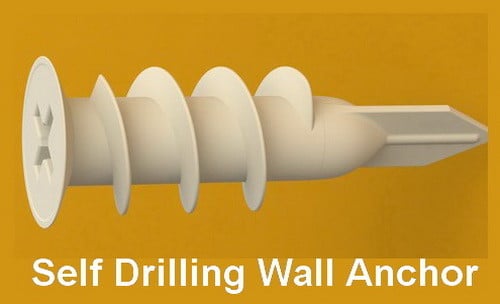
If your frame or wall decor is on the heavier side, I use two anchors instead of one and space them as far apart as the hanging hardware allows. And if you drilled the original holes too big for a snug fit, re-drill a few inches over rather than forcing an anchor into a loose hole — a loose anchor is a future repeat of this exact same problem.
Getting the Installation Details Right
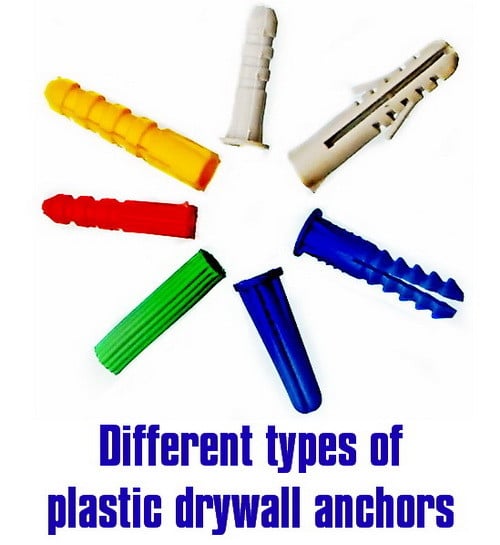
A lot of these repairs fail a second time not because the wrong anchor was chosen, but because it wasn’t installed correctly the first time. With a standard (non self-drilling) plastic anchor, I pick a drill bit that’s roughly a third the thickness of the anchor itself — too wide and the hole is too loose for the anchor to grip; too narrow and you’ll crack the drywall trying to force it in. Tap the anchor in gently with a hammer until it sits flush, then drive the screw.
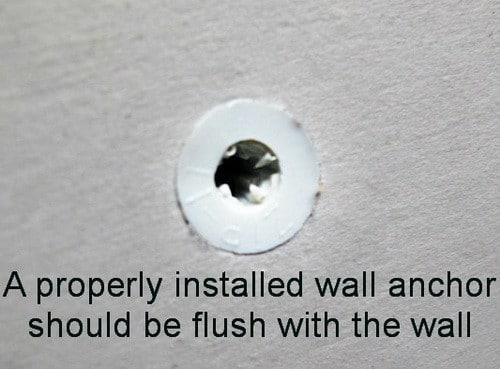
You want the anchor flush with the wall, not proud of it and not sunk in past the surface. If I can wiggle it side to side after it’s tapped in, the hole’s too big — I pull it back out and start over a couple inches away rather than trusting it to hold. For a closer look at anchor sizing charts and load ratings by anchor type, this drywall anchor installation guide breaks down sizing better than I can here.
Heavy or Frequently-Pulled Items Need a Toggle Bolt
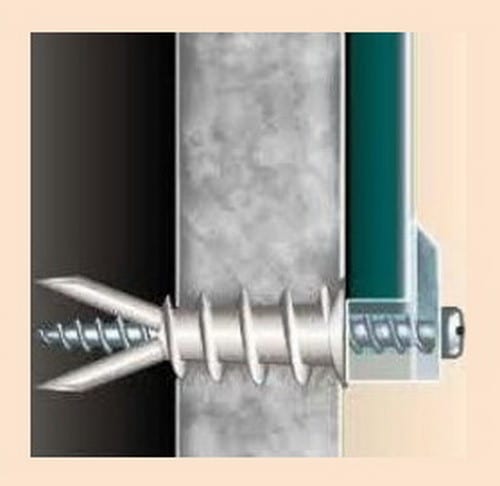
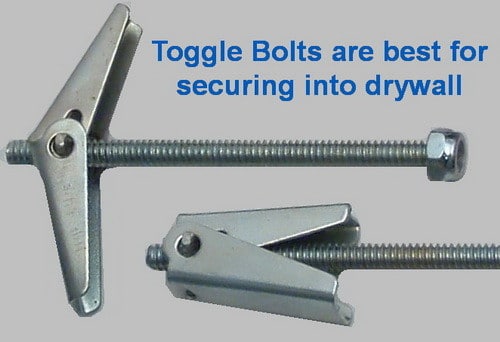
This is the fix I reach for on towel bars, curtain rod brackets, toilet paper holders, wall-mounted shelving — anything that’s going to get pulled on, leaned on, or loaded up regularly. A toggle bolt passes through the drywall with spring-loaded wings folded flat, and once it’s through, those wings pop open and spread the load across a much wider area of drywall than any plastic anchor can manage.
Drill your hole first — check the toggle bolt packaging for the correct bit size, since it’ll be bigger than you’d expect because the folded wings have to pass through it. Slide the bolt through the mounting hole of whatever you’re hanging, thread the wing nut onto the end, then feed the wing end into the wall until you feel it spring open on the other side. Give it a light pull to confirm it’s caught, then tighten it down until it’s snug.
If you’ve already dealt with this exact failure on a towel bar specifically, I’ve got a more detailed walkthrough on fixing a towel bar that pulled out of the wall that goes step by step through the toggle bolt install for that particular fixture.
How To Keep It From Happening Again
Once you’ve got it back on the wall, a few small habits keep you from doing this twice. I default to a toggle bolt for anything that gets pulled on daily — towel bars, curtain rods, TP holders — rather than reaching for whatever plastic anchor happens to be in the junk drawer. I also don’t over-tighten plastic anchors during install; cranking down too hard is what cracks the surrounding drywall and starts the loosening process early. And every so often, I give wall-mounted items a gentle test tug — if something’s started to give even a little, it’s a lot easier to fix before it comes off in your hand.
Frequently Asked Questions
Can I just put a bigger plastic anchor in the same hole?
You can, but I wouldn’t. A bigger anchor in an already-stripped hole is usually just delaying the same failure by a few weeks. Move over a couple inches, or find a stud, and you won’t be back here doing this again next month.
What’s actually different between a plastic anchor and a toggle bolt?
A plastic anchor grips the inside walls of the drilled hole itself — it’s only as strong as that small ring of drywall around it. A toggle bolt spreads its holding force across a wing that opens up well behind the wall surface, a completely different mechanism and, in my experience, a stronger one for anything that gets repeated pulling force.
How do I know for sure I’ve found a stud and not just wiring or blocking?
A real stud will sound and feel solid when you knock on it — no hollow echo — and a stud finder should register consistently across a vertical strip roughly an inch and a half wide. If I’m still not confident, I’ll drill a small test hole with a nail in an inconspicuous spot to confirm before committing to the real hole.
Will spackle alone fix a hole where the anchor pulled out?
Spackle fixes the hole, not the underlying problem. If you patch it and reinstall the exact same anchor in a spot you’ve already stripped out once, don’t be surprised when it happens again. Patch it, then move the new anchor a few inches away or switch to a toggle bolt.
Do toggle bolts work the same way in plaster walls?
Mostly yes, though older plaster walls are usually backed by wood lath instead of drywall, and that lath can crack more easily when you’re drilling. I go slower on plaster and keep an eye on the surrounding surface as I drill — if I hear cracking, I stop and reposition before the damage gets worse than the original loose anchor ever was.

Written by Keith Schneerer
Certified Appliance Tech · Founder, RemoveAndReplace.com
Keith has spent 30+ years repairing machines, starting as a military mechanic and later maintaining food processing equipment before moving into appliance repair. He founded RemoveAndReplace.com to share field-tested repair advice.
More about Keith →
Rochelle,
Depending on weight, use the proper hardware to mount. What are you planning to use to attach the cornice? What type of wood or material is it?
-RR
Mounting a cornice, 70″ across. Any special hints?
Thank you very much to whomever explained toggle bolts so clearly. I was trying to place a ceiling hook using a toggle bolt. I made the hole using a large screw since I didn’t have a drill, got the toggle bolt placed but was disappointed when it fell out once the hook was screwed tightly. I found this site, and discovered that I had put in the toggle bolt upside down. Needless to say, I am not very handy but thanks to sites like this one, I am getting better. The hook is now placed. I hesitate to say what is hanging from it – a ceramic toucan!