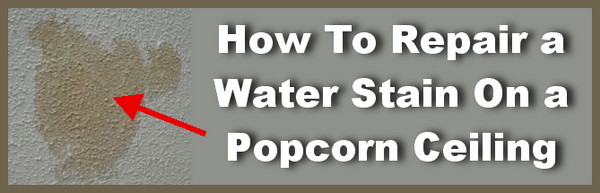
Cut the damaged spot into a clean square with a handsaw, screw a matching square of drywall into the ceiling joists behind it, then tape, spackle, sand, prime, and paint. A hole under 2ft by 2ft is a one-afternoon job with about $40 in materials — no drywall contractor needed for a patch this size.
- Cut the ragged hole into a clean square first — square holes patch cleaner than jagged ones every single time.
- Screw the patch into the ceiling joists (the 2x4s), not just into loose drywall edges.
- Three coats of primer and three coats of paint — feathered out past the repair — is what actually hides the work.
- Most visible patch jobs fail at the sanding stage, not the spackle stage.
- Under 2ft by 2ft you can do this yourself for around $40. Bigger than that and the math starts favoring a pro.
Start by Cutting the Hole Into a Clean Square
Here’s the part nobody tells you: a ragged hole is almost impossible to patch invisibly, but a clean square is dead simple. So the first thing I do — before buying anything — is take a handsaw and cut the damaged area into a neat square or rectangle. Then I measure the exact dimensions. About 80% of a good-looking drywall patch is decided right here, at the cutting stage, long before any spackle goes on. Take those measurements to your local home improvement store and grab a pre-cut drywall section that covers the opening. The hole I was fixing was under 2ft by 2ft, so I bought a 2ft x 2ft piece. You’ll also grab drywall screws, drywall tape, wall spackle, a spackle applicator, sandpaper, primer, and paint that matches the ceiling. Cut once, measure twice, and the rest of the job falls into place.
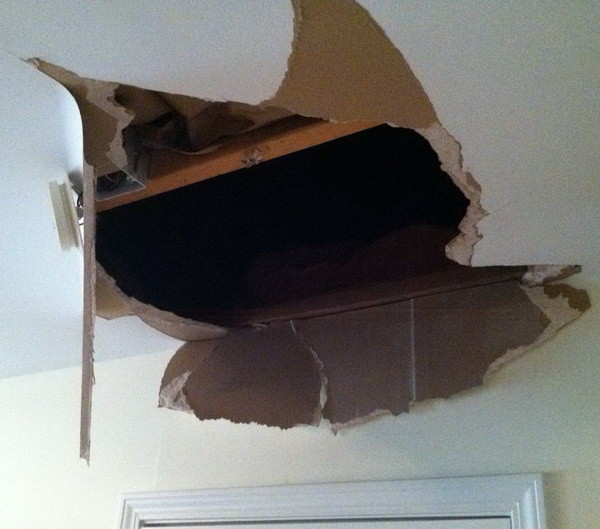
A ceiling drywall hole like the size above can be fixed easily by following the steps below.
Everyone Assumes a Ceiling Hole Means Calling a Contractor — It Usually Doesn’t
The #1 wrong assumption I run into is that a hole in the ceiling means a big-money drywall contractor. For a patch under 2ft by 2ft, that’s just not true. I’ve patched holes in my own places going back to the ’90s, and the materials for a job this size run about $40 total. A contractor callout for a small patch is often $150-$300 because of the minimum service charge — you’re paying for them to show up more than for the actual work. My 39 years fixing hardware, from Air Force aircraft panels to commercial kitchen walls, taught me one thing about drywall: the skill isn’t in the muscle, it’s in the patience. Sand slow, prime past the edges, and a first-timer’s patch can vanish. Where I’d say call a pro: if the hole is bigger than a couple feet across, if there’s water damage spreading past the hole, or if you find wiring or plumbing in the cavity you don’t understand.
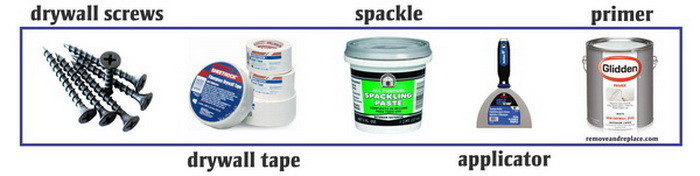
Materials Needed To Fix a Hole In Your Wall or Ceiling Drywall
- 1 – Piece of drywall cut to fit over hole (square piece)
- 1 – Box of drywall screws
- 1 – Roll of drywall tape
- 1 – Can of drywall spackle
- 1 – Spackle applicator tool
- 1 – Sheet of sandpaper
- 1 – Can of primer paint
- 1 – Can of matching paint
1. Screw the Patch to the Ceiling Joists
Once I got home I organized all the materials, then screwed the drywall replacement square right into the ceiling joists — into the 2x4s up in the ceiling. This is where most people screw up: they anchor the patch into the crumbly edges of the old drywall instead of into solid framing. Loose drywall edges won’t hold, the patch flexes, and the seam cracks a few months later. **Drive your screws into the joists behind the hole**, not into the paper edge of the surrounding board. If the joists don’t line up with your patch, slip a backing strip of scrap wood behind the opening first and screw into that. Solid backing is the whole game here.
2. Tape and Spackle the Seams
Next I used drywall tape to cover the joints — the seams where the new piece of drywall meets the old. Then I applied spackle over the drywall tape, working it even and smooth with the applicator. Don’t glob it on thick thinking you’ll sand it flat later. Thin, even coats. Feather the edges out past the seam so there’s no ridge to give the repair away. You’ll hear the applicator drag differently as the spackle grabs — that faint scraping tells you when you’ve got an even pull versus a build-up you’ll have to sand off.
3. Sand It Smooth — This Is Where the Job Is Won or Lost
After the spackle was fully dry, I sanded it with sandpaper to make it smooth and level. The better job you do sanding, the less likely anyone notices work was done. I’ll be honest — my first instinct on my early patches was always to power through the sanding fast and call it good. I did that for years and my patches always showed. Then I learned that drywall sanding is a slow, light-touch job, not a muscle job, and everything changed. On this ceiling I actually sanded down a little too much, so I added more spackle, let it dry, then sanded again. That back-and-forth is normal — don’t get frustrated by it. Run your bare hand across the area with your eyes closed; if you can’t feel the seam, neither will anyone else.
How Do You Blend a Ceiling Patch So It Doesn’t Show?
Blending comes down to primer and paint discipline, not talent. Once the sanding was finished I applied primer with 3 coats to hide the area well. It’s best to prime not only the exact spot you’re concealing but a little further out, so the repaired area matches the rest of the ceiling. Primer seals the spackle so it doesn’t suck the sheen out of your topcoat and flash a dull patch at you in raking light. Skip this and the repair glows a different color every time the afternoon sun hits it. If you want a second opinion on technique, This Old House has a solid walkthrough on how to patch a ceiling, and a separate guide for textured ceilings if yours has a knockdown or popcorn finish.
4. Paint With Matching Color — At Least 3 Coats
Once the primer was on and fully dry, I applied the perfectly matching paint. If you did a good job spackling, sanding, and priming, the surface will be smooth and you shouldn’t feel any uneven areas as you paint. I put on at least 3 good deep coats, let it dry, then examined the ceiling. Now stand back and look for any spot of the repair that stands out or looks uneven under normal room light. Matching an aged ceiling paint is the sneaky-hard part — old white has yellowed, and a fresh “white” can read brighter than the surrounding area, so buy a sample and test a small spot first if you’re unsure. Lowe’s has a decent reference on patching and repairing your ceiling that covers paint selection too.
Check Your Work — And What To Do If It Still Shows
If everything looks good, you’ve successfully repaired your wall or ceiling. If the surface still has an obvious flaw or looks uneven, you may want to start over — knock it back with spackle, sand, and re-prime that spot. And if the area just cannot be made right no matter what you try? Do what plenty of folks do and hang a picture over it (don’t ask me how I know that trick works). No shame in it. A patch that’s 90% invisible plus a well-placed frame beats a wall you’re afraid to look at.
Keep It From Happening Again
Most ceiling holes I see come from someone stepping between the joists in an attic — foot goes through the drywall, and boom, there’s your hole. If you spend any time in your attic, lay down a couple of 2×8 boards across the joists to walk on and never trust the drywall to hold weight; it won’t. In humid spots, watch for soft or sagging drywall before it fails outright — that sag is often a moisture problem, and it’s worth reading up on how to stop condensation issues if the damp is appliance-related. A quick annual look at your ceilings for hairline cracks or sag catches trouble while it’s still a $5 tube of spackle instead of a full sheet of drywall.
Materials for a patch this size run about $40 — drywall square, screws, tape, spackle, applicator, sandpaper, primer, and paint. A drywall contractor for a small patch typically charges $150-$300 because of the minimum service fee. If you’re comfortable with a handsaw and a paintbrush, you’re saving $100+ on an afternoon’s work. Where I’d hand it off: holes bigger than a couple feet, spreading water damage, or wiring in the cavity you can’t identify.
Frequently Asked Questions
Do I really need to cut the hole into a square?
Yes. I know it feels backwards to make the hole bigger, but a clean square is what lets the patch sit flat and screw into solid framing. A jagged hole almost never patches invisibly — I’ve tried to shortcut it and always regretted it.
What size ceiling hole can I patch myself?
Anything under roughly 2ft by 2ft is a comfortable DIY job — that’s exactly the size I fixed here. Once you get past a couple feet across you’re into hanging full sheets and taping long seams, and that’s where a pro starts earning their fee.
How many coats of primer and paint do I actually need?
Three coats of primer and at least three coats of matching paint, feathered out past the repair. I’ve cut corners with one coat and the patch always flashed a different sheen in the afternoon light. Don’t skip coats — this is the step that makes the whole thing disappear.
Why does my patch keep cracking at the seam?
Almost always because it was screwed into the crumbly drywall edge instead of into a joist or a backing board. Anchor into solid wood and the movement stops. I learned that one the hard way on an early patch that cracked within a season.
What if I can’t get the patch to look right no matter what?
Redo the spackle-sand-prime cycle on the bad spot once more, and if it still won’t hide, hang a picture over it. That’s not giving up — I’ve done exactly that when a ceiling texture just wouldn’t match. For other around-the-house fixes in the same spirit, our guide on fixing leaks and clogs without a plumber is worth a look.

Written by Keith Schneerer
Certified Appliance Tech · Founder, RemoveAndReplace.com
Keith has spent 30+ years repairing machines, starting as a military mechanic and later maintaining food processing equipment before moving into appliance repair. He founded RemoveAndReplace.com to share field-tested repair advice.
More about Keith →