Here’s what’s happening every time an appliance dies on you: you’re standing there with a repair quote in one hand and a store flyer in the other, and nobody’s told you the one number that actually decides it. Let me fix that. I spent 9 years fixing commercial kitchen equipment where a dead dishwasher meant a restaurant was bleeding money by the hour, and 19 years before that keeping Air Force aircraft systems running where “just replace it” wasn’t always an option. The math I’m about to give you is the same math I used on those jobs.
The 50% Rule says this: if a repair costs more than half the price of a comparable new unit, and the appliance is past 50% of its expected lifespan, replace it. If the repair is under 50% of replacement cost and the unit still has years left, fix it. Two numbers — repair quote and unit age — settle almost every decision.
- Repair over 50% of a new unit’s cost + past half its lifespan = replace it.
- Repair under 50% + unit still has years left = fix it, every time.
- Age matters as much as the dollar figure — a $200 fix on a 2-year-old fridge is a no-brainer; the same fix on a 14-year-old fridge usually isn’t.
- The diagnostic fee ($75-125) is sunk cost — don’t let it push you toward a bad repair.
- Sealed-system and compressor jobs ($400-1,200) blow past the 50% line on almost any home unit.
The 50% Rule, and Why It Beats a Gut Feeling
The 50% Rule works like this. Take your repair quote — the real one, parts plus labor. Then find the price of a comparable new unit, same size, same class. If the repair comes to more than half that new-unit price, you lean toward replacement. Now layer age on top: appliances have a known expected lifespan, and once a unit passes the halfway mark, every dollar of repair is buying you fewer remaining years. So a $250 repair on a machine that costs $500 new is a hard “replace,” and a $250 repair on a $900 machine that’s only three years old is a hard “fix.” About 80% of the repair-versus-replace calls I’ve ever made came down to those two numbers and nothing else. The 10% that don’t are edge cases — a discontinued part, a premium brand worth saving — and I’ll cover those below. Run the two numbers first. Trust them.
Step 1: Get the Real Repair Number (Not the Guess)
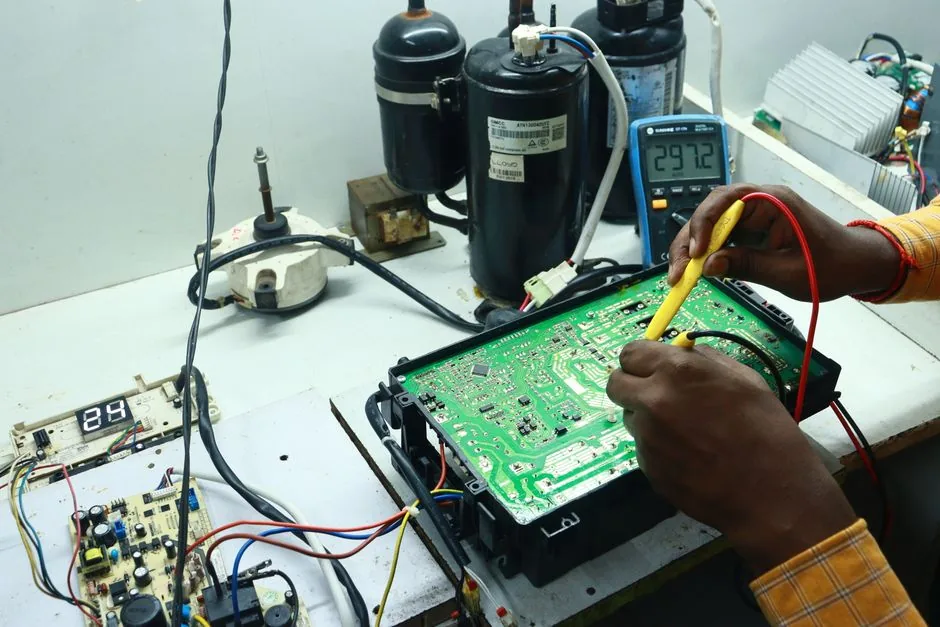
You can’t run the rule on a guess. Here’s the honest part most sites skip — the diagnostic fee is money you’re spending no matter what. Most techs charge $75-125 just to show up and tell you what’s wrong. That fee is sunk. Do NOT let it trick you into approving a bad repair just because “I already paid to have him out here.” I’ve watched people dump $400 into a $500 washer purely to feel like the $95 service call wasn’t wasted. That’s throwing good money after bad.
What you’ll see: a written quote with parts and labor broken out, or at least a firm verbal number.
What’s happening: the tech has diagnosed the actual failed component. Now you have your top number.
What to do: write it down. Parts plus labor, all in. That’s the figure you’ll compare against a new unit. If you’re comfortable with a screwdriver and the fix is something like a straightforward component swap you can do yourself, your “repair number” drops to just the part cost — and that changes the whole calculation. A $30 part you install yourself almost never crosses the 50% line.
Step 2: Layer On the Age Number
Dollars alone don’t decide it — age is the other half of the equation, and it’s the half most people ignore. Every major appliance has a known expected lifespan, and once a unit crosses the halfway point, you’re repairing a machine that’s statistically closer to the next failure than the last one. I keep an average lifespan chart for every major home appliance handy for exactly this reason, because “how old is too old” isn’t a feeling — it’s a number. A refrigerator averages 10-13 years. A dishwasher, 9-10. A clothes dryer, 10-13. Gas ranges push 15+. So here’s the move: find your unit’s expected lifespan, figure out where it falls on that timeline, and if it’s past 50% of its life AND the repair is past 50% of new — replace. Both flags up means walk away. One flag up means think hard. No flags means fix it and don’t lose sleep. That single sentence has saved my customers more money than any tool I own.

Is the 50% Rule Actually Reliable, or Just a Rule of Thumb?
Fair question, and I get it a lot. It’s a rule of thumb, yes — but it’s a rule of thumb built on real cost data, and it’s right far more often than gut instinct. My first instinct, early on, was to fix everything. Nine years in commercial kitchens will do that to you — downtime costs money, so my reflex was always “patch it and keep it running.” I did that for years. Then I started tracking the units I’d talked people into repairing, and I noticed a pattern: the ones past their halfway mark came back. Second failure inside 18 months, different component, another service call. That’s when the rule clicked for me. The 50% Rule isn’t magic — it’s just the accumulated cost of every second repair I watched happen on machines I should’ve told people to replace.
Watch how a tech runs the repair-or-replace math in real time
When the Repair Almost Always Wins
Some fixes are so cheap the rule never even comes into play. If the part is under $60 and you can get to it, you fix it — full stop. Inlet valves, drain pumps, igniters, door switches, thermal fuses. A microwave that’s lost all power is often just a blown internal fuse or a tripped door interlock — a few dollars in parts, not a reason to buy a new microwave. Same logic runs through home systems generally; a lot of what looks like disaster is a cheap component, which is exactly why basic plumbing fixes like leaks and clogs rarely justify calling in a full replacement. About 60% of the appliance repair calls I ran over the years were fixes under $60 in parts. Those never hit the 50% ceiling. You just do them.
When Replacement Almost Always Wins
Sealed-system work. That’s the big one. Any repair that opens the refrigerant circuit — compressor, evaporator, condenser, a refrigerant leak — runs $400 to $1,200 and legally requires an EPA-certified tech. On a home refrigerator that costs $700-1,000 new, that repair blows straight past 50% before you’ve even factored age. I’ve never once recommended a sealed-system repair on a home fridge older than 8 years, and I’d bet I’m right 90% of the time doing it. Control boards are the other frequent replace-flag: a board can run $150-250, and on an older mid-range unit that’s often more than half of new. Kinda brutal, but the math’s the math.
Never open a sealed refrigerant system yourself. It requires EPA Section 608 certification, specialized recovery equipment, and venting refrigerant is illegal. This is a hard “call a pro or replace the unit” line — no DIY exception.
The Exceptions Where I Break My Own Rule
The rule covers about 80% of decisions. Here’s the 20% where I bend it. Premium brands maintained well — a Sub-Zero, a commercial-grade range, a Whirlpool direct-drive washer that’s bulletproof if you keep it clean — those can justify a repair past the 50% line because their real lifespan runs longer than the chart says. GE refrigerators from before 2010 are the same story; they’ll outlast you, and I’ll fix one at 60% of new without blinking. The flip side: Samsung French door ice makers. That’s a problematic design, and I’d think twice about a pricey repair there even under the 50% line, because I’ve seen the same units come back. And LG’s linear compressors — after the recalls, the jury’s still out for me, so I weight those toward replacement even when the raw math says fix.
The rule tells you what to do 80% of the time. Knowing the 20% where the brand changes the answer — that’s the part 39 years buys you.
Rough numbers to hold in your head: a diagnostic call is $75-125. A typical repair (valve, pump, igniter, element) runs $150-400 installed. A major repair — compressor, sealed system, control board — runs $400-1,200. Compare that middle-and-top range against the new-unit price before you approve anything. If the tech’s quote is more than half of new and the unit’s past its halfway age, thank him for the diagnosis and go shopping.
How to Not Be Back Here in Two Years
Most of the “should I fix it” calls I got were failures that maintenance would’ve prevented. So — clean your dryer’s full vent run once a year, not just the lint trap. Pull your refrigerator out and vacuum the condenser coils every 6 months (this one’s free and it’s the single biggest lifespan-extender I know). Run a dishwasher cleaner monthly. And don’t put a chest freezer in an unheated garage without checking whether it’s rated for it — cold-weather garage freezer problems are a whole category of failure people cause themselves. Do those handful of things and you’ll be running the 50% math a lot less often.
FAQ
Does the diagnostic fee count toward the repair cost in the 50% Rule?
No — I treat it as separate, and here’s why. The diagnostic fee ($75-125) is already spent the second the tech walks in. Rolling it into your repair-versus-replace math tempts you to approve a bad fix just to “justify” the fee. Run the rule on the actual repair quote alone, and mentally write off the diagnostic as the cost of finding out what’s wrong.
What if the exact appliance model is discontinued?
That’s one of my real exceptions. If the part is discontinued or backordered for months, I lean toward replacement even if the dollar math says fix it — a machine you can’t reliably source parts for is a future headache. I’ve had customers wait 6 weeks for a control board that never came. Not worth it.
Is a 15-year-old appliance ever worth repairing?
Rarely, but yes — if it’s a cheap part you install yourself and it’s a durable brand. I’ll fix a $25 igniter on a well-built 15-year-old gas range all day long. What I won’t do is put a $300 professional repair into a 15-year-old anything. Age past the halfway mark plus a big bill is the clearest “replace” signal there is.
How accurate are the lifespan averages, really?
They’re averages, so your unit could beat them or fall short — but they’re accurate enough to make decisions with. A well-maintained fridge can run 18 years; a neglected one dies at 8. Maintenance is what moves you along that curve, which is exactly why the prevention stuff up top matters.
Should I repair it myself to stay under the 50% line?
If you’re comfortable and it’s a safe job — absolutely, that’s the smartest move on this whole page. DIY drops your repair number to just the part cost, and I’ve watched people turn a “replace” decision into an easy “fix” by spending $40 and an afternoon. Just stay away from sealed refrigerant systems and live gas lines. Those are pro-only, no exceptions.
Facing this decision yourself? Our Repair vs. Replace Calculator gives you a clear verdict, with the reasoning behind it.

Written by Keith Schneerer
Certified Appliance Tech · Founder, RemoveAndReplace.com
Keith has spent 30+ years repairing machines, starting as a military mechanic and later maintaining food processing equipment before moving into appliance repair. He founded RemoveAndReplace.com to share field-tested repair advice.
More about Keith →