A squeaky floor is almost always the sound of a nail rubbing against wood where the floorboards have pulled away from the joist below. For about $20, a Squeeeeek No More kit drives a special breakaway screw down through the floor and into the joist, pulling the boards tight and killing the squeak. Most rooms take under an hour.
- That squeak is friction — nails sliding through wood where boards separated from the joist, not a broken floor.
- About 80% of the squeaks I’ve chased down come from boards that lost their grip on the joist and started flexing.
- The Squeeeeek No More kit runs a little over $19 and works on hardwood, carpet, and linoleum — different fixture for each.
- The screws are scored to snap off below the surface so you never see them once you’re done.
- Find the joist first. A screw into empty subfloor between joists does nothing and you’ll be right back where you started.
What’s Actually Making Your Floor Squeak?
Here’s the thing everybody gets wrong: that squeak is not your floor falling apart. It’s friction. Over the years the boards shrink and warp a little, and gaps open up between the floorboards and the beams underneath. When you step down, the board flexes, and the nail holding it slides back and forth through the wood. That scraping is the noise you hear at 6 a.m. when somebody heads to the bathroom. Nine times out of ten it’s exactly that — a board that lost its tight grip on the joist and started rubbing the nail. About 80% of the squeaks I’ve tracked down over the years come down to that one thing. The other 20% is a support problem: too-small beams over too long a span, or joists spaced too far apart when the place was framed. That second kind is a bigger conversation. But the friction squeak? That you can fix yourself this afternoon for around twenty bucks.
I spent years thinking a real squeak meant pulling up boards and re-nailing everything — I did it that hard way more than once. Then I found out there was a kit built for exactly this, and I felt a little dumb for all the weekends I’d wasted. Live and learn.
The busted assumption: you don’t need to tear up the floor
Most folks assume a squeaky floor means demo — ripping up hardwood or pulling back carpet and re-securing everything. You almost never have to. The whole point of these kits is that you work from the top, right through the finished floor, and leave no visible damage behind. Save yourself the demolition.
The $20 Fix: How the Squeeeeek No More Kit Works
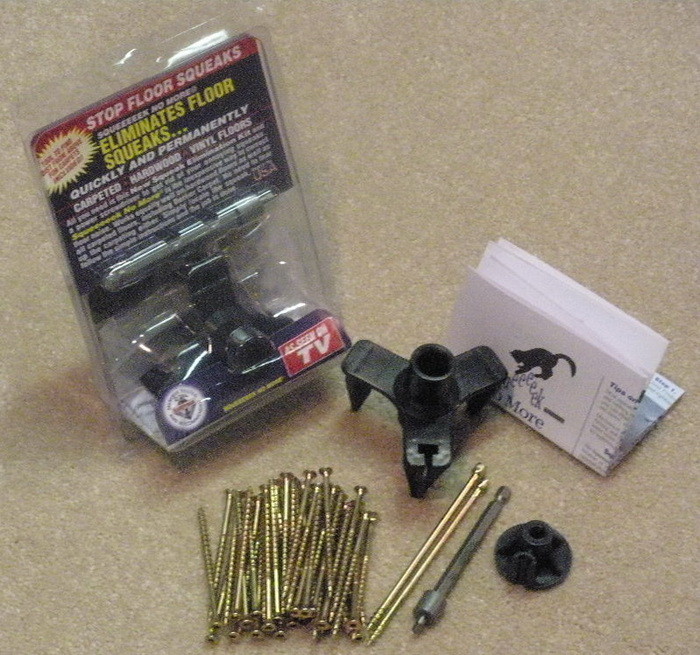
It’s hard to believe, but for around $20 you can get a complete kit that actually stops the squeak in your floors. We picked one up at our local Home Depot called the “Squeeeeek No More kit” for a little over $19. Followed the directions right on the package and had amazing results — it killed squeaks we’d been living with for 15 years. I had no idea something like this even existed, which is exactly why I’m writing it up. It’s been six months and the floors we treated are still dead quiet. We just bought a new place with hardwood, and I’m gonna run this same kit on those floors too.
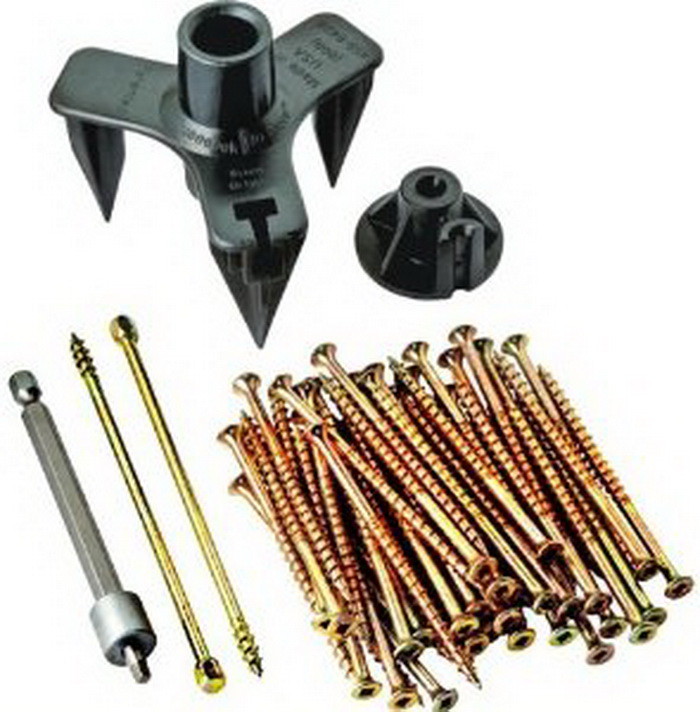
The kit contains a plastic molded alignment and depth control fixture, 50 specially scored 3-inch x 1/8-inch diameter screws, a customized driver bit to regulate the depth at which to drive the screw, and two joist-finding screws to help find the joist from above. The scored screws are the clever part — you drive one in, snap the head off with the fixture, and the screw sits below the surface where you’ll never see it. Budget an hour your first room while you get the feel for it. After that it goes quick.
What you’ll see / what’s happening / what to do
What you’ll see: a spot on the floor that squeaks every time your weight lands on it. What’s happening: the board right there has pulled up off the joist and the nail is scraping as it flexes. What to do: locate the joist under that spot using the joist-finder screws, set the fixture over it, and drive a scored screw down through the floor into the joist to pull everything tight. That’s the whole game.
Which Kit Do I Need — Hardwood, Carpet, or Linoleum?
This one comes up in the “People Also Ask” boxes all the time, so let me answer it straight: the Squeeeeek No More system is made for all three floor types, and the difference is the fixture and technique, not some totally different product. The core idea — drive a scored screw through the floor into the joist and snap it off below the surface — stays the same across the board. Match the kit to what’s on your floor and you’re set.
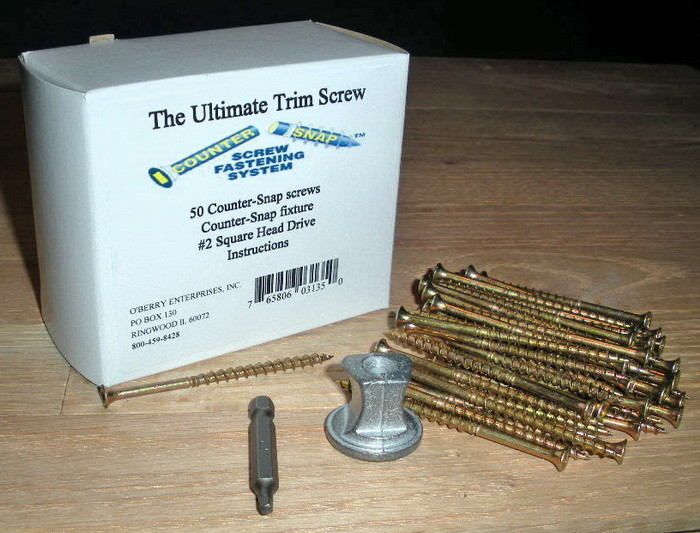
For hardwood, you work directly on the exposed plank. The scored screw snaps off just below the surface, and once you dab the tiny hole it disappears into the grain. If you’re the type who also likes tackling small wood repairs around the house yourself, this is right up that alley — same patience, same payoff.
Carpet is honestly the most satisfying one. The fixture drives the screw straight through the carpet and pad into the joist, then breaks the head off below the backing. You run your hand across it after and feel nothing (don’t ask how many times I checked mine the first time). No patching, no finishing — just quiet floor.
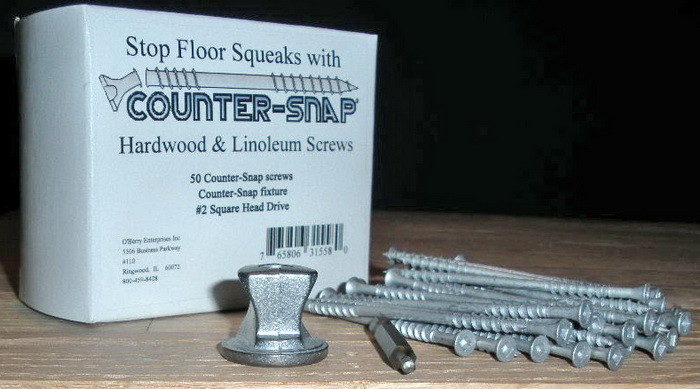
Linoleum works the same way — screw down through the vinyl into the joist and snap off below the surface. Just go slow finding your joist on this one. A hole in the wrong spot in linoleum is more noticeable than a stray hole in hardwood, so measure twice.
The One Mistake That Wrecks This Repair
This is where most people screw up: they drive the screw and it grabs nothing. If you miss the joist and sink the screw into open subfloor between joists, you’ve pulled tight against a board that’s already loose — the squeak comes right back within a week. That’s exactly what the two joist-finding screws in the kit are for. Use them. Find solid wood before you commit the real screw. I know it feels like an extra step you can skip. Don’t skip it. Every callback squeak I’ve heard of with this kit traces back to somebody guessing at the joist instead of finding it.
Watch the video below before you start — it walks through the whole process in real detail and shows exactly how the fixture and the breakaway screws work together.
When It’s Not the Floor — It’s the Framing
I said earlier that about 20% of squeaks aren’t a loose-board problem. If your whole floor feels bouncy, or a big stretch of it squeaks and flexes as a unit rather than at one spot, that points at the framing underneath — undersized beams, too long a span, or joists spaced too far apart. A screw kit won’t fix a structural support issue, and I wouldn’t want you thinking it will. That’s a get-under-the-house-and-look situation, and sometimes a call to someone who does structural work. But for the ordinary spot-squeak that most homes have? The kit handles it every time.
How to Keep the Squeaks From Coming Back
Once a room is quiet, it tends to stay quiet — but wood floors move with the seasons. When the heat’s been running all winter and the air’s bone dry, boards shrink and a new squeak can pop up. Keep indoor humidity reasonably steady (a humidifier in dry months helps more than people think) and you’ll cut down on new squeaks forming. If one does show up, you’ve still got 50 screws in the kit — I keep the fixture and driver bit in a drawer for exactly that. Walk the floor once a year, mark any new squeaks with painter’s tape, and knock them all out in one short session.
Frequently Asked Questions
How much does the Squeeeeek No More kit cost?
A little over $19 at our local Home Depot — call it around $20 for the complete kit. That gets you the fixture, 50 scored screws, the depth-control driver bit, and two joist-finding screws. For twenty bucks and an hour of your time, I can’t think of a better return on a home repair.
Will the screws be visible in my hardwood floor?
No. The screws are scored so the head snaps off below the surface. On hardwood you’re left with a tiny hole you can fill and it vanishes into the grain. On carpet you won’t see a thing at all — I’ve run my hand over carpet I treated and felt nothing.
Does this really work long-term, or does the squeak come back?
It lasts. The floors I treated stayed squeak-free — it’s been six months and counting on the ones I did, after we’d lived with those squeaks for 15 years. The only time I’ve seen it fail is when someone missed the joist. Hit solid wood and it holds.
Can I use this on a floor that’s bouncy over a large area?
Probably not with good results. If a big section flexes as a whole, that’s a framing or support problem, not a loose board, and this kit is built for spot squeaks. Fix the localized squeaks with it, but get the bouncy span looked at separately.
Do I really need the joist-finding screws, or can I eyeball it?
You really need them. Guessing at the joist is the single fastest way to waste a screw and have the squeak return. I’ve seen it happen enough that I won’t drive a real screw until the finder screw hits solid wood underneath.
You can grab the kit for online purchase here: Stop Squeak Floor Kit. While you’ve got the DIY momentum going, some of the other jobs I’ve walked through — like removing an interior door without damaging it or sorting out common garage door problems — use the same take-your-time approach. And if it turns out the squeak in your house isn’t the floor at all, my write-up on tracking down a squeaky garage door covers the other usual suspect.

Written by Keith Schneerer
Certified Appliance Tech · Founder, RemoveAndReplace.com
Keith has spent 30+ years repairing machines, starting as a military mechanic and later maintaining food processing equipment before moving into appliance repair. He founded RemoveAndReplace.com to share field-tested repair advice.
More about Keith →