A handshake happens fast — it’s often over before you’ve finished saying your name — but it tells the other person a lot before you’ve said a word. I always notice the grip first, then the eye contact, then the timing. Get those three right, and you’ve made a solid first impression. Get one wrong — too limp, too crushing, too short, too clingy — and that’s often what people remember instead of anything you actually said.

Below is the breakdown I’d give anyone asking how to shake hands the right way. I’ll cover what to do, what to avoid, and the small technical details — grip, timing, duration — that separate a confident handshake from an awkward one.
The Elements of a Strong Handshake
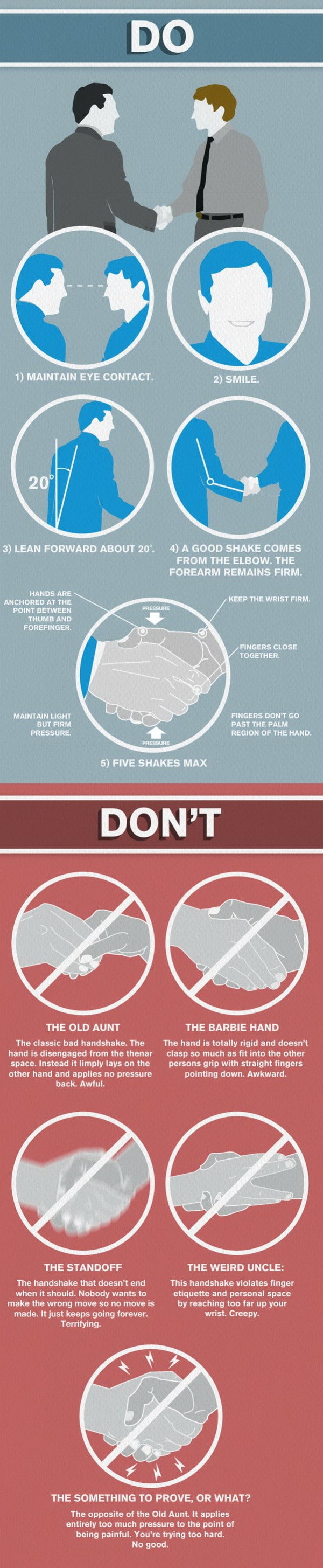
These five habits form the foundation of a good handshake. None of them are complicated. But skip even one, and I’ve found it changes how the whole interaction feels to the other person.
- Maintain eye contact — I look at the person, not at my hand or the floor, while I shake.
- Smile — a neutral or tense expression paired with a handshake reads as cold, even if that’s not the intent.
- Lean forward slightly — just enough to show you’re engaged, without crowding the other person’s space.
- Shake from the elbow — the motion comes from your elbow, not your wrist or shoulder, and your forearm stays firm throughout.
- Keep it brief — a few shakes is plenty. Anything longer starts to feel mechanical or overly eager.
What Handshake Mistakes Should You Avoid?
Most weak handshakes fall into one of a handful of recognizable patterns. If you’ve ever shaken a hand and thought “something felt off,” it was probably one of these:
- The Old Aunt — an overly gentle, barely-there grip that feels more like a pat than a shake. It reads as timid or disengaged, even if that’s not how you meant it.
- The Barbie Hand — offering only your fingertips instead of full palm-to-palm contact. It leaves the other person unsure whether a handshake actually happened.
- The Standoff — leaning back and keeping maximum distance during the shake, which comes across as guarded or uninterested.
- The Weird Uncle — going overly familiar, adding a second hand on top or a long pull-in that feels too personal for the setting.
- Something to Prove — the crushing, overpowering grip meant to establish dominance. It usually just makes the other person wince and remember you for the wrong reason.
In my experience, most people don’t realize which of these they default to until someone points it out. I’d suggest practicing a normal handshake with a friend or family member and asking for honest feedback.
Timing, Grip, and Duration: The Technical Details
Beyond the do’s and don’ts, a few technical details make the difference between a handshake that feels natural and one that feels forced. I pay attention to these four in particular:
- Timing — if you’re the one initiating, extend your hand as you introduce yourself, not before or after.
- Eye contact — make and hold eye contact as you shake hands and exchange names, rather than looking down at the handshake itself.
- Grip — I think of it like holding a baseball bat just a bit inside the knob: firm enough that the bat stays straight out in front of you, but not gripped so hard your knuckles whiten.
- Duration — keep it brief. I aim to let go once the other person’s grip loosens, which is usually just a beat or two. Holding on longer than that starts to feel awkward fast.
Michigan State University Extension covers this same ground in more depth. It notes that a handshake is often the very first nonverbal signal you send in a professional interaction. That’s exactly why I think these small details carry more weight than people expect. Their printable handshake handout is a good one to keep on hand if you’re coaching someone else through this.
Is Handshake Etiquette Different With Women?
Older etiquette guides — including the one this article was originally built from — treat greeting a woman a bit differently. Instead of a standard shake, the guidance was to bow slightly without losing eye contact. Or you’d let her hand rest in yours, palm-up, while you introduced yourself — thumb resting gently over her fingers, your other hand cupped beneath her palm. Contact was meant to last only as long as the introduction itself.
That’s a traditional, more formal version of the greeting. It’s worth knowing it exists, in case you’re ever in a setting where that older style is still expected. In most professional settings today, though, I’d point people to Emily Post’s modern etiquette guidance. It treats the handshake itself as a gender-neutral greeting — a firm, brief handshake is the standard for everyone in a business context, not just for men greeting men.
Quick Reference: Getting It Right
If I had to boil all of this down to one thing, it’s this: extend your hand as you say your name, keep eye contact, grip firmly from the elbow without crushing, hold on for a beat or two, and let go when the other person does. I think everything else — the smile, the slight lean, avoiding the common mistakes above — just builds on that same basic foundation.

Written by Keith Schneerer
Certified Appliance Tech · Founder, RemoveAndReplace.com
Keith has spent 30+ years repairing machines, starting as a military mechanic and later maintaining food processing equipment before moving into appliance repair. He founded RemoveAndReplace.com to share field-tested repair advice.
More about Keith →