Here’s what’s actually happening inside your dishwasher when you shut the door. Nothing in there scrubs. A pump pushes hot water up through hollow spray arms, the water fires out of a couple dozen angled jet holes, and the reaction force of those jets is what spins the arms and blasts food off the plates. Heat dissolves and activates the detergent; pressure does the scrubbing. So when dishes come out gritty, filmy, or still dirty, you’re looking at a water problem — force, path, or temperature — not a dead machine, and after 11 years repairing commercial food service equipment I can tell you every one of those three gets worked the same way.

A dishwasher not cleaning properly is usually a spray arm problem, not a pump failure. Pull the lower rack, hold each spray arm up to a light, and check for jet holes glazed shut by hard water. Clear them with a paper clip, then soak the arms in a descaler for 30 minutes. Free, and it fixes most cases.
Before You Start
- Water temperature matters as much as water pressure — detergent needs roughly 120°F to actually activate.
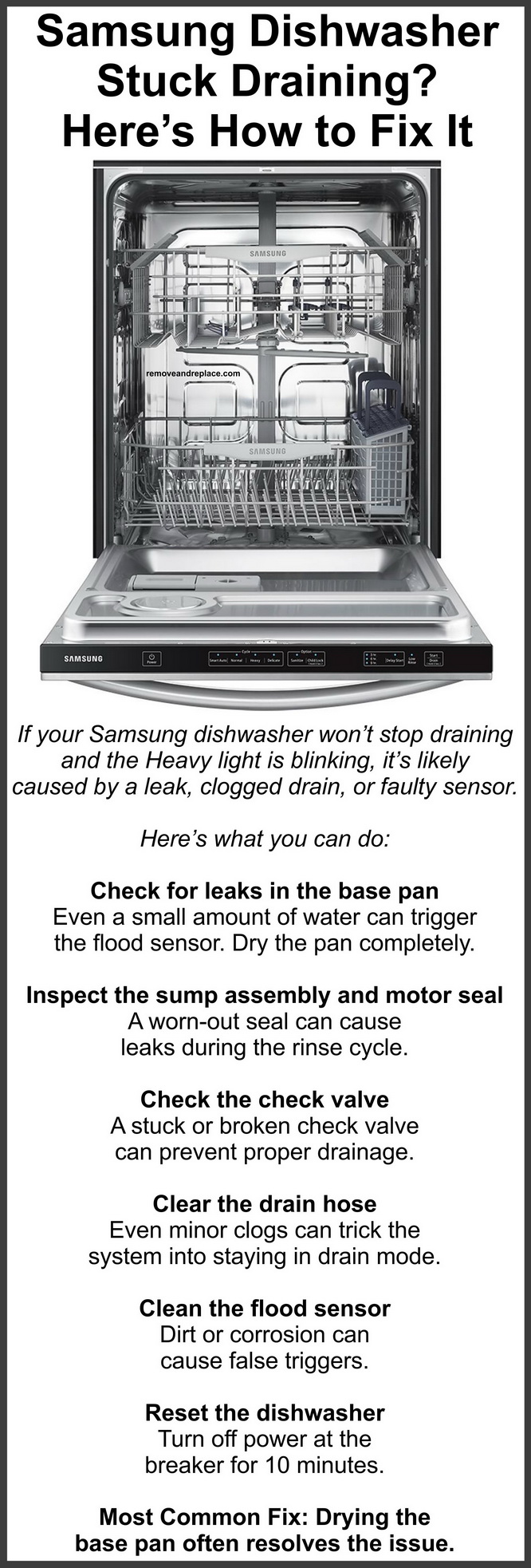
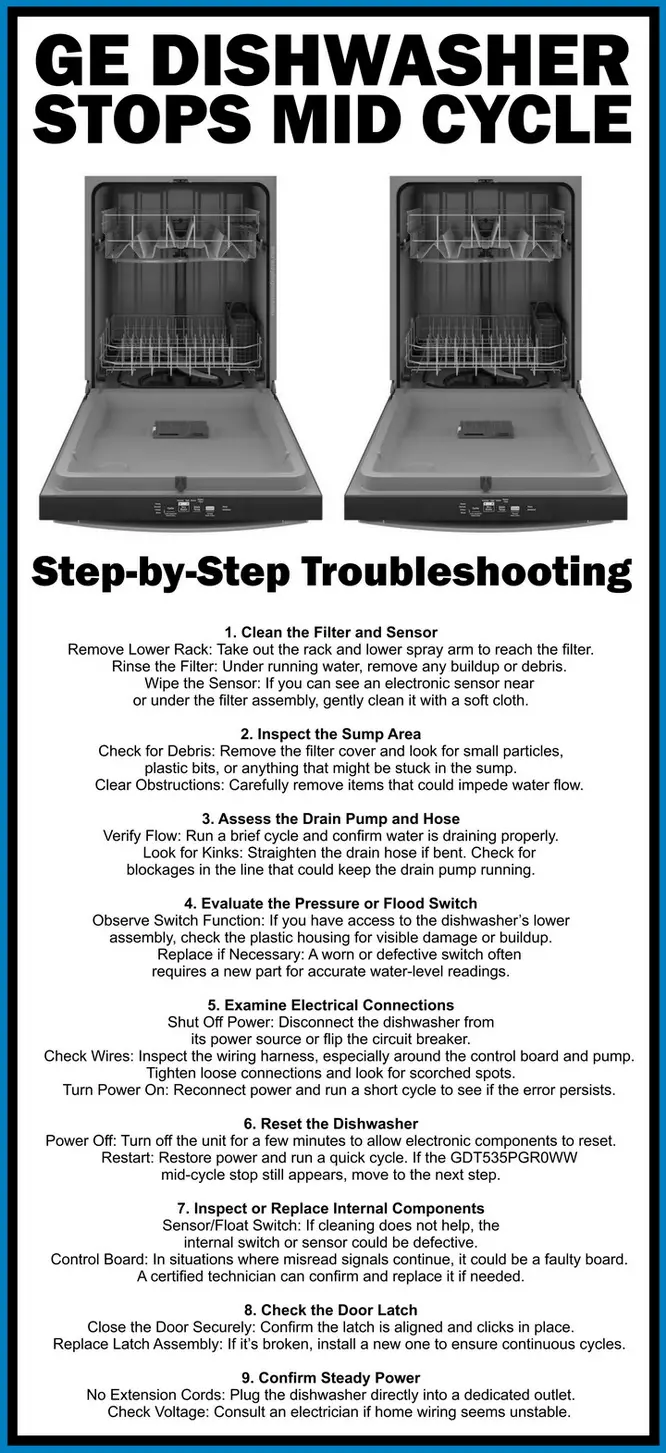
- GE, Samsung, Bosch, KitchenAid, Frigidaire, Whirlpool, Maytag — they all wash by spraying hot water, so the diagnosis is identical across brands.
- A single broken glass shard wedged under the lower arm will stop it dead. Check that before you blame anything expensive.
- If you’re on hard water, this is a maintenance problem, not a one-time repair.
| Cause | Likelihood | Fix Cost | DIY Time |
|---|---|---|---|
| Hard water scale glazing the spray arm jet holes | Most common | Under $10 | 45 min |
| Incoming water not hot enough | Common | Free | 5 min |
| Spray arm jammed by glass, a utensil, or a fallen lid | Less common | Free | 10 min |
| Clogged filter, clogged pump, or loose upper feed tube | Least common | $0–$100 | 30–60 min |
Why Is My Dishwasher Not Cleaning My Dishes?
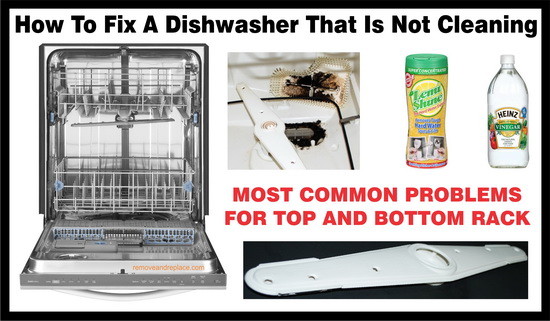
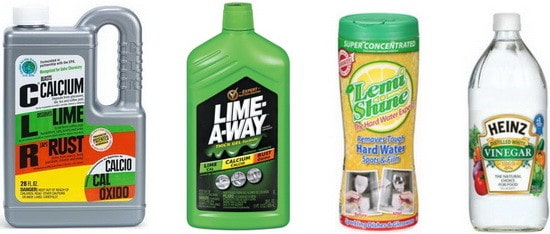
Most of the time, a dishwasher not cleaning has nothing wrong with its motor, its computer, or its pump. The water simply isn’t reaching the dishes with enough force or enough heat to do the job. Hard water deposits glaze over the tiny jet holes in the spray arms, the arms slow down or stop spinning, and the top rack in particular stops getting hit. That’s the first thing I check, every time, before pulling a single part. Grab a flashlight, pull the lower rack out, and hold the spray arm up so light passes through the holes. If half of them look glazed, chalky, or partly plugged, you’ve found it. The fix is a paper clip and a thirty-minute soak in a descaler like CLR or Lime Away — no parts, no service call, and you’ll know inside an hour whether that was the whole problem.
The assumption almost everybody arrives with is that the pump is dying or the motor is on its way out. It almost never is. A failing wash pump makes noise and moves water badly on every cycle; scaled-up spray arms just quietly stop covering the load, and the decline is so gradual you don’t notice until the glasses look permanently foggy.
1. Hard Water Has Glazed Over the Spray Arm Holes
What you’ll see: Dishes on the top rack come out worse than the bottom. Glasses have a chalky white haze that doesn’t wipe off wet. Food is still stuck to plates that were facing the arm. From a foot away the spray arm looks fine — that’s the trap. Get it up close under a light and you’ll see the holes have narrowed to pinholes, ringed with a grey-white crust. I also run a fingertip along the top of the arm; if it feels like fine sandpaper instead of smooth plastic, that’s scale. On a badly scaled arm, the whole thing feels heavier than it should, because the internal channel is partly packed with the same deposit.
What’s happening: Every gallon of hard water leaves behind dissolved calcium and magnesium. It bakes onto the plastic at the hole edges first, because that’s where water evaporates last. Narrow the hole and you don’t just lose a little water — you lose the jet velocity that spins the arm, so the arm slows, coverage drops, and the deposits build faster. It compounds on itself. Out here in the Phoenix area this happens fast enough that I’d call it scheduled maintenance rather than a repair.
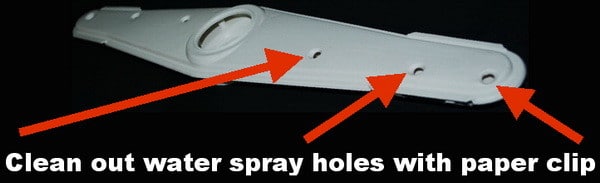
What to do:
- Poke the holes with something small and pointy. A straightened paper clip works, and that’s what I keep in the drawer for this job. Push it into every hole on the top and bottom arms. This opens them back up and you’ll get an immediate improvement — but understand this is a temporary fix, not a real one. You’ve punched a channel through the crust, you haven’t removed it.
- Remove the spray arms. On most models the lower arm lifts off a hub or unscrews with a plastic retaining nut, and the upper arm comes off the rack with a quarter turn. Budget about 10 minutes. If you’re not sure on yours, search “How to remove dishwasher spray bar for [Manufacturer] [Model#]” — every brand has a video.
- Soak them in a descaler for 30 minutes. CLR or Lime Away both work. I give them the full half hour, fully submerged — I’ve never seen a rushed soak do the job properly.
- Rinse under hot running water until every deposit is flushed out of the holes and out of the internal channel. Shake the arm — you shouldn’t hear grit rattling around inside.
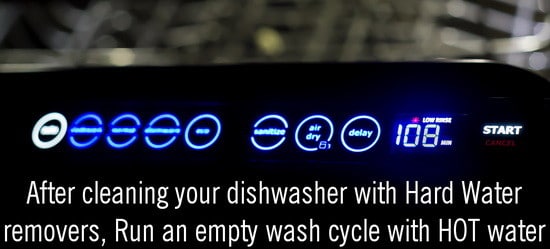
- Reinstall exactly the way you took them out and run one empty cycle on the hottest setting. I never skip that step, because it flushes loosened scale and leftover cleaner out of the tub.
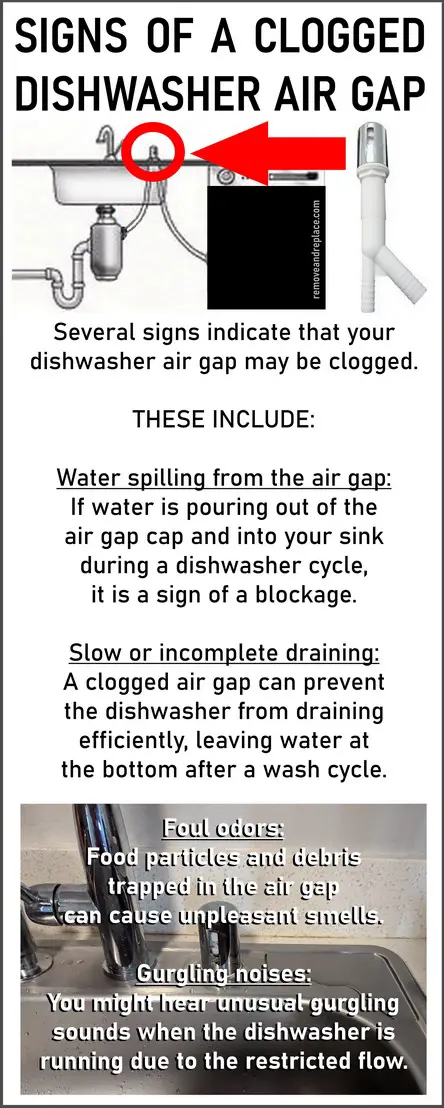
- Check the bottom of the tub when the cycle finishes. Pull the filter, clear any debris, and make sure nothing is sitting over the drain. If water’s pooling down there instead of clearing, I’d treat that as a separate problem — often a clogged dishwasher air gap restricting the drain line.
The mistake I see most often: people respond to poor cleaning by dumping in twice the detergent. Don’t. Extra detergent doesn’t compensate for weak spray — it just doesn’t rinse away, so it dries into the same white film you were trying to get rid of, and now you’ve got two problems that look identical. Fix the water delivery first, then go back to a normal dose.
2. The Water Isn’t Hot Enough To Activate the Detergent
What you’ll see: Undissolved detergent still sitting in the dispenser cup at the end of the cycle, or a gritty powder residue on the bottom of glasses. Greasy plates that come out warm but still greasy. I’ve lost count of how many “broken” dishwashers turned out to be a temperature problem, and it gets misdiagnosed because everything mechanical checks out fine.
What’s happening: Dishwasher detergent needs water at around 120°F to dissolve and activate — below that it never fully breaks down, and it rides through the cycle without doing much of anything. Cold water sitting in the supply line, a water heater set conservatively, or a long pipe run from the heater to the kitchen will all put cool water into the tub for the first fill.
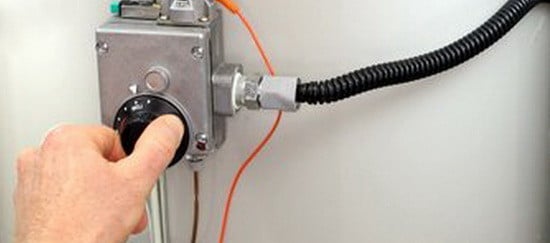
What to do: I’d start by running the hot water at the kitchen sink until it’s genuinely steaming, then starting the dishwasher immediately — that alone tells you whether temperature is your issue, and it costs nothing to test. If that helps, raise the water heater thermostat about 5 degrees and re-test. Both gas and electric heaters adjust easily; on electric there are usually two thermostats behind access panels and they should match. I’d rather you make that small adjustment and use the sink test as a habit than crank the heater way up.
Scald warning. Raising the water heater temperature makes water hotter at every faucet and shower in the house, not just the dishwasher. Hot water above about 120°F can scald a child in seconds. If there are kids or older adults in the house, use the run-the-sink-first trick instead of turning the heater up, or install anti-scald mixing valves before you touch that thermostat.
3. The Spray Arms Aren’t Spinning at All
If you’ve descaled the arms and they still won’t turn, something is physically stopping them. The lower arm is the usual victim — a chip of broken glass, a fallen utensil, a jar lid, a chunk of bone. I spin the arm slowly by hand through a full rotation and feel for the catch rather than looking for it, because the obstruction is usually somewhere you can’t see.
And I’ll say it plainly: whoever decided the lower spray arm should sit a half-inch above the filter never had to fish a glass shard out of that gap. There’s no clean angle, you can’t see what you’re grabbing, and it’s a knuckle-buster every single time. Wear a glove and use needle-nose pliers, not your fingers.
4. When the Top Rack Comes Out Dirty and the Bottom Rack Is Fine
This is the odd one, and it’s the case most articles skip right past. If the lower rack washes perfectly and the upper rack comes out with dried-on food every time, the upper arm isn’t getting water — and that’s usually not the arm’s fault. Water reaches the upper arm through a feed tube running up the back of the tub, and on a lot of models that tube joins the tub with a plastic clip or a friction fit that eventually cracks or works loose. When it separates, the pump is still pushing water, it’s just dumping it behind the liner instead of up to the top arm. I’d pull the upper rack right out and look at where that tube meets the tub wall before assuming anything else.
There’s a second version of this on models where the upper rack docks to a water port on the rear wall (Bosch and KitchenAid are the ones I run into most). If the rack isn’t pushed all the way home, or if the rack’s height adjusters are set unevenly, that port never seats and the upper arm gets nothing at all. Push the rack in firmly and listen for it to click. Costs nothing to rule out, and I’ve seen people chase this one for weeks.
If neither arm is getting good pressure, I’d look at the filter and the wash pump inlet next. Check your manual for the filter location, or search “clogged filter or faulty water pump in dishwasher [Manufacturer] [Model#]”. And if the tub isn’t holding enough water to begin with, the problem may be upstream of the pump entirely — a stuck dishwasher float switch will cut the fill short, and a unit that keeps draining when it should be washing never builds enough water to spray with. RepairClinic’s poor-wash troubleshooting page is a decent second opinion if you want to work down the list, and replacement arms for most brands are on PartSelect’s spray arm catalog if yours is cracked rather than clogged.
How To Keep It From Coming Back
Once a month I pour a cup of white vinegar into the bottom of the empty dishwasher and run a hot wash cycle. That’s the whole routine — I don’t do anything fancier than that. The vinegar keeps scale from re-establishing itself in the jet holes, and it’ll keep the tub from developing that stale smell too.
I’d also add Lemi Shine to your regular detergent if your water is hard. It’s a citric acid additive, you use it alongside normal detergent rather than instead of it, and it’s genuinely good at pulling hard water spots off glassware. If you’re in the Southwest — Arizona, Nevada, southern California, west Texas — and you don’t have a whole-house softener, you’re gonna need something like it. The mineral load out here is high enough that a spray arm can go from clean to noticeably restricted in under a year.
When It’s Worth Calling Someone
Everything above is free or under $10 in cleaner, and a service call runs $100–$200 before anyone touches a part. Which means the descaling is always worth trying yourself first — you’ve gotta rule out the free stuff before you pay someone to rule it out for you.
I’d call a pro if:
- The wash pump motor is humming or grinding but moving no water after the arms are verified clear.
- You’ve got standing water that won’t drain and the filter, air gap, and drain hose are all clear.
- The control board isn’t advancing cycles, or the heating element circuit is dead (that’s a live 120V repair inside a wet cabinet).
Dishwasher Cleaning Questions I Get Asked A Lot
Why is my dishwasher leaving a white film on glasses?
Most of the time that’s hard water scale, not detergent residue — and the giveaway is that it won’t wipe off with a wet cloth but will come off with vinegar. Add Lemi Shine to your detergent and run the monthly vinegar cycle. If it wipes off easily when wet, I’d say you’re using too much detergent instead.
Should I rinse dishes before loading them?
Scrape, don’t rinse. Modern detergents actually need some food residue to work against, and I’ve seen people pre-rinse so thoroughly that the detergent has nothing to grab and ends up etching the glassware instead. Knock the big stuff into the trash and load it.
Can I use vinegar in the dishwasher safely?
Yes, in the amounts described here — a cup poured into the bottom of an empty tub, once a month, on a hot cycle. I wouldn’t run vinegar with every load or leave it sitting in the rinse aid dispenser long term, because prolonged acid exposure isn’t great for rubber door seals. Once a month is the sweet spot.
Does the type of detergent actually matter?
More than people think. Powder dissolves at a lower temperature than most pods, so if your incoming water is marginal, switching from pods to powder can fix a wash problem all by itself. I’d try that before touching the water heater thermostat.
My dishwasher is old — is it worth fixing?
If the tub, door seal, and pump are sound and it’s just a wash-quality issue, absolutely — you’re looking at an hour of your time and a bottle of descaler. I’d only start shopping if the pump has failed, the inner tub is cracked and leaking, or the control board is gone, because those repairs stack up fast against the price of a new unit.
A dishwasher not cleaning is almost never a dead machine, and I’d give any unit that still runs 45 minutes of descaling before I’d replace it. But if you do decide it’s finished — the pump’s gone, the tub’s leaking, whatever — I wouldn’t assume you’re locked into a full built-in replacement either. There are countertop units under $200 that hold a real load and hook to a kitchen faucet, and for a small household I think they’re a perfectly reasonable stopgap while you save for something better.

Written by Keith Schneerer
Certified Appliance Tech · Founder, RemoveAndReplace.com
Keith has spent 30+ years repairing machines, starting as a military mechanic and later maintaining food processing equipment before moving into appliance repair. He founded RemoveAndReplace.com to share field-tested repair advice.
More about Keith →