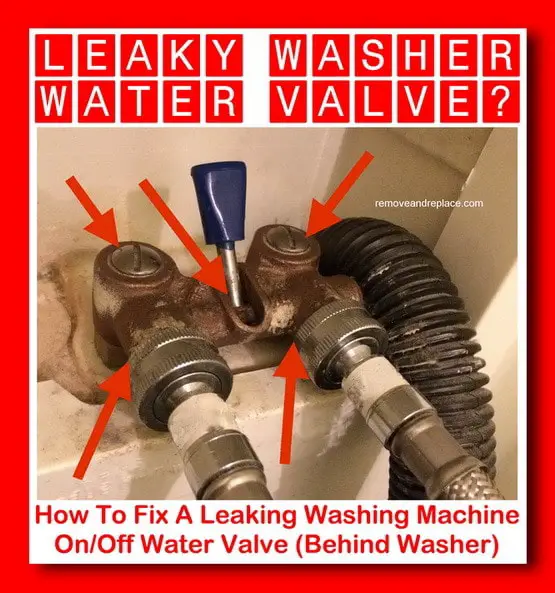
Where Exactly Is the Leak Coming From?
Before you start taking anything apart, figure out what you’re actually dealing with. The fix depends entirely on the leak location, and there are really only three possibilities on these valves:
Knowing how to fix a leaking washer is vital for every homeowner. Regular maintenance can help you identify leaks early and fix a leaking washer before it becomes a major problem.
Dripping around the handle or packing nut — This is the most common one. Water seeps out around the valve stem when the valve is open. Jump to Tighten or Repack the Packing Nut below.
Leaking where the hose threads onto the valve — That’s not a valve problem at all. The rubber washer inside the hose fitting is worn out or missing. Pull the hose off, check the washer, and replace it. We cover that in detail in our washing machine hose leak guide.
Water coming from the valve body itself or the pipe connection — If the valve body is cracked or the solder joint is leaking, you can’t rebuild your way out of it. The whole valve needs to be replaced, and unless you’re comfortable sweating copper, that’s a plumber call.
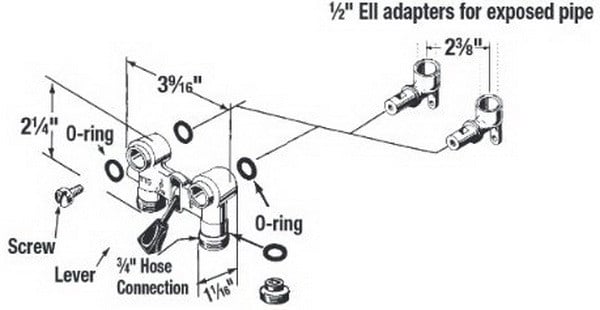 Exploded view of a typical washer water shut-off valve
Learn How to Fix A Leaking Washer
Understanding how to fix a leaking washer is essential for maintaining your appliance. By following the right procedures, you can effectively fix a leaking washer and prevent further issues.
Tighten or Repack the Packing Nut
Nine times out of ten, the leak around the stem is caused by a loose or worn-out packing nut. The packing nut compresses an o-ring, rubber bushing, or Teflon packing ring against the valve stem to create a watertight seal. Over time that material compresses, hardens, or cracks — and water finds its way through.
Don’t underestimate the importance of knowing how to fix a leaking washer. A simple tightening can make all the difference.
Try Tightening First
Turn the valve to the closed position. Hold the handle steady with one hand and use an adjustable wrench to tighten the packing nut clockwise — just a quarter turn. Don’t gorilla it. Open the valve back up and watch the stem area for 30 seconds. If the drip stops, you’re done.
I’ve fixed hundreds of these over the years, and I’d say a simple quarter-turn snug-up solves the problem about half the time. The other half, the packing material is too far gone and needs to be replaced. Here’s how to do that.
If you’re unsure how to fix a leaking washer, consult an expert. Even minor issues can escalate if not addressed promptly.
Replace the O-Ring or Packing
You’ll need an adjustable wrench, a flat-head screwdriver, and a replacement o-ring or packing kit that matches your valve. There are a few different valve styles used behind washers — gate valves, ball valves, and multi-turn stop valves are the most common. Snap a photo of yours before you head to the hardware store so you get the right kit.
- Shut off the main water supply to your house. This is usually at the meter near the street or on an exterior wall. Open a faucet somewhere in the house to relieve pressure.
- Close the washer shut-off valve and disconnect both washer hoses. Have a towel ready — some water will drain out.
- Remove the handle screw or nut and pull the handle off the valve stem.
- Unthread the packing nut counterclockwise with your adjustable wrench and slide it up the stem.
- Pull the old o-ring, rubber bushing, or Teflon packing off the stem. If it’s stuck or compressed flat, use a flat-head screwdriver to gently pry it free. Inspect the stem while it’s exposed — if the stem is scored or pitted, a new o-ring won’t seal against it and you’ll need a new valve.
- Slide the new packing material onto the stem. Make sure it seats flat in the same groove or position where the old one sat.
- Thread the packing nut back on and tighten it snug — firm but not cranked down.
- Reinstall the handle.
- Turn the main water supply back on slowly. Open the washer valve and watch the stem area for at least a full minute.
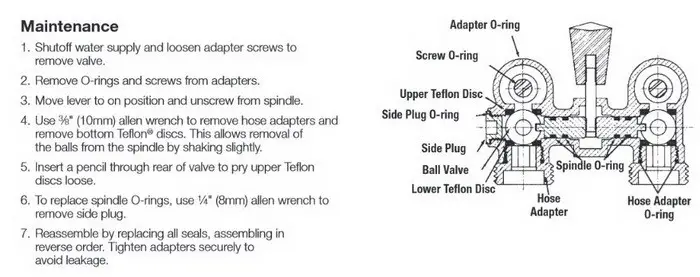 O-ring replacement instructions for typical washer shut-off valve
Safety note: Always shut off the main water supply before disassembling any valve. Even a “closed” valve can have residual pressure behind it. Keep towels on the floor and a bucket underneath — water in the wall cavity behind a washer can cause mold and serious drywall damage if it goes unnoticed.
Know Your Valve Type
Not every shut-off valve behind a washer is the same, and the rebuild process varies slightly depending on what you’ve got. The three types you’ll typically find are multi-turn gate valves (the oldest and most common in homes built before 2000), quarter-turn ball valves (the lever-handle style — these rarely leak but when they do, the entire valve usually needs replacement), and straight or angle stop valves with compression fittings.
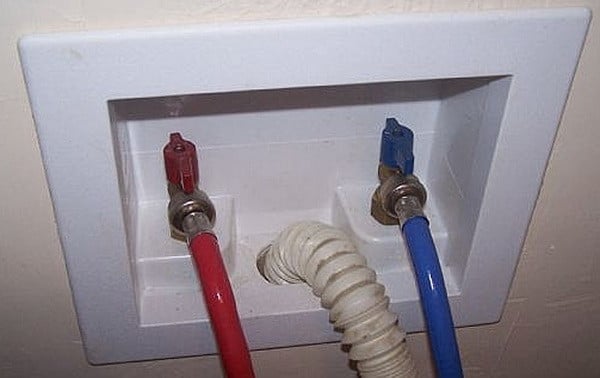 Another type of washer water shut-off valve – notice hot and cold are separate and color coded
If your home has the old-style gate valves with round handles, those are the ones most likely to develop packing leaks. They’re also the ones that tend to seize up if you haven’t turned them in years. (A valve that hasn’t moved in a decade is a valve that’s about to give you a headache — I learned that the hard way on a commercial kitchen install in my food service days.) If you’re rebuilding one and it won’t turn smoothly even with new packing, it’s time to replace the whole valve with a modern quarter-turn ball valve.
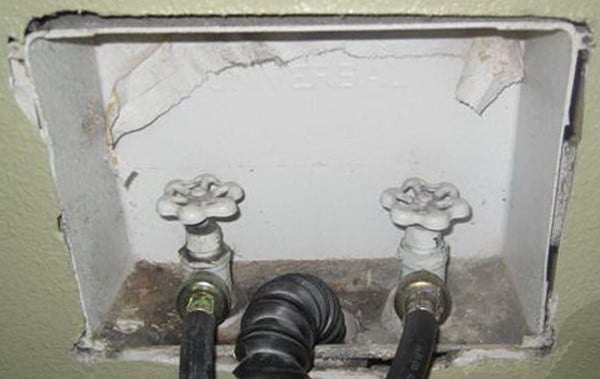 Another type of washer water shut-off valve – notice hot and cold are old style handle
What a plumber charges: Replacing a washer shut-off valve typically runs $150–$300 depending on your area, the valve type, and whether the plumber needs to cut and resolder copper pipe. If you’re just having the packing repacked, some plumbers will do it for a service call fee of $75–$150. The parts themselves — o-rings, packing kits, rebuild kits — are usually under $10.
When Tightening and Repacking Won’t Work
If you’ve tightened the packing nut, replaced the o-ring, and the valve still leaks — or if the leak is coming from the valve body itself — the valve needs to be replaced entirely. Cracks in the valve body, corroded threads, or a scored stem can’t be fixed with new packing material. A cracked valve body is not repairable.
When you need to fix a leaking washer, ensure you have all the necessary tools ready. This can save you time and frustration in the long run.
Replacing a shut-off valve involves cutting the old valve off the water supply pipe and soldering or compression-fitting a new one. If you’re comfortable with basic plumbing, a quarter-turn ball valve from the hardware store runs $8–$15 and is a straightforward swap. If you’ve never dealt with plumbing behind a washer before, this is a reasonable job to hand off to a plumber.
One thing I’ll add from experience — if one valve is leaking, check the other one too. They’re the same age, same material, same water. If the hot side went, the cold side usually isn’t far behind. Replacing both at the same time saves a second service call and keeps you from pulling the washer out again in six months.
Frequently Asked Questions
Can I use Teflon tape to stop a washer valve from leaking?
Teflon tape works on threaded pipe connections, but it won’t fix a packing nut leak. If the leak is around the valve stem, you need to tighten or replace the packing — tape won’t help there. If the leak is at a threaded connection between the valve and the pipe, then yes, removing the fitting, wrapping the threads with Teflon tape, and reassembling can stop that specific type of leak.
My valve leaks even when it’s completely shut off. What does that mean?
That usually means the internal gate or washer inside the valve is worn out and no longer seating properly. Tightening the packing nut won’t fix this because the leak is internal, not around the stem. The valve needs to be replaced.
Should I replace old gate valves with ball valves?
Absolutely. Quarter-turn ball valves are more reliable, less likely to seize, and almost never develop packing leaks. If you’re already calling a plumber or doing the work yourself, upgrading to ball valves is worth the extra few dollars.
Is it safe to leave a slowly dripping shut-off valve?
Not for long. Even a slow drip behind a washer can soak into drywall, cause mold growth, and damage flooring. The wall behind a washer is usually the last place you’d notice water damage until it’s already serious. Fix it as soon as you spot it.
Do I need to shut off the main water supply to fix this?
To tighten the packing nut, no — just close the washer valve itself. But to replace the o-ring or the entire valve, yes, you need to shut off the main water supply to the house first. There’s no way to take the packing nut off a pressurized line without getting soaked.
Still dealing with water leaking from your washing machine? If it’s not the shut-off valve, check the hoses, the water inlet valve on the washer itself, and the drain connections. Our complete washer leak troubleshooting guide covers all 13 common leak points.
Leaky Washing Machine Valve Fix

Written by Keith Schneerer
Certified Appliance Tech · Founder, RemoveAndReplace.com
Keith has spent 30+ years repairing machines, starting as a military mechanic and later maintaining food processing equipment before moving into appliance repair. He founded RemoveAndReplace.com to share field-tested repair advice.
More about Keith →

Fixed in 30 seconds after reading your guide and watching the last video. So clear and concise. Eternally grateful.
My laundry valves are similar to the setup in the last video, where the pipes aren’t visable/accessible. I have a leaking/running cold water valve – it was a drip, now it’s constantly running, even with the valve all the way off. How do I fix this? I have been told it’s an o ring/washer that needs to be replaced but there’s no way to take the valve off of the pipe that I can see. Thanks!