Before you assume the worst, reseat the SIM tray so it clicks in fully, restart the phone, and if you can, try the SIM in another phone to figure out whether the card or the phone is the problem. It’s also worth a quick call to your carrier in case it’s an outage or an activation lock on their end, not the hardware at all. If none of that clears it and the phone got wet at some point, it’s almost always contact oxidation, not a dead SIM — the same kind of corrosion I’ve dealt with constantly across 39 years of hands-on repair work, just on a much smaller scale here. Power the phone down, pull the SIM tray, and clean the card and the metal contacts with a cotton swab and isopropyl alcohol. If that doesn’t fix it, the SIM card itself has failed — most carriers replace it free.
- Not every SIM problem is water-related — reseating the tray, restarting the phone, or a carrier-side outage causes this just as often
- Oxidized SIM tray contacts are the most common reason a phone stops reading a SIM after water exposure specifically
- Cleaning both the SIM card and the tray contacts with isopropyl alcohol fixes this most of the time
- A SIM card that still won’t read after cleaning has usually failed and just needs replacing
- Most carriers will swap a bad SIM card for free, in person, in a few minutes
- Always power the phone off and pull the battery if you can before touching contacts with alcohol
If Your Phone Wasn’t Wet, Check These First
Water damage isn’t the only reason a phone stops reading a SIM, so don’t jump straight to cleaning contacts if nothing ever got wet. Work through these first:
- Reseat the tray. Pop it out and push it back in until it clicks fully — a tray that’s slightly out of alignment reads exactly like a bad SIM.
- Try the SIM in another phone. If it reads fine there, the problem’s in your phone, not the card. If it doesn’t read anywhere, the card itself is the issue.
- Restart the phone. A surprising number of “no SIM” errors are just a software glitch, and a restart or toggling airplane mode on and off clears it.
- Check for a carrier-side problem. An outage, a billing hold, or an activation lock can all produce the exact same “No SIM” message as a hardware fault.
- Check the card itself for damage. A nicked or scratched edge, or the wrong SIM size jammed into an adapter, will cause the same symptom without a drop of water involved.
If this happens while you’re abroad, it gets messier fast, since carrier settings and roaming profiles can throw the same error — I’d read up on how to set up your phone when traveling internationally before you assume the SIM itself has failed. Honestly, I work through this the same way I’d work through a DirecTV error code list — rule out the common, easy causes first, then move to the hardware.
If you’ve been through all of that and it still won’t read — or you already know the phone got wet — the rest of this covers the most common cause I run into: oxidation on the tray contacts.
| Cause | Likelihood | Fix Cost | DIY Time |
|---|---|---|---|
| Oxidized SIM tray contacts (water exposure) | Most common after water exposure | Free | 5-10 min |
| Failed SIM card itself | Less common | Free (carrier swap) | Same-day at a carrier store |
| Water damage to the SIM slot or logic board | Least common | $50-150+ or phone replacement | Professional repair |
Here’s what’s actually happening inside your phone when it stops reading the SIM card: the SIM tray has a row of tiny spring-loaded metal contacts that press against matching pads on the SIM itself. That’s the entire connection — no solder, no adhesive, just metal touching metal under light pressure. Get moisture into that tray, even briefly, and those contacts start to oxidize. Corroded connectors fail the same simple way everywhere, and a phone’s SIM tray is no different. The oxide layer acts like a thin coat of insulation, so the phone can power on and the screen can work fine, but the signal path to the SIM just stops. People often assume it’s a fried logic board or a burned-out SIM slot, but I’ve found that’s almost never actually the case. Most of the time it’s corrosion sitting on a contact point, and a five-minute cleaning fixes it before you spend a dime.
Why Won’t My Phone Read the SIM Card After It Got Wet?

This section picks up where the quick fix above leaves off — it assumes you’ve already reseated the tray, restarted the phone, ruled out a carrier-side issue, and confirmed the phone actually got wet at some point. If you’ve done all that and you’re still stuck, this is the deeper explanation of why water causes this specific failure. The tray’s contacts are exposed metal, and metal plus moisture plus time is a recipe for oxidation — a dull, sometimes greenish or grayish film that acts like tape over the connection, even after the phone has fully dried out and started working normally in every other way. What I’d check first: pull the SIM tray, look at the contacts under good light, and if I see any discoloration at all, I treat that as the problem until proven otherwise. Clean it before you assume anything else is wrong — it’s the single most common reason a phone won’t read the SIM card after any kind of water exposure.
What If the SIM Card Itself Has Gone Bad?
Sometimes cleaning the tray and the card doesn’t get you anywhere, and the phone still won’t pick up a signal or show a carrier name at the top of the screen. At that point I stop troubleshooting the phone itself. The SIM card has its own tiny embedded chip, and that chip can fail on its own — from water, corrosion, or just age — even after every contact involved is spotless. It’s a separate part with its own failure mode, and once that chip’s gone, no amount of cleaning brings it back. The fix here isn’t technical, it’s just a swap: a new SIM card from your carrier, usually free, usually done in about five minutes.
How to Clean the SIM Card Contacts (Step-by-Step)
This is the same fix I’d walk someone through in person, and it works whether the phone’s been rained on, dropped in a sink, or just fogged up from humidity. You don’t need anything special — a Q-tip, some isopropyl alcohol, and a few minutes of patience.
Turn the phone completely off before you touch anything with alcohol — not just the screen off, fully powered down. Pull the battery if the phone allows it. Isopropyl alcohol is safe around small electronics in small amounts, but only when nothing’s got power running through it.
- Power down the phone and remove the battery if you can. This isn’t optional — cleaning live contacts is how a five-minute fix turns into a bricked phone.
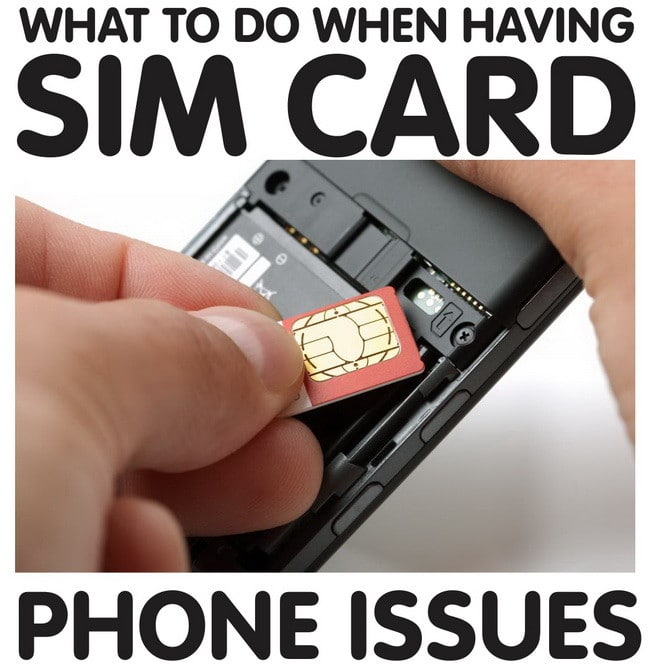
- Eject the SIM tray with the pin tool that came with the phone, or a straightened paperclip if you’ve lost it.
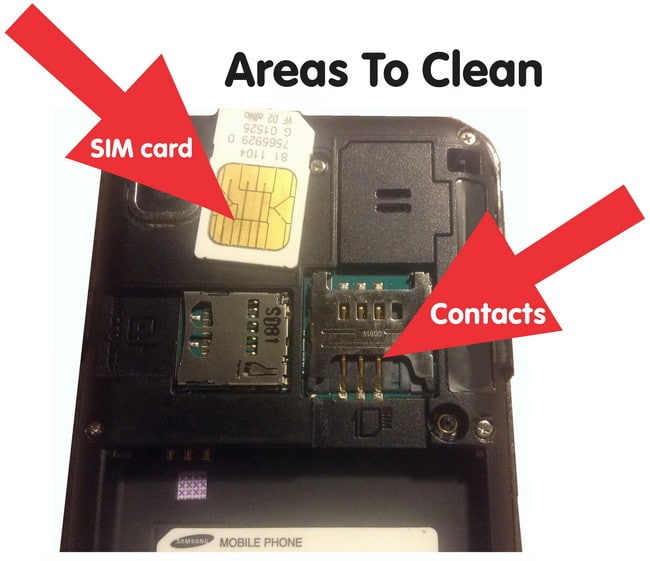
- Dampen a cotton swab with isopropyl alcohol — damp, not soaking. You don’t want alcohol dripping into the tray slot itself.
- Clean the tray contacts until the metal looks bright and shiny, with no dull or discolored film left anywhere on the pins.
- Clean the SIM card’s gold contacts the same way, working gently — the plating on these is thin.
- Let everything air dry completely before reassembly. A few minutes is usually enough since alcohol evaporates fast.
- Reinsert the SIM, close the tray, and power the phone back on. If it reads the SIM, I’d call the job done.

What I see most often is someone grabbing a pin, a key, or the edge of a knife and trying to scrape the corrosion off instead of dissolving it. That’s the worst thing you can do — you’re not cleaning the contact, you’re scratching through the thin gold plating underneath it. Once that plating’s gone, the corrosion comes back faster and worse than before, and now the part’s actually damaged instead of just dirty. Alcohol dissolves the oxide layer. Scraping just strips the protection that was keeping it from getting worse in the first place.
Samsung actually has its own official walkthrough for this if you want a manufacturer-verified version — I’d still start with Samsung’s SIM troubleshooting guide — but it’s the same basic fix techs use in the shop, just with more official phrasing.
When to Just Get a Replacement SIM Card
If you’ve cleaned everything and the phone still won’t read the SIM card, don’t keep messing with the tray — the card itself has failed, and no amount of cleaning is going to change that. Take it to your carrier’s store. AT&T, T-Mobile, and Verizon reps will swap a bad SIM card for free in a few minutes, as long as you’re an active customer on their network, and most of the time they’ll have a working new SIM installed before you’ve finished explaining what happened.
iPhone owners run into the same oxidation issue, just with slightly different symptoms on screen — Apple’s support page covers what to do if you’re seeing an invalid or no-SIM message. And if the phone gets stuck at activation after you swap in a new SIM, Apple’s activation troubleshooting guide walks through that separately — it’s a different problem from the SIM not reading at all, and I’d treat it as its own repair.
Preventing This the Next Time Your Phone Gets Wet
A case with a rubber SIM tray gasket isn’t gonna stop a full dunk, but it buys real time against rain, splashes, and the coffee that gets knocked over at your desk. If your phone does get wet, power it off immediately and don’t touch the SIM tray until it’s fully dry — opening it while everything’s still damp just moves moisture around instead of letting it evaporate. I always tell people the same thing: power down first, let it dry completely, then start troubleshooting.
On a lot of Android phones, that same tray holds a microSD card slot right next to the SIM. While you’re already in there checking contacts, it’s worth knowing how to get more storage on an Android phone without a microSD card slot, especially on newer models that skipped the slot entirely.
I approach a lot of everyday tech problems this same way — check the simple stuff first, then dig into the part that’s actually failing. It’s the same logic I’d use if a TV won’t connect to wifi, or even setting up something like an Amazon Alexa communication setup — rule out the obvious before you assume the hardware’s dead.
Can I clean a SIM card with rubbing alcohol?
Yes — isopropyl alcohol is exactly what I’d reach for. It cuts through oxidation without leaving residue behind, and it evaporates fast enough that you’re not left waiting around with a wet SIM card. Just make sure the phone is off and the battery’s out before you start.
Why does my phone say “No SIM Card” after it got wet?
Most of the time it’s oxidation on the tray contacts, not real damage to the phone or the SIM. Water gets into the tray, the metal starts to corrode, and the connection just stops carrying a signal — even though everything else on the phone still works fine. That’s the reason a phone won’t read the SIM card in most of the cases I’ve run into.
Will my carrier replace a SIM card for free?
Almost always, yes. AT&T, T-Mobile, and Verizon will swap a bad SIM in-store in a few minutes at no charge, especially if you’re already an active customer on their network. I’d still bring the phone with you — some stores want to confirm the tray itself isn’t damaged before they hand you a new card.
Can oxidized SIM contacts cause permanent damage?
Rarely, if you catch it early. Contacts can corrode badly enough that a quick alcohol clean isn’t enough anymore, but that’s usually only after months of a phone sitting wet somewhere, not a few days. Clean it as soon as you notice a problem and you’re very unlikely to need anything more than a swab and some patience.
How long should I let a wet phone dry before turning it back on?
Longer than you think. A few hours in a warm, dry spot is a reasonable minimum, but I’d rather see someone wait a full 24 hours than rush it. I always skip the rice trick — it doesn’t pull moisture out of a tight spot like a SIM tray nearly as well as people think it does. In my experience, patience with drying time saves more phones than any cleaning trick does.
I own a Lycamobile NUU A3 cell phone and I just added minutes to my phone, at first i could make calls and receive them. i tried to get on line and the phone read offline. this morning and yesterday morning it read NO SIM CARD but there is a sim card in the reader.
Hi. I have a tablet mint mobile and my sim card it’s not working don’t know what’s wrong, and I bought it this year online please help me…
my lumia 535 dual sim card when i switch it off and on then one sim is not working. But when i switch it on for the first time all sim cards where working without problems.
Please help.
Thank you guys. It worked with my Samsung Galaxy 7 SIM CARD. My phone is cracked but now I can make calls and text!
Marina,
If you have an iPhone 6 Knock-off or fake iPhone 6 made by a Chinese company with a Chinese name on the phone, then when you restart the phone it may show Chinese writing.
It may have asked you in Chinese about using the SIM card and you accidentally pressed NO.
You will need to find out what the message is saying…. or try this…
Try this…
– Turn OFF the fake iPhone 6
– Remove the sim card
– Clean the sim card and the area on the phone where it resides
– Put the sim card back in and turn on the phone
– The phone will probably show chinese writing, choose the opposite of what you did before
– If the phone will still not recognize your SIM, give us the NAME and MODEL NUMBER of your fake iPhone.
Or ask your phone carrier for a new SIM and see if that works.
-RR