If your window AC stopped blowing cold, clean the filter first — it’s free and fixes a surprising number of “no cold air” calls. But if the filter’s clean and it’s still warm, the bad news: these units have no serviceable parts inside. A repair call costs more than a replacement. Buy a new or cheap used unit instead.
I spent 9 years repairing commercial food service equipment — walk-in coolers, ice machines, the kind of refrigeration where a dead compressor costs a restaurant real money fast. So when a reader in a hot Los Angeles apartment asked me to help save their little window unit, I wanted to give them good news. I couldn’t. So let me give you the honest version.
Why Your Window AC Has No Repairable Parts Inside
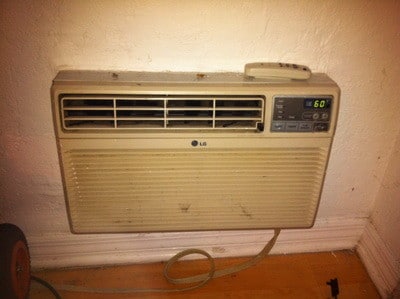
What most people don’t realize before they spend an afternoon prying at one of these: a small window-mounted air conditioner is a sealed throwaway appliance, not a repairable machine. The refrigeration circuit — compressor, coils, refrigerant — is welded shut at the factory. About 80% of the time, when one of these stops blowing cold, it’s either a dead compressor or a refrigerant leak inside that sealed system, and neither is something you or I can fix at a workbench. The remaining cases are usually a clogged filter (free fix) or a failed fan motor (not worth the labor). Calling an AC company to open that sealed system runs more than the unit cost new. That’s the whole problem in one sentence: the repair always costs more than replacement. So before you tear into it, clean the filter — and if that doesn’t do it, start shopping. I know that’s not what you wanted to hear.
I learned this reality the hard way back when I first started doing appliance work. Someone handed me a dead window unit and I figured, electrical and mechanical systems are electrical and mechanical systems — I’d done aircraft hydraulics in the Air Force for 19 years, how hard could a little AC be? I pulled it apart, traced everything, and finally realized there was nothing in there a person could replace. The manufacturer didn’t design it to be opened. I wasted an afternoon learning what I’m about to save you in five minutes.
The One Thing Everybody Assumes Wrong
Everybody assumes a window AC that quit is “broken” and just needs a part swapped — like a fridge where you replace a $20 inlet valve and you’re back in business. That’s the wrong mental model. These units aren’t built like that. There’s no part you order, no fuse you reset, no board you swap. The assumption that “it stopped working so something inside needs replacing” is exactly what sends people on an afternoon they’ll never get back. The truth is closer to a disposable razor — it works until it doesn’t, then it’s gone.
Clean the Filter First — It’s Free and It’s the Only DIY Fix
Before you write the unit off entirely, do this. About 1 in 5 “no cold air” complaints on these little units is just a filthy filter choking the airflow. The air can’t move across the coils, so even a perfectly good compressor feels like it’s doing nothing. This is the only repair on the whole unit you can actually do yourself, and it costs nothing.
- Unplug the unit. Don’t just hit the power button — pull the cord. I don’t care how small it is, you’re sticking your hands near electrical components.
- Pop off the front grille. On most of these it snaps off or has two clips at the bottom. The filter sits right behind it.
- Pull the filter and look at it. If it’s gray, furry, or you can’t see light through it, that’s your airflow problem.
- Wash it in the sink with warm water and a little dish soap. Let it dry completely — gotta be bone dry before it goes back in or you’ll grow mildew.
- Reinstall, plug in, and run it for 15 minutes. If cold air comes back, you just saved yourself a couple hundred bucks.
One sensory tip while you’ve got it running: put your hand at the vent. A working unit pushes air that’s noticeably cold within a few minutes and you’ll hear the compressor running as a steady low hum. If you hear the fan whirring but feel only room-temperature air after 15 minutes — and the filter’s clean — that sealed system is done. No amount of poking changes that.
Can You Even Remove One of These Without Tools or Skills?
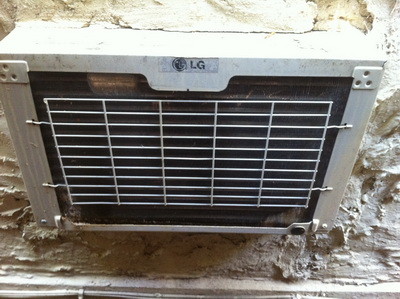
The reader asked whether they could even access the unit without completely removing it from the window. Honest answer: you don’t need to. Even if you pull the whole thing, it won’t help you. But for the record — the way these are built, the entire guts of the unit slide out of the metal casing through the front. The casing stays mounted in the window; the working unit comes forward and out. So yes, it comes apart. The catch is there’s nothing useful waiting for you once it’s out.
If you’re dealing with other cooling appliances in the apartment, the same throwaway logic doesn’t always apply — a full refrigerator, for instance, often has parts worth replacing. If your fridge is warm but the freezer is cold, that’s a different animal with real DIY fixes. Window units just aren’t in that category.
What an AC repair company will tell you: Opening a sealed refrigeration system to recharge refrigerant or replace a compressor on a small window unit runs more than buying a new one outright. That’s not a sales pitch — it’s the math. A new small window AC is cheap; the labor to weld into a sealed system and recharge it is not. This is the rare repair where I tell you flat out: don’t call a pro, and don’t DIY it either. Replace it.
What To Do When the Landlord Won’t Help and It’s Getting Hot
The reader’s landlord said they couldn’t fix it for two months because of financial issues. I get it, but you can’t wait two months sweating in a Los Angeles apartment. The practical move: buy a fast, cheap replacement. A used window unit off a local resale listing can run you very little, and a new small one isn’t much more. You can find new units on Amazon’s window AC listings shipped to your door in a day or two.
And hang onto your receipt and any texts from the landlord. Depending on your lease and local renter laws, you may be able to deduct the cost from rent — but check that first, because the rules vary. (Learned to keep paper trails the hard way on more than one job.)
How To Make the Next One Last Longer
Since you’re buying a replacement anyway, do these three things and the new unit will outlive this one by years:
- Clean the filter once a month during cooling season. This is the single biggest thing — a choked filter makes the compressor work harder and burn out early.
- Pull it from the window every fall and store it inside if you can. Sitting in a window through a wet winter rots the housing and corrodes the coils.
- Don’t undersize it. A unit too small for the room runs flat-out 24/7 and cooks itself. Buy one rated for your square footage.
If you’ve got a window unit you want to deep-clean rather than replace, that’s worth doing on a unit that still blows cold — clean coils run more efficiently and last longer.
Frequently Asked Questions
Why is my window AC running but not blowing cold air?
Nine times out of ten on a unit that’s been running fine and suddenly went warm, it’s one of two things: a clogged filter blocking airflow, or a failed sealed refrigeration system. Clean the filter first — that’s free. If it’s clean and you still get room-temperature air after 15 minutes, the sealed compressor or refrigerant circuit is shot, and that’s not repairable.
Can I add refrigerant to a window AC myself?
No. These units are sealed at the factory with no charging port a homeowner can use, and adding refrigerant requires EPA certification and tools you don’t have. I wouldn’t even attempt it. If it’s low on refrigerant there’s a leak somewhere in a welded system, and chasing that costs more than a new unit.
Is it worth repairing a small window air conditioner?
Almost never, beyond cleaning the filter. I’ve taken these apart and there’s simply nothing inside designed to be replaced. The repair labor on the sealed system costs more than buying new. Save your money and your afternoon — replace it.
How do I get the unit out of the window casing?
The whole working unit slides forward out of the metal casing through the front, while the casing stays mounted in the window. That said, I’d skip it. Even fully removed, there’s nothing serviceable waiting for you inside.
What size window AC should I buy to replace this one?
Match it to your room’s square footage — a small bedroom needs far less cooling capacity than a living room. Buying one too small is the most common mistake I see; it runs nonstop trying to keep up and burns out years early. Check the BTU rating against the room size on the box before you buy.
Bottom line: clean the filter, and if that doesn’t bring the cold back, this one’s done. Buy a cheap replacement, keep the new one’s filter clean, and you won’t be back here next summer.

Written by Keith Schneerer
Certified Appliance Tech · Founder, RemoveAndReplace.com
Keith has spent 30+ years repairing machines, starting as a military mechanic and later maintaining food processing equipment before moving into appliance repair. He founded RemoveAndReplace.com to share field-tested repair advice.
More about Keith →

If that is an actual picture of their unit they are SOL and would be better off to buy a new one of a different brand. I bought one of those that is pictured when they first came out and it has never worked right. Doesn’ even take the humidity out of the air and the local service man here says they are worthless. On the most humid days it doesn’t drip. I only saw it drip any water a couple of years ago and am now looking for a different one.