Last April my neighbor Dave came over holding an electric bill like it owed him money. Over $350 for one month, and his central air was running nearly nonstop just to hold 76 degrees inside. He was ready to write a check for a whole new system before summer hit. I told him to put the checkbook away — nine times out of ten this is a dirty coil, a strangling filter, or a house that’s leaking cold air out a bad door seal, and none of those need a new unit.
An air conditioner that runs constantly is usually starved for airflow or fighting the weather — not broken. Swap the restrictive “allergy” filter for a cheap free-flowing one, clean the evaporator and condenser coils, and check your door and window seals. If cold air still barely comes out, have a tech check the refrigerant charge for about $30 before you buy anything.
- The single biggest cause I see is a restrictive pollen/allergy filter choking airflow — a 99-cent filter fixes it cheaper.
- Don’t call it “freon” and don’t touch the refrigerant yourself — R-22 work legally requires EPA certification.
- A ~17-degree split between return air and vent air means the unit is fine; it’s just brutally hot outside.
- A tech will check your charge with real gauges for around $30 — spend that before you spend $5,000.
- Bumping the thermostat from 76 to 79 degrees cuts runtime and cost immediately, for free.

Why Does My AC Run Constantly to Hold 76 Degrees?
Everybody’s first instinct is the same one Dave had — the refrigerant must be low, or the unit’s dying, so it’s time to buy a new one. It almost never is. An air conditioner that runs all day is doing exactly what it’s designed to do: hold a setpoint. When it can’t reach that setpoint, it just keeps running. The real question isn’t “is my unit broken,” it’s “what’s making it work this hard.” About 40% of the time I trace it straight to airflow — a filter or coil that’s strangling the system. Another 25% is the house itself leaking cold air out bad seals or open patio doors. Maybe 20% is an oversized or undersized unit that was never matched to the home. Refrigerant charge is the last 15% or so, and even then it’s cheap to check. Start with the free and cheap stuff. I’ve watched people replace an entire condenser when a $1 filter was the whole problem.
Throw Away the Expensive “Pollen” Filter First
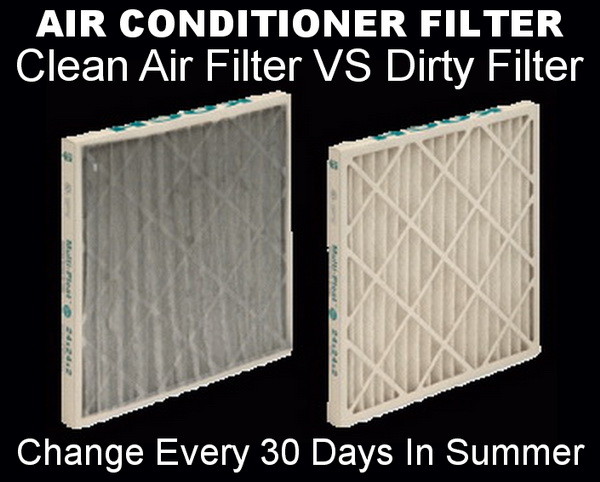
This is the one that fixes the most units for the least money, so it goes first. If your AC is running nonstop, walk over to your return grill right now and look at the filter you’ve got in there. If it’s one of those thick, pleated, high-dollar “allergy” or “pollen” filters, that’s very likely your whole problem. Those filters are so restrictive they choke the airflow your system needs to move air across the evaporator coil. Toss it. Put a cheap free-flowing return filter on there instead. Those high-dollar filters are really for equipment protection in commercial settings, and the allergy-catching versions are total gimmicks for a normal home A/C — way too restrictive.
The cheap blue or green 99-cent filter is the single cheapest way to keep your AC from running constantly and to improve how well it cools. I’m not exaggerating — I’ve seen a swap from a $20 pleated filter to a 99-cent one drop a system’s runtime noticeably in an afternoon.
If your return grill is small, another trick is to swap it out for a much bigger grill to make up for the reduced airflow through any filter. Bigger opening, less resistance, more air across the coil. And remember to change your filter every 30 days in the summer months — a clogged filter blocks air from crossing your indoor evaporator coil and puts you right back where you started.
Clean the Evaporator Coil
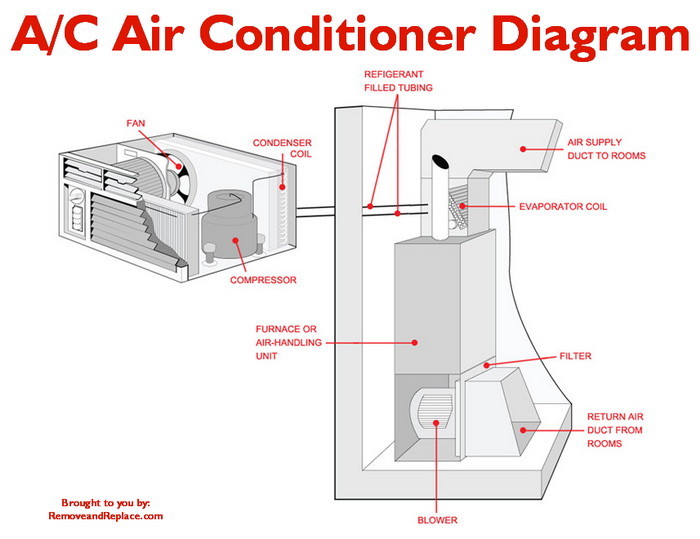
Over time and with normal use, the evaporator coil inside your air handler gets dirty. When it does, it drops the effectiveness of the whole unit — the system can’t pull heat out of the air the way it should, so it just keeps running trying to catch up. This is a real cause worth checking, though I’d put it behind the filter on the priority list since a strangled filter usually gets the coil dirty faster anyway.
You can clean the evaporator coil yourself with a proper coil cleaner. I’ve used this evaporator coil cleaner on plenty of units — you spray it on, it foams up and lifts the gunk, and it drains out through the condensate line. Take your time and don’t bend the fins. If you’d rather, the same $30 tech visit that checks your charge can clean the coil while they’re there.
Don’t Call It “Freon” — and Don’t Touch It Yourself
First of all, the word “freon” is a brand name for a refrigerant named R-22 (Refrigerant 22). Other types of air conditioning refrigerants are called R-134a, R-404A, R-407C, R-12, and R-410A. The actual refrigerant that was named Freon got banned years ago. Here’s the part people don’t like hearing: to legally work with R-22 yourself you need to be certified by the EPA. If you want the specifics, the EPA’s R-22 phaseout page spells out the requirements.
So what’s actually going on inside the system? Your unit is probably either undercharged (not enough refrigerant) or overcharged (too much). Both make it run long and cool poorly. An AC mechanic or tech company will come out and check the refrigerant with industrial gauges for about $30. That’s the move — have them come check it before you ever buy a new unit. If you’re a Groupon member, there are usually great discounts on getting your AC checked to see if repairs are needed. Trane’s own troubleshooting notes back this up: an AC that won’t shut off is far more often an airflow or setpoint issue than a dead compressor — their AC won’t turn off guide walks through the same checks.
Bigger Isn’t Better — Sizing and Cold-Air Check
A bigger air conditioner unit is not always better with HVAC equipment. The unit must be properly sized for the house it’s going on. There are a lot of factors in a load calculation — the number of windows in your home, your east and west sunshine exposure, and how well the house is insulated. An oversized unit short-cycles; an undersized one runs forever. Neither gets fixed by throwing money at more capacity.
Here’s the field test I lean on. If you don’t get cold air out of the AC vents, you could have a refrigerant issue, and most people can’t check that themselves — call an Air Conditioning Technician for that $30 charge check. But if cold air is coming out and the unit still runs nonstop, that points back to airflow or the building envelope. Check your air filter for dirt and clogging first, since a dirty AC air filter prevents airflow across your indoor evaporator coil. Change those filters every 30 days in summer.
The 17-Degree Split Test Most People Never Heard Of
This is the one thing in here that the generic advice never tells you, and it’ll save you a service call. Grab a cheap thermometer and measure the temperature of the return air (the air going back into the system) and the cold air coming out of a supply vent. If you’ve got roughly a 17-degree difference between the two, there is nothing wrong with the unit itself. That split — call it the temperature difference or delta-T — is the unit working correctly. It just means it’s so hot outside that your system can’t stay ahead of the heat. That’s physics, not a fault. I’ve stopped a lot of people from buying units they didn’t need with this one measurement.
While you’re at it, make sure no windows are open and that any sliding glass patio doors aren’t cracked. Then check that your sliding glass doors and windows have a proper seal — seals rip or come loose over time and let precious cold air escape outside. If you’ve got an aging system and you’re wondering whether it’s just at the end of its road anyway, our average lifespan chart for every major home appliance gives you a realistic read before you spend anything.
Free Fixes: Thermostat and Condenser Cleanup
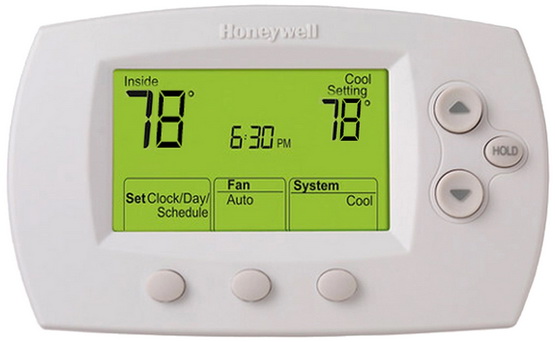
Two things here cost nothing. First, set the thermostat a few degrees higher — go from 76 to say 79 degrees — and you’ll save energy and money immediately with less runtime. Simple, free, works today.
Second, if you know the basic workings of an A/C, head outside to the condenser. Take the cover off and see if anything’s blocking the airflow — leaves, grass clippings, cottonwood fluff, a plastic bag. Use a Shop-Vac to vacuum the inside of the condenser, then spray it out gently with a water hose. And if the fan blades are dirty or slightly bent, straighten them out and clean them off. A caked-up condenser can’t dump heat, so the unit runs and runs. I learned to keep two feet of clearance around every condenser after fighting a unit in Arizona back in the ’90s that was buried in oleander bushes.
Shut off power at the disconnect and the breaker before you open the condenser or touch a fan blade. There’s high voltage in that cabinet even when the fan isn’t spinning. And don’t attempt to add or recover refrigerant yourself — that’s EPA-certified work, and getting it wrong damages the compressor.
A tech checking your refrigerant charge with real gauges runs about $30 — often less with a Groupon deal. A full new central AC system runs several thousand dollars installed. Spend the $30 first. I’ve never once regretted sending someone for the cheap diagnostic before the big purchase, and I’ve watched plenty of people regret skipping it. Repair Clinic’s air conditioner won’t turn off guide is a solid free read before that visit.
How To Keep It From Happening Again
Prevention on this one is almost embarrassingly simple, and it’s why most of these calls never needed to happen. Change your filter every 30 days in the summer — mark it on the calendar. Keep a cheap free-flowing filter in it, not a restrictive pleated one. Hose out the condenser at the start of every cooling season and keep two feet of clearance around it. Walk your doors and windows once a year and re-seal anything that’s cracked or peeling. Do those four things and your unit stops running constantly, your bill drops, and the system lasts years longer.
Frequently Asked Questions
Why does my AC run constantly but the house is still not cool?
Most of the time it’s airflow. A restrictive filter or a dirty evaporator coil keeps air from moving across the coil, so the unit runs and runs without pulling the temperature down. Swap to a cheap free-flowing filter and clean the coils first. If cold air still barely comes out of the vents, get the refrigerant charge checked — that’s a $30 tech visit, not a new-unit problem.
How often should I change my AC air filter in summer?
Every 30 days during the cooling months. I know it sounds like overkill, but in peak summer a filter loads up fast, and a clogged filter is the number one reason I see units running nonstop. It’s a 99-cent fix that prevents a $30 service call.
Do I need to add freon to a constantly running AC?
Probably not, and “freon” is really R-22 — a refrigerant you legally can’t handle without EPA certification anyway. I’ve had people convinced they were low on charge when the real issue was a strangled filter. Get the airflow stuff sorted, then let a tech verify the charge with gauges before you assume it’s refrigerant.
What is a normal temperature difference for a working AC?
Around 17 degrees between the return air and the air coming out of the supply vents. If you measure that split and it’s roughly 17 degrees, the unit is doing its job — it’s just losing the fight against extreme outdoor heat. I use this test constantly to keep folks from replacing perfectly good equipment.
Will turning my thermostat up actually save money?
Yes, and it’s the easiest free win here. Going from 76 to 79 degrees cuts how long the compressor runs, which drops your bill directly. I’d try that alongside the filter swap before spending a dime on anything else. If your system is also noisy while it runs, some of the same airflow fixes help — our approach to quieting a loud machine shows the same “find the restriction, then the vibration” logic I use on any appliance.

Written by Keith Schneerer
Certified Appliance Tech · Founder, RemoveAndReplace.com
Keith has spent 30+ years repairing machines, starting as a military mechanic and later maintaining food processing equipment before moving into appliance repair. He founded RemoveAndReplace.com to share field-tested repair advice.
More about Keith →
Why Freon will only last 4 months and then freeze ?
My AC runs almost constantly, it’s June so it’s pretty hot out.
The problem i noticed in particular is that the room temp by the thermostat barely comes down from 80 degrees F but the thermostat is set to 74 F to 75 F.
So it just runs and runs trying to come down, but never does.
The filter is clean and the condenser coils are relatively clean.
Why is the pan of central air conditioner is running all day?
Bonnie,
If it is running periodically then this is normal as you may be cooking or similar and causing heat in the home. If the ac is running constantly then this would be an issue.
-RR
My a/c is running even though it sets at 76 inside and outside temp is about 62. Is that okay?