That musty, sour smell blasting out of your car’s AC vents almost always comes from moisture sitting on the evaporator core. Mold and bacteria grow on that wet coil every time you run the AC, and every time the blower kicks on, it pushes that smell straight into the cabin. I’ve worked through this exact complaint more times than I can count over the years running RemoveAndReplace.com, and it’s fixable in an afternoon without a trip to the shop — the fix follows the same basic logic every time: kill what’s growing in there, then stop feeding it moisture.

- Musty AC smell is almost always mold or bacteria growing on the wet evaporator coil, not something wrong with the refrigerant itself.
- A clogged or dirty cabin air filter is one of the most common causes and the cheapest thing to check first.
- Cleaning the AC vent system means treating both the exterior air intake below the wipers AND the interior vents.
- Cigarette smoke needs a deeper treatment — shampooing carpet, upholstery, and headliner, plus an enzyme odor neutralizer.
Why Does Your Car’s AC Vents Smell Musty?
Every time you run the air conditioning, air passes over the evaporator core and leaves moisture behind on the coil. That damp surface is exactly what dust, pollen, spores, and bacteria need to grow, and once they settle in on the coil or the ductwork around it, the smell rides every blast of air right into the cabin. In my experience this is almost always where the smell starts — not the outside air, and not the cabin itself — so spraying air freshener without addressing the coil just masks the problem for a day or two.
If the AC is also blowing warmer than it used to, along with the smell, I’d check refrigerant levels too. Our guide on how to recharge a car’s AC and when not to use a sealer can walks through when a low charge is actually the problem versus when it’s something else. Low refrigerant on its own won’t cause the smell. But a system that isn’t cycling right can leave the coil wet longer than normal, and that makes the mold problem worse.
Check Your Cabin Air Filter First
Most cars built in the last 15-20 years have a replaceable cabin air filter. It’s supposed to catch dust, pollen, and debris before any of it reaches the evaporator. Check your owner’s manual first — it’ll tell you if your car has one and usually where to find it, often behind the glovebox. If that filter’s never been changed, it’s holding a lot of trapped debris, and that debris is happy to keep growing mold and feeding that smell straight into your vents. I always check this before anything else — it’s the cheapest fix by far, and it solves the problem more often than people expect.
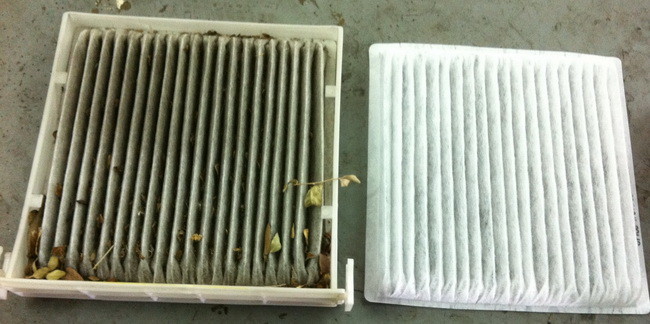
A replacement filter typically runs $10 to $25, depending on the make and model. Swapping it yourself takes about ten minutes, and most vehicles need no tools at all. If you replace a filter this dirty and the smell is still there afterward, that tells you something — the odor’s already moved past the filter and into the vent system itself. That’s the next step.
How to Clean Your Car’s AC Vent System
Once you’ve ruled out — or fixed — the cabin air filter, an enzyme-based AC vent cleaner is the next move. Enzymes break down the organic material actually causing the smell instead of just covering it up, which is why regular household cleaners and air fresheners don’t hold up — they’re heavily perfumed with no enzyme content, so the smell comes right back once the fragrance fades. Something like Chemical Guys Bio-Enzymatic Odor Eliminator or Ozium Air Sanitizer Foam works well for this, in my experience. Both run about $10 to $18, and they’re built specifically for this job.
Cleaning the system means getting the cleaner to both ends of the airflow path — the exterior intake and the interior vents — so it can reach the ductwork and the evaporator in between. This is the process I walk people through:
- Turn the AC on full blast, with the “recirculate” button off so outside air is pulling through the system.
- Spray a generous amount of enzyme cleaner into the EXTERIOR air intake vents, located just below the base of the windshield wipers.
- Let the car run for about 10 minutes with the AC still on. This gives the cleaner time to work through the ductwork and across the evaporator.
- Turn the AC off. Then spray the same cleaner directly into the INTERIOR vents on the dashboard.
- Shut the car off, roll up the windows, and let it sit undisturbed for about 20 minutes. The enzymes need that time to break down the odor-causing bacteria and mold.
- If the smell’s still noticeable afterward, repeat the whole process. Stubborn mold on the evaporator sometimes needs a second treatment, and I wouldn’t be surprised if it does.
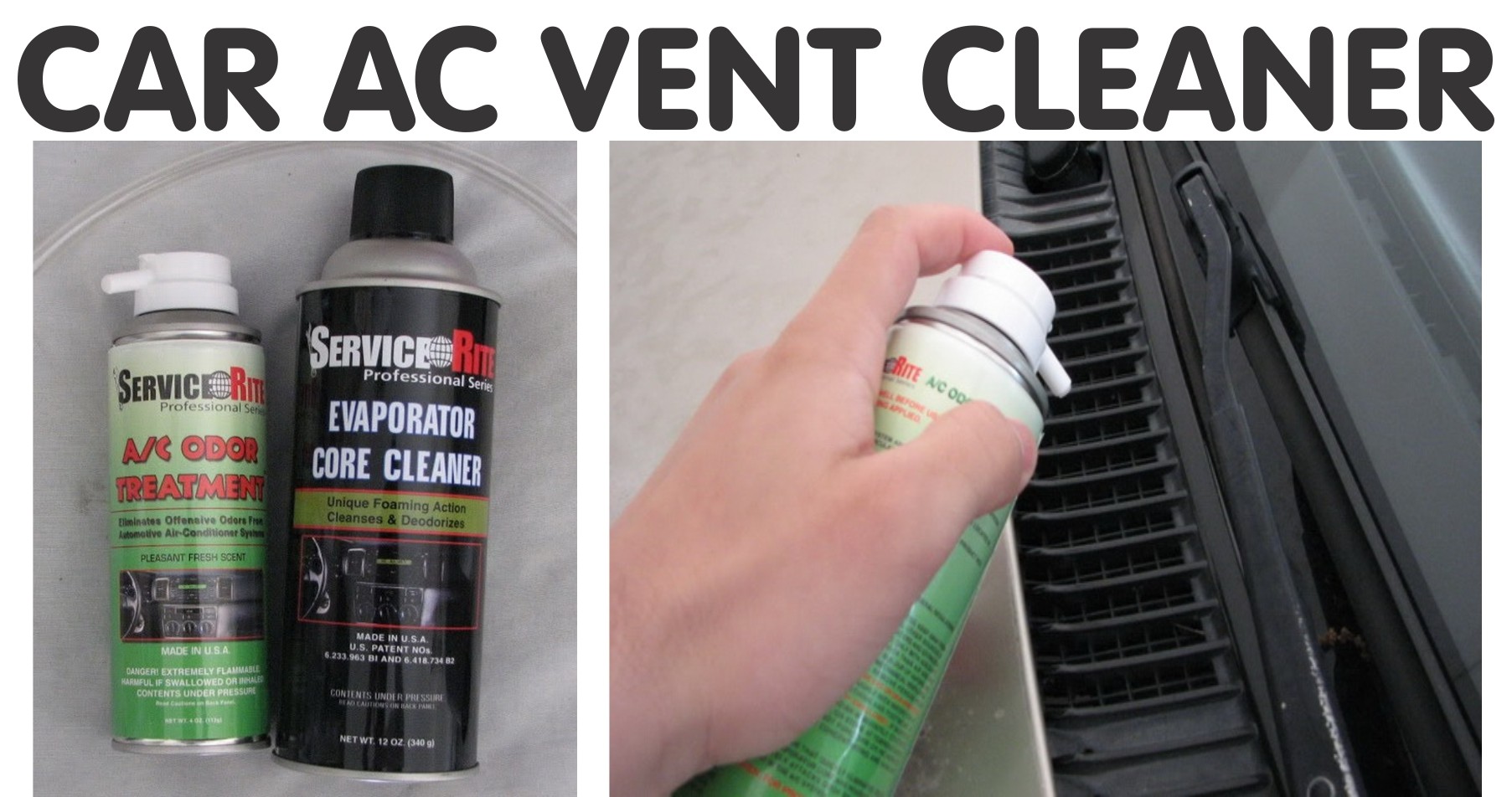
AutoZone’s guide on musty AC smells covers this same approach and lines up with what I’ve found tends to work in practice. They also have a good rundown on why your car’s AC smells bad in the first place, if you want more background before you start.
Here’s a quick video walkthrough that shows this same process in action:
Removing Cigarette Smoke Odor From a Car’s Interior
Cigarette smoke is probably the toughest smell to deal with, in my opinion. It doesn’t just sit in the AC system — it soaks into the carpet, the upholstery, and the headliner. Vent cleaning alone won’t touch that. Shampoo those surfaces first with an enzyme-based cleaning product, then follow up with an enzyme odor neutralizer sprayed through the whole interior to finish the job. Skip the shampoo step and only treat the vents, and the smoke smell’s gonna come right back within a few days — I’ve seen it happen, and it’s kinda frustrating when you think you’ve solved it.
Consumer Reports notes that odor problems like this are common enough that most auto parts stores stock dedicated AC vent treatment kits. You don’t need anything specialized or professional-grade to handle it yourself.
When It’s More Than Just Cleaning
If you’ve replaced the cabin air filter and run the enzyme treatment twice with no improvement, I’d move on to a shop inspection rather than another round of spray cleaner. Part of that inspection is checking the evaporator drain tube, which runs from the AC housing down under the vehicle. Leaves, debris, or a collapsed section of hose can clog it, and once it’s clogged, water backs up into the housing instead of draining out — which keeps the coil wet between drives no matter how many times you clean the vents. I’d have that drain checked before spending money on parts that aren’t the actual problem; a tech can usually clear it with compressed air or a stiff wire.
The other thing I’d want checked is the coil itself. A shop can pull the blower motor or evaporator housing cover to look directly at the coil fins. If mold has built up heavily enough on the metal, a spray treatment from the vents may not fully reach it, and the housing may need to come apart for a proper cleaning. That’s a bigger job than a DIY afternoon, and it costs more than a filter and a bottle of enzyme cleaner, but in my experience it’s usually what finally fixes the smell for good when spraying alone hasn’t done the job.

Written by Keith Schneerer
Certified Appliance Tech · Founder, RemoveAndReplace.com
Keith has spent 30+ years repairing machines, starting as a military mechanic and later maintaining food processing equipment before moving into appliance repair. He founded RemoveAndReplace.com to share field-tested repair advice.
More about Keith →
Bob,
Yes good suggestion.
Thanks.
-RR
“CARS”? In most of the instances in your article, you should have used an apostrophe in that word; like this: “HOW TO CLEAN THE CAR’S AC VENT SYSTEM”
I have a bad smell coming out of the cars vents and when I removed the in cab air filter I found a mouse nest on top of the filter. What would be the best cleaner to use to rid the smell from the venting system
I had my car develop a SUDDEN smell in cabin when I put the air on (not air conditioner), it was worse when was on cold.
The smell started after I had the car hand washed.
As the problem came suddenly I felt it was connected to the people in the car wash, so far it seems likely they sprayed water into the cat converter and screwed it up.
The fact that it gets slightly better on heat suggests it is not heater core.
Not sure how to resolve this, maybe a long journey to evaporate water and hopefully dry out cat converter, I could replace exhaust but still not sure of the source.
My Toyota Corolla 2015 started doin this from day 1, I would get this pungent smell after my car set in the garage for a few hours. The smell would last for just about 15sec when first starting my car up out of the garage at first. The smell gradually lasted longer and longer…up to 4 full min now, only 2 summers of a brand new car. When I was in a/c school a simple solution of 50/50 bleach and water sprayed on the evaporator would fix the smell and prevent it from coming back. I haven’t did this due to it still under warranty. I did take it to the dealer and the sprayed a foam up the condensate drain line that they say will fix it but I just got that done today and haven’t checked it out yet.
Linda McCormack,
Try them and see. The one with active enzymes seems to always do the trick as it kills any bacteria or mold that could be causing the manure smell in your car vents.
-RR