For dish soap in dishwasher trouble, no parts are needed. Wipe out as much soap and suds as you can, add half a cup of distilled white vinegar with a sprinkle of table salt, and run the machine for a few minutes. If the suds have dropped when you open the door, let a full cycle finish.
- Dawn or Joy hand soap is the culprit, not a failed dishwasher.
- Remove the loose soap by hand before any cycle runs.
- Out of vinegar? Olive oil works in the same steps.
- Repeat the whole process until the bubbles stop.
What Happens When Dawn or Joy Goes Into the Dishwasher
If you poured Dawn or Joy in where dishwasher detergent belongs, the machine isn’t broken. It’s just full of foam. Hand dish soap is made to suds up, and a dishwasher throwing water around inside a closed box turns that into a wall of bubbles that pushes out past the door and across the kitchen floor. The fix uses things you already have in the pantry, and it’s a basic one that’s served me well across 30+ years of repair work.
Don’t start a full cycle and hope for the best, because the suds will just keep coming. Get the loose soap out first, then let vinegar and table salt knock the foam down. If you still find water under the machine after the cleanup, that’s a separate problem, and the Samsung dishwasher leaking from the bottom guide walks through hose connection and drain seal checks.

This video shows what goes on when dish soap ends up in a dishwasher. Watch it before you start so the foam you see in your own machine makes sense, then follow the steps below to get rid of it.
Unplug the appliance or switch off its breaker before you touch anything. Soapy water on the floor around a dishwasher is a shock risk, so mop up the standing water first. Restore power only once the floor and area around the machine are dry, and only because the steps below need the machine to run.
How Do You Remove Dish Soap From a Dishwasher?
This is the longest section, and the sequence below is the whole job. Vinegar and salt act as an anti-foaming agent, and the full cycle at the end carries the leftover soap out of the machine.
- Grab a sponge or rag and remove as much of the dish soap and suds as you can from the inside of the dishwasher.
- Once you’ve gotten as much liquid soap as possible off the bottom and walls, pour in 1/2 cup of distilled white vinegar and sprinkle some table salt over the top of the vinegar.
- Shut the door and run the machine on the normal setting for a few minutes. Then open it and check that the bubbles and suds have gone down and won’t overflow.
- Once you know the vinegar and salt are working as an anti-foaming agent, close the door and let it run a full wash cycle. You can open the door and check from time to time to make sure suds aren’t forming.
- If suds and bubbles are still there, repeat the whole process until the bubbles have subsided.
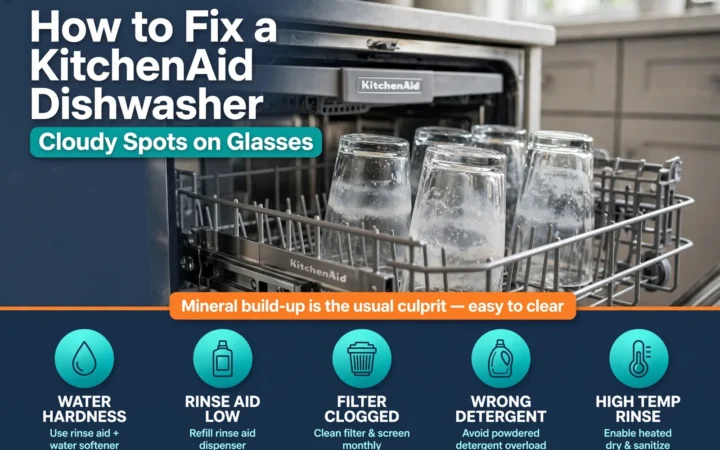
A full wash cycle after the vinegar and salt removes all of the Dawn or Joy, and the excess bubbles won’t come back. A clogged filter or stubborn residue is a different story, and the KitchenAid cloudy spots on glasses guide covers detergent film on dishes.
Skipping the hand removal in step 1 is the common wrong move. Running a cycle on top of a tub full of soap just feeds the foam, so scoop first and run second.
KitchenAid also publishes its own help page on removing suds, bubbles or soap foam if you want a manufacturer’s take on the same problem.

No Vinegar in the House?
Use the same steps and substitute olive oil for the vinegar.
- Wipe out as much of the soap and suds as you can.
- Add the olive oil in place of the vinegar.
- Run the machine a few minutes and check the suds.
- Finish with a full wash cycle.
If the Foam Won’t Stop
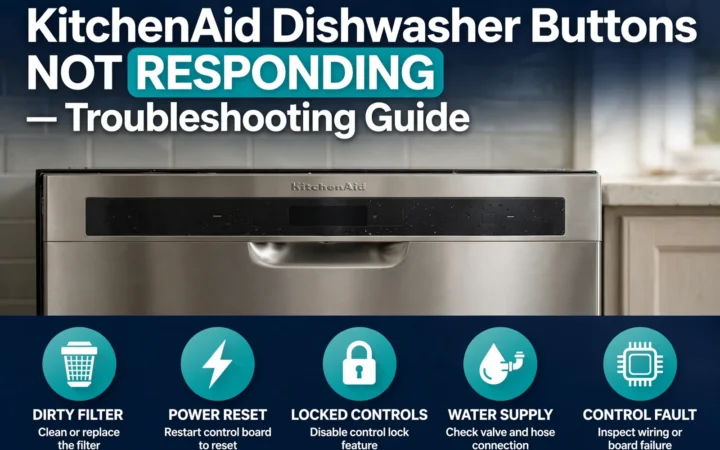
Repeat the process until the bubbles are gone, and don’t walk away from the first cycle. If foam is still pushing out around the door, stop the cycle, wipe out the loose soap again, and repeat the vinegar and salt steps. If the controls act up after a flood, see the KitchenAid dishwasher buttons not responding troubleshooting guide. Standing water around a different appliance, like condensation inside a KitchenAid refrigerator, is its own problem and needs its own check.
Call a pro if water is still showing up under the machine after the suds are gone, or if the controls stay dead once everything has dried out. At that point it’s a leak or electrical issue, not soap.
Keeping Suds Out for Good
Only put dishwasher detergent in the dispenser, and keep the Dawn or Joy at the sink. Dish soap in a dishwasher causes overflow because it’s made to foam, and dishwasher detergent isn’t. GE has a short page on excess suds in a dishwasher if you want a second reference.
FAQ
How long do I run the machine after adding vinegar and salt?
Just a few minutes on the normal setting, then open the door and look at the suds. If they’ve dropped, let the full cycle run.
Which soaps cause this?
Dawn and Joy are the ones people most often put in by mistake. Any hand dish soap will foam the same way.
Will the bubbles come back after the full cycle?
No, the full cycle removes the soap and the excess bubbles won’t form again. If they do, I’d repeat the vinegar and salt routine until they stop.
Can I skip wiping out the soap and just add vinegar?
I wouldn’t. Taking out the loose soap first means less foam to fight, and it’s the step that keeps the kitchen floor dry.
Scoop, add vinegar and salt, run it, and repeat until the bubbles quit. That’s the whole job.

Written by Keith Schneerer
Certified Appliance Tech · Founder, RemoveAndReplace.com
Keith has spent 30+ years repairing machines, starting as a military mechanic and later maintaining food processing equipment before moving into appliance repair. He founded RemoveAndReplace.com to share field-tested repair advice.
More about Keith →
All soap suds are gone but the water won’t do anything. The arm in the bottom won’t push the water through