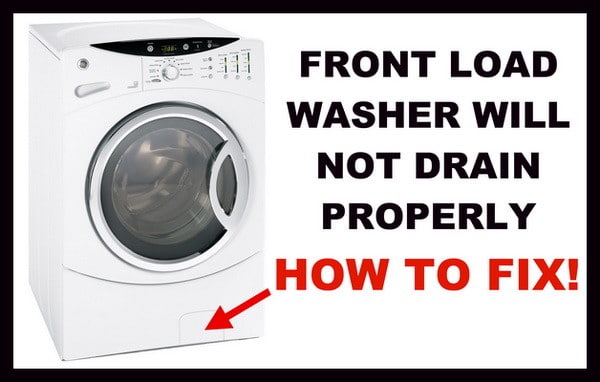
On a front loader, the drain pump pulls water out through a small strainer behind a panel at the bottom front, and anything that slips past the door can end up plugged in that strainer. When it clogs, the pump can’t push the water out and you get soaked clothes and a wet floor. I’d go there before blaming the detergent or the drain pipe.
Front load washer not draining? Check the drain pump filter first, because a clog there leaves clothes soaked. Open the small lower front access panel and drain any standing water, using the emergency drain hose if your washer has one. Then unscrew the filter cap counterclockwise. Debris inside means you found it; a clean filter points to the pump itself or an unbalanced load.
Why a new GE front loader leaves clothes soaked and the floor wet
A reader wrote in about a new GE front load washer. Clothes come out very wet, the floor is sometimes wet, and the amount of water left in the drum varies from load to load. They had recently moved from a top loader, and they’d also seen water and suds come out of an overflow outlet at the back of the machine. Their question was whether a backflow prevention valve on the drain pipe could be stopping the dirty water from draining. I can’t confirm that valve from a description, but the cheap, fast suspect is the drain pump filter, a basic check that’s served me well across 30+ years of repair work. A partly clogged filter explains the “sometimes more, sometimes less” pattern, because some loads clear it and others don’t. Front loaders also behave differently from top loaders in a few ways, which is why a new owner gets caught out.
| Symptom | Likely cause | Check first |
|---|---|---|
| Clothes very wet after the cycle | Clogged drain pump filter | Open the lower front panel and clean the filter |
| Varying amounts of water left in the drum | Partial clog in the filter or pump | Filter first, then the drain pump |
| Spin stops early, clothes soggy | Unbalanced or overloaded wash load | Redistribute the load and wash a smaller one |
| Suds or water from the rear overflow outlet | Too many suds or slow draining | HE detergent, then the drain line |
What you’ll see, what’s happening, and what to do about the filter
What you’ll see: soaked clothes, a damp floor, and water still sitting in the drum when the cycle ends. What’s happening: the pump pulls water through the strainer in the lower front. Coins, pen caps and dog hair all turn up in these filters, and a clogged strainer slows or stops the water leaving the drum. Debris like that keeps the washer from draining properly.
What to do: pull the filter and clean it. It’s free, and it takes the pump’s most likely problem off the table before you spend money on parts.
Unplug the appliance or switch off its breaker before you touch anything. Shut off the water supply to the appliance before you disconnect any hose or valve. Water will run out when you open the filter, so lay down towels and have a shallow pan ready.
How do you clean the drain pump filter on a front load washer?
- Unplug the washer. Pull it out far enough that you can reach the front comfortably.
- Remove the small lower front metal panel. It sits at the bottom of the machine.
- Unscrew the cap. Behind the panel is a screw-on cap holding a little debris filter or strainer. Let the water drain into the pan as you turn it.
- Clean it out. Pull out the coins, pen caps, hair and whatever else is stuck in there.
- Wash the filter in the sink to get rid of any odor.
- Screw it back on firmly, replace the panel, and run a test cycle.

The GE support page on front load washers that won’t drain or drain slowly covers the same checks if you want a second reference. A clogged filter is a common reason for soaked clothes, so clean it before you touch anything else.
Watch it done: the filter and the drain pump
Both videos cover this job. The first shows how to clean out the filter on a front load washing machine. The second shows how to reach the drain pump on a GE washer.
How to clean out filter on front load washing machine.
Drain Pump GE Washer Repair and Access. Use it if the filter was clean and you need to look inside the pump itself.
Could the backflow prevention valve be the problem?
It’s possible in principle, since anything restricting the drain line can slow the water leaving the machine. But I wouldn’t start there. A clean filter, a balanced load and the right detergent come first, and you can check all three without touching the plumbing. If the filter is clean and the pump runs, look at the drain pipe and that valve next.
The wrong assumption, and the mistake that makes it worse
Many people coming from a top loader assume the drain problem must be the detergent or the house plumbing, because a top loader has no filter to clean. Switching to HE detergent was the right call for a front loader, since regular detergent makes too many suds. But new detergent won’t clear a clogged strainer.
The common mistake is running load after load and hoping it clears, or sticking a tool down the drain. Each cycle can push more debris against the filter. Open it and look instead.
An unbalanced load can also leave clothes wet
Another cause is a wash load that is unbalanced. If the washer rocks too hard on the spin cycle, it stops to prevent damage, so the clothes stay soggy. Don’t overload it. If it still bounces on small, even loads, the shock absorbers on a Kenmore washer article shows how those suspension parts work, and a worn drum bearing is another thing that can make a spin rough.
Before you order a pump
You may also need to access the drain pump, because things can lodge themselves inside the pump too. Use the second video above or your GE washer manual. Run this check before you spend anything:
- Clean the filter using the steps above.
- Run a drain cycle with the filter back in place.
- Watch the drum. If the water leaves, you’re done.
- If it doesn’t, open up the pump and look for lodged debris.
- If the pump is clear and still not moving water, the pump may be the problem. The nameplate on the washer gives the model number you need to find the right pump.
RepairClinic’s washer won’t drain guide walks through the other likely failures.
Call a pro if the filter and pump are clear and the washer still won’t drain, or if you see a lock error. A door that won’t release can mean something different, as in the F5 E2 door lock error write-up. If the control panel stops responding too, see this Whirlpool locked washer guide. Anything electrical beyond a pump swap is worth a service call.
Keeping it from happening again
Check pockets before loading, and open the filter every few months to clear what’s collected. If you’ve got a dog, look more often. Rinse it in the sink so it doesn’t smell.
FAQ
Why is my front load washer not draining all the way?
A clogged drain pump filter is the first thing I’d check. If that’s clear, the pump itself may be blocked or failing, or the drain line may be restricted.
Could HE detergent or too many suds cause this?
Too many suds can cause trouble in a front loader, which is why HE detergent matters. But if standing water remains after you switch, the filter is still the more likely cause.
Where is the filter on a GE front load washer?
It’s behind the small lower front metal panel. Behind it is a screw-on cap holding the debris filter or strainer. Have towels ready before you open it.
Do I need a new drain pump?
Not until you’ve cleaned the filter and looked inside the pump for lodged objects. A pump that’s clear of debris and still not moving water is when I’d start pricing a replacement, using your model number from the nameplate.
Know of another reason a front load washer won’t drain? Leave a comment below.

Written by Keith Schneerer
Certified Appliance Tech · Founder, RemoveAndReplace.com
Keith has spent 30+ years repairing machines, starting as a military mechanic and later maintaining food processing equipment before moving into appliance repair. He founded RemoveAndReplace.com to share field-tested repair advice.
More about Keith →

Water comes in to machine even if power is off but water line is attached and turned on.